

Your entryway is the first thing visitors notice, and upgrading it with pavers can dramatically improve your home’s curb appeal and value. Pavers are durable, stylish, and easy to maintain, offering countless design possibilities. From classic patterns to modern layouts, here are 10 paver ideas to transform your entrance:
- Herringbone Pattern: Timeless zigzag design, ideal for durability and elegance.
- Large-Format Slabs: Sleek, oversized pavers for a modern look.
- Curved Walkways: Gentle, flowing paths that complement landscaping.
- Mixed Materials: Combine brick, concrete, and stone for a custom look.
- Accent Borders and Inlays: Add decorative frames or central motifs for a polished finish.
- Natural Stone: Luxurious options like flagstone, bluestone, or travertine.
- Textured/Tumbled Pavers: Rustic, weathered designs for added charm.
- Pavers with Plant Gaps: Blend greenery with hardscaping for a natural feel.
- Multi-Level Steps: Tiered designs for sloped properties or dramatic entrances.
- Built-in Lighting: Integrated LED or solar lights for safety and nighttime appeal.
Each option offers unique benefits, from boosting durability to enhancing aesthetic appeal. Whether your style is modern, classic, or rustic, there’s a paver design that fits your needs and budget. Professional installation ensures long-lasting results and adds value to your property.
BUDGET FRIENDLY Exterior DIY Entryway Makeover | Curb Appeal Updates
1. Classic Herringbone Pattern
The classic herringbone pattern is a timeless design that uses rectangular pavers arranged in a distinctive zigzag, V-shaped layout. This eye-catching arrangement naturally draws attention to your entryway and has been a staple in architecture and roadways for centuries, celebrated for both its beauty and durability.
Aesthetic Appeal
The herringbone pattern can turn a basic entryway into a sophisticated centerpiece, adding a touch of elegance to your home’s exterior. Its versatility means you can select materials that fit your style – concrete for a sleek, modern vibe, brick for a warm, classic feel, or natural stone for a luxurious, textured look. To personalize the design even further, consider adding accent borders or inlays to frame the layout and enhance its overall style.
But it’s not just about the looks – this pattern offers practical advantages as well.
Durability and Maintenance
The interlocking structure of the herringbone pattern makes it exceptionally durable, especially in high-traffic areas like entryways. This design distributes weight evenly, which minimizes the chance of pavers shifting over time. Maintenance is straightforward: regular sweeping and occasional washing are usually enough to keep it in great shape. When installed correctly, only minor upkeep is needed, making it a low-maintenance option that performs well in various settings.
Suitability for Home Style and Climate
One of the best things about the herringbone pattern is how well it works with different architectural styles. Whether your home is a traditional colonial, a craftsman design, or a sleek modern build, this layout can complement your aesthetic. For durability across climates, concrete and brick pavers are reliable choices, even in areas with freeze-thaw cycles. If you live in a milder climate, natural stone can be a great option for a more upscale look. Professional installation is key to ensuring proper grading and drainage, which helps maintain the pattern’s beauty and structural integrity, no matter the weather.
Cost Considerations
Investing in a herringbone paver entryway is a great way to boost your home’s curb appeal. Material costs vary depending on your choice: concrete ranges from $8 to $15 per square foot, brick from $10 to $20, and natural stone from $20 to $30. While the precision required for the zigzag layout might slightly increase labor costs, hiring professionals ensures that the foundation – grading, base preparation, and drainage – is done right. This attention to detail pays off, keeping your entryway both durable and visually stunning for years to come.
2. Modern Large-Format Slabs
Modern large-format slabs bring a sleek and contemporary vibe to entryway paver designs. These oversized paving stones, typically 24"×24" or larger, create a bold, architectural entrance that immediately catches the eye .
Aesthetic Appeal
With their expansive design and minimal grout lines, large-format slabs deliver a clean, seamless look that can make even smaller entryways feel open and inviting. Their geometric simplicity pairs beautifully with modern landscaping, and they come in a variety of materials – from smooth concrete to textured porcelain – offering plenty of design possibilities. To take it up a notch, built-in LED lighting can add a dramatic effect for nighttime curb appeal .
Concrete slabs are a great choice for their versatility, offering smooth finishes in neutral tones like charcoal, gray, and beige, ideal for a minimalist aesthetic. Porcelain slabs add texture while maintaining crisp lines, and natural stone options bring unique patterns and a touch of sophistication .
For a polished look, consider framing your installation with ornamental grasses or sleek planters. Not only do these slabs look impressive, but they also deliver excellent performance.
Durability and Maintenance
Large-format slabs are built to last, especially when made from reinforced concrete or porcelain. They can handle heavy foot traffic and resist weather damage, making them a practical choice for entryways . Plus, with fewer joints, there’s less opportunity for weeds to grow, which means less maintenance compared to smaller pavers.
Keeping these slabs in top shape is simple – regular sweeping and occasional washing usually do the trick. As Sheila F. shared in May 2024 about her experience with Pacific Pavers, "cleaned, sanded, and sealed our paver driveway and it looks great". In areas prone to freeze-thaw cycles, sealing the slabs can help prevent staining and extend their lifespan.
Suitability for Home Style and Climate
While these slabs are a natural fit for modern homes, they can also work with transitional designs when paired with accent borders. Their durability and versatility make them suitable for most U.S. climates, provided they’re installed correctly . The neutral tones and smooth finishes align with current architectural trends that favor clean, uncluttered designs.
Cost Considerations
Large-format slab pavers come with a premium price tag. Concrete slabs typically cost $10–$30 per square foot installed, while natural stone options range from $25–$50 per square foot. Installation costs can add another $10–$25 per square foot, depending on the complexity of site preparation .
Proper installation is critical, as the weight and precision required for these slabs demand expertise. Companies like Pacific Pavers in Orange County, CA, specialize in custom installations, ensuring high-quality results that not only enhance the look of your property but can also boost its value. In fact, industry reports suggest that homes with upgraded entryways featuring modern pavers often sell faster and at higher prices than those with standard materials .
3. Curved Walkways
Curved walkways bring a fresh and inviting touch to your home, offering a softer, more dynamic alternative to rigid, straight designs. Their flowing lines not only guide visitors gracefully to your front door but also enhance the natural beauty of your landscaping.
Aesthetic Appeal
Curved walkways blend practicality with style, offering a striking option for both classic and modern homes. The gentle curves add visual interest, breaking up the monotony of straight edges and creating a sense of movement. You can further enhance the look by incorporating accent borders or contrasting colors. For example, lighter pavers can make the path appear wider, while darker tones create a seamless blend with the surrounding landscape. Material choices also play a role – concrete lends itself to modern designs, while natural stone and brick complement more traditional aesthetics, emphasizing the walkway’s graceful form.
Durability and Maintenance
When properly installed with a stable base and secure edge restraints, curved paver walkways are as durable as their straight counterparts. Materials like concrete, brick, or natural stone are flexible enough to follow curves and withstand natural ground shifts. Maintenance is straightforward: regular sweeping, occasional washing, and periodic sealing help preserve their appearance and longevity. This durability makes curved walkways a practical choice for a variety of climates.
Suitability for Home Style and Climate
Curved walkways are versatile enough to suit nearly any home style. For traditional homes, brick or natural stone works beautifully, while concrete pavers in neutral tones complement modern architecture. These walkways also perform well in diverse U.S. climates, offering better freeze-thaw resistance and drainage than poured concrete. While heavy snowfall might require extra care during snow removal, the benefits of curved designs – like improved drainage and visual appeal – typically outweigh this minor inconvenience.
Cost Considerations
The cost of professionally installed curved paver walkways typically ranges from $10 to $25 per square foot. Labor costs can be 10–20% higher than straight designs due to the precision required for cutting and fitting pavers along the curves. Natural stone options tend to be more expensive than concrete or brick, but the added curb appeal and potential to boost property value often justify the investment. Homes with standout entrances not only attract more attention but also tend to sell faster and at higher prices. For flawless results, especially along intricate curves, hiring experienced contractors like Pacific Pavers ensures a balance of beauty and long-lasting durability.
4. Mixed Material Designs
Mixed material paver designs bring together concrete, natural stone, and brick to create a custom entryway that truly stands out.
Aesthetic Appeal
Combining different materials adds depth and contrast, making your entryway visually engaging. Picture sleek concrete paired with rustic stone accents or concrete walkways enhanced with natural stone inlays to define the space. These combinations create a design that feels both intentional and dynamic.
Playing with color and texture adds even more character. For example, lighter pavers can make pathways feel more expansive, while darker accents provide a polished border that frames the walkway beautifully. The interplay of smooth concrete with rough stone, or the warmth of brick against the cool tones of slate, transforms a simple path into a striking architectural element.
A smart approach is to use premium materials sparingly, focusing on accents rather than covering the entire space. For instance, you could use cost-effective concrete pavers for the main walkway and incorporate natural stone as borders or inlays. This technique achieves a high-end look without breaking the bank, balancing style with practicality.
Durability and Maintenance
Mixed material designs aren’t just about looks – they’re built to last. When installed correctly, each material brings its own strengths to the table. Concrete and natural stone can withstand heavy foot traffic and harsh weather, while brick remains a timelessly durable option.
Keeping these designs in top shape is relatively simple. Regular sweeping and occasional washing usually do the trick. Natural stone might need periodic sealing, and decorative pebble infill or plant gaps may require minor adjustments over time. These tasks are manageable for most homeowners, making maintenance straightforward.
Suitability for Home Style and Climate
Whether your home leans modern or traditional, mixed material designs can complement its style. For a contemporary look, pair concrete with stone accents. For a classic feel, incorporate brick and natural stone details.
Climate plays a big role in material selection. In colder areas, frost-resistant materials help prevent cracking during freeze-thaw cycles. In warmer climates, lighter-colored stones and concrete can keep surfaces cooler to the touch. Additionally, these designs can adapt to regional needs. For example, in Southern California, drought-tolerant and permeable options with plant gaps not only look great but also address environmental challenges.
Cost Considerations
While mixed material designs deliver stunning results, they do come with a higher price tag. The combination of premium materials and the labor involved in intricate installations typically costs between $10 and $30 per square foot or more . Natural stone tends to be the most expensive option, while concrete and brick offer more budget-friendly alternatives.
To keep costs manageable without sacrificing style, consider using high-end materials as accents rather than covering the entire surface. For instance, a concrete walkway with natural stone borders can achieve an upscale look at a fraction of the cost of an all-stone design.
Investing in a standout entryway often pays off in the long run. Homes with well-designed, eye-catching entryways not only attract more buyers but also tend to sell faster and at higher prices.
5. Accent Borders and Inlays
Accent borders and inlays can turn a simple walkway into a striking entryway that catches the eye. Borders create a defined frame around your walkway, while inlays are decorative patterns or motifs embedded within the paver layout. Together, they add a layer of detail that makes your home’s entrance stand out. Besides their visual appeal, these features also enhance the functionality and curb appeal of your property.
Aesthetic Appeal
Borders and inlays bring structure and personality to an otherwise plain walkway. For instance, a basic concrete path becomes a design statement with a charcoal border or a granite medallion inlay. These elements give the impression of thoughtful planning and professional craftsmanship.
Color contrast plays a big role in their appeal. Imagine a tan walkway framed with a deep charcoal border – it immediately draws attention. Similarly, a light gray path with a natural stone inlay creates a striking focal point that elevates the overall design.
Mixing materials can also add a sense of rhythm and movement. A herringbone walkway bordered by a darker, straight-laid pattern creates visual interest, while a curved path with a cobblestone medallion at the landing area transforms the entrance into something grand.
What’s great about these features is how adaptable they are. They can reflect the architectural style of your home, highlight curves in your landscaping, or introduce geometric patterns that match modern aesthetics. This flexibility allows you to create an entryway that feels personal and complements your home’s character.
Durability and Maintenance
Borders and inlays are not just about looks – they’re built to last. When installed with high-quality materials and proper preparation, they can handle heavy foot traffic and weather challenges just as well as standard pavers. Using freeze-thaw resistant pavers and ensuring a well-prepared base are crucial for long-lasting results.
One practical advantage is how easy repairs can be. If a single paver in the border or inlay gets damaged, it can be replaced without disrupting the surrounding walkway. This ability to make targeted repairs helps keep maintenance costs low while preserving the design.
Day-to-day upkeep is simple. Regular sweeping clears debris, and occasional washing with water keeps the colors vibrant. Applying a sealer can reduce the risk of stains and minimize weed growth between the joints. If natural stone is part of your design, periodic sealing will help maintain its appearance and extend its lifespan.
Suitability for Home Style and Climate
Borders and inlays can complement a wide range of architectural styles across the U.S. Traditional homes pair beautifully with classic brick borders or natural stone inlays that echo timeless design elements. On the other hand, modern homes often favor sleek geometric inlays and minimalist borders for a clean, contemporary look.
Regional trends often influence material choices. For example, coastal or southwestern homes might use lighter stone borders for a relaxed, sunlit feel, while northeastern homes may lean toward brick or bluestone accents that suit more historic designs. Across the country, geometric inlays and understated borders are becoming increasingly popular for their sophisticated, modern vibe.
Climate also plays a large role in material selection. High-quality concrete and natural stone generally hold up well in most U.S. regions, provided proper drainage and base preparation are in place. For areas with harsh freeze-thaw cycles, it’s essential to use materials rated for cold weather to ensure that your decorative elements stay intact season after season.
Cost Considerations
Adding borders and inlays does increase costs due to the extra materials and labor involved. The price depends largely on your choice of materials – natural stone tends to be more expensive, while concrete and brick offer more affordable options without sacrificing style.
The complexity of the design also affects the price. A simple contrasting border is more budget-friendly than an intricate medallion inlay that requires multiple materials and detailed cutting. However, even modest border treatments can make a big difference, offering a cost-effective way to elevate your entryway’s appearance.
Beyond aesthetics, these upgrades can boost your home’s value. A well-designed entryway with custom features like borders and inlays creates a strong first impression, enhancing both your daily enjoyment and your home’s resale potential. Considering their durability and visual impact, these decorative touches are a smart investment in your property’s overall appeal.
6. Natural Stone Options
Natural stone pavers bring a touch of elegance to any entryway, thanks to their variety of colors, textures, and unique character. Popular choices among American homeowners include flagstone, bluestone, limestone, granite, and travertine. Each type offers its own distinct look, making it easy to find an option that complements your home’s style.
- Flagstone: Known for its irregular shapes and earthy tones, it creates natural, organic pathways.
- Bluestone: Offers a smooth, blue-gray finish, perfect for more formal entrances.
- Limestone: Its creamy hues can brighten any entryway.
- Granite: Features a speckled, durable finish that’s both strong and eye-catching.
- Travertine: Brings a Mediterranean flair with its warm, textured appearance.
Aesthetic Appeal
Natural stone stands out for its authentic beauty, with unique color variations and textures that make every installation one-of-a-kind. Its timeless charm enhances the overall look of your property, whether your home leans toward traditional, rustic, craftsman, Mediterranean, or modern design. By blending seamlessly with different architectural styles, natural stone can significantly boost your home’s curb appeal.
Durability and Maintenance
When it comes to longevity, natural stone pavers are hard to beat. They typically last 30–50 years, outpacing the 20–30-year lifespan of concrete pavers. Dense stones like granite and bluestone are particularly tough, handling heavy foot traffic and harsh weather with ease. Plus, if a stone gets damaged, it can be replaced individually – saving you the trouble of redoing an entire section.
To keep natural stone looking its best, sealing every 2–3 years is recommended. This helps protect against stains and weathering, especially in high-traffic areas, ensuring the pavers remain both durable and attractive.
Suitability for Home Style and Climate
Natural stone performs well in diverse U.S. climates when installed correctly. For regions with freeze-thaw cycles, denser stones like granite and bluestone are better at resisting cracking and water damage. In wetter or more humid areas, proper drainage and regular sealing can prevent issues like moss or algae growth.
Coastal homes often favor lighter stones that reflect a sunny, beachy vibe. In the Northeast, bluestone or granite is a classic choice, while Southwestern homes often lean toward flagstone or travertine to match the desert scenery and local architecture.
Cost Considerations
Investing in natural stone pavers typically costs between $15 and $40 per square foot. Materials like flagstone and limestone fall on the lower end of the spectrum, while granite and bluestone are pricier due to their durability and processing demands. While the upfront cost is higher than materials like concrete or brick, natural stone offers a potential return on investment of up to 70% through increased property value. This makes it not only a visually appealing choice but also a smart financial decision in the long run.
| Stone Type | Appearance | Climate Suitability | Cost Range (per sq ft) |
|---|---|---|---|
| Flagstone | Irregular, earthy tones | Most climates | $15–$25 |
| Bluestone | Blue-gray, smooth | Excellent for freeze-thaw | $20–$35 |
| Limestone | Light, creamy colors | Moderate climates | $15–$30 |
| Granite | Speckled, highly durable | All climates | $25–$40 |
| Travertine | Warm, textured surface | Warm climates preferred | $18–$32 |
Choosing natural stone not only elevates your home’s exterior but also lays the groundwork for exploring creative paver designs that can further personalize your space.
sbb-itb-11ea599
7. Textured and Tumbled Pavers
If you’re looking to elevate your entryway’s curb appeal, textured and tumbled pavers are an excellent choice. These pavers bring a sense of timeless charm that smooth pavers just can’t replicate. Textured pavers feature surface details like ridges, grooves, or embossed patterns, mimicking the look of natural stone. Meanwhile, tumbled pavers are designed to have a rustic, weathered appearance, reminiscent of cobblestone streets in old European towns .
By opting for these pavers, you can transform an ordinary entryway into a standout feature. Their irregular surfaces and softened edges create depth and character, giving your entrance a handcrafted feel. Whether you’re aiming for a classic, Mediterranean, or cottage-inspired design, these pavers can be arranged creatively to perfectly complement your vision. Let’s dive into their aesthetic charm, durability, style versatility, and cost considerations.
Aesthetic Appeal
Textured and tumbled pavers shine when it comes to adding personality to your entryway. Their varied surfaces catch light and shadow differently throughout the day, creating a dynamic and inviting look.
These pavers also lend an upscale feel, with their weathered appearance evoking a sense of history and craftsmanship. For a more layered and sophisticated design, you can mix tumbled pavers with smooth or patterned options, giving your entryway a unique and polished finish.
Durability and Maintenance
Despite their aged and rustic appearance, these pavers are built to last. They’re highly resistant to cracking and wear, even under heavy foot traffic or harsh weather conditions . Their textured surfaces are particularly forgiving, as they help hide minor stains and chips that would stand out on smoother materials. Plus, their interlocking design ensures stability and reduces the risk of shifting or cracking, even in areas with freeze-thaw cycles.
Maintenance is straightforward – regular sweeping and the occasional wash are usually enough to keep them looking great. Their textures naturally conceal dirt and debris, and while sealing is recommended in harsher climates, the pavers are generally low-maintenance and durable.
Suitability for Home Style and Climate
Textured and tumbled pavers are versatile enough to complement a wide variety of architectural styles, from colonial and craftsman homes to modern farmhouses. Their organic, irregular look blends beautifully with natural landscapes, creating a seamless transition between hardscape and surroundings.
These pavers are also practical for different climates across the U.S. They handle freeze-thaw cycles well and offer enhanced slip resistance, making them a smart choice for entryways exposed to rain or snow. In coastal areas, their weathered look fits perfectly, while in other regions, they can reflect the charm of local architectural styles.
Cost Considerations
The cost of textured and tumbled pavers usually falls between $8 and $20 per square foot installed. The price varies based on the material, local labor rates, and the complexity of the finish. While these pavers are slightly more expensive than standard smooth options due to the additional processing involved, their long-lasting appeal and durability make them a worthwhile investment. Natural stone tumbled pavers are on the higher end of the price range, while concrete options provide a more budget-friendly alternative without sacrificing style. In many cases, an upgraded entryway can even boost your property value, with some realtors noting quicker sales and higher offers for homes with standout entrances.
| Feature | Textured/Tumbled Pavers | Standard Smooth Pavers |
|---|---|---|
| Aesthetic Appeal | Rustic, weathered, unique | Clean, modern |
| Slip Resistance | High | Moderate |
| Maintenance | Low to moderate | Low |
| Cost | Higher | Lower |
When planning your project, it’s a good idea to request samples and review completed installations to see how different textures will look in your space. Professional installation is key to ensuring proper site preparation, including a stable base and adequate drainage, which are crucial for the longevity of any paver style.
8. Pavers with Plant Gaps
Pavers with plant gaps bring together the best of hardscaping and greenery, offering an inviting, environmentally friendly entryway. This design spaces out pavers to allow grass, groundcover, or low-growing plants to grow between them, creating a softer, more natural look that seamlessly blends with the surrounding landscape.
This style has become a favorite in modern landscape design, especially among homeowners looking for outdoor spaces that are both visually appealing and mindful of the environment. The addition of living plants not only enhances aesthetics but also reduces heat buildup and improves stormwater drainage.
Aesthetic Appeal
Pavers with plant gaps offer a charming, natural look that traditional solid paving just can’t match. By breaking up the rigid lines of hard surfaces, this design creates a garden-like feel that’s both welcoming and visually dynamic. The mix of hard materials and greenery adds texture, color, and even seasonal changes to your entryway.
Popular plants for these gaps include creeping thyme, blue star creeper, Irish moss, and dwarf mondo grass. Each brings its own unique flair and can be chosen to complement your home’s style. This setup also creates a natural stepping-stone effect, guiding the eye toward your entrance and making visitors feel at ease before they even step inside. However, this beautiful look does require a bit of upkeep to maintain its charm.
Durability and Maintenance
While the pavers themselves are built to last, the plants in the gaps require regular care to keep the entryway looking polished. Tasks like weeding, trimming, and occasionally replanting are necessary to maintain the balance between the hardscape and the greenery.
To minimize maintenance, choose drought-tolerant, low-growing plants that can handle light foot traffic. Proper installation is also key – this includes preparing a solid base with good drainage and using weed barriers to keep unwanted vegetation at bay. With these steps, you can reduce the effort required to keep your entryway looking fresh and inviting.
Suitability for Home Style and Climate
One of the great things about pavers with plant gaps is their versatility. They work well with a wide range of architectural styles, from sleek modern designs to cozy cottages. This makes them a great choice for homeowners looking to create a natural, eco-conscious aesthetic that complements their home and surroundings.
That said, climate plays a big role in the success of this design. In areas with extreme drought, heavy rain, or freezing temperatures, plant survival and paver stability can become challenges. The choice of groundcover is crucial – plants like Irish moss thrive in partial shade, while creeping thyme does better in full sun. For high-traffic areas, it’s important to select hardy plants that can bounce back from occasional trampling.
Cost Considerations
The upfront cost of pavers with plant gaps is typically on par with or slightly higher than traditional paver installations. This is due to the extra precision required for spacing and the preparation needed for soil and plants. Beyond the cost of pavers, you’ll also need quality soil amendments and the plants or seeds to fill the gaps.
Labor costs may rise if you hire a professional landscaper to handle installation and plant selection. However, many homeowners feel the long-term benefits – like better drainage, cooler surfaces, and enhanced curb appeal – are well worth the investment.
| Feature | Solid Paver Entryway | Pavers with Plant Gaps |
|---|---|---|
| Aesthetic | Formal, structured | Natural, softer, organic |
| Drainage | Limited | Improved/permeable |
| Maintenance | Low (sweeping) | Moderate (trimming plants) |
| Environmental Impact | Higher heat, runoff | Cooler, eco-friendly |
| Cost | Standard | Slightly higher (plants) |
When planning your budget, don’t forget to account for ongoing maintenance costs, such as seasonal plant care, occasional replanting, and irrigation during the initial establishment phase. The environmental perks, like reduced runoff and better groundwater recharge, make this option especially appealing for those who value sustainability in their home design.
9. Multi-Level Entryways with Steps
Multi-level entryways with steps can turn your home’s entrance into a stunning centerpiece that grabs attention from the street. By using pavers to create a tiered pathway to your front door, you can incorporate landings, risers, and platforms at varying heights. This design approach not only makes a bold statement but also adds a sense of depth and dimension that a flat walkway simply can’t match.
This style is particularly effective for homes with sloped lots or raised front doors, transforming elevation changes into a design highlight. The tiered layout naturally guides guests toward the entrance while offering visual interest and practicality. Plus, it pairs seamlessly with other paver features, enhancing both the look and functionality of your outdoor space.
Aesthetic Appeal
Multi-level paver steps bring a dynamic and engaging look to your entryway by breaking it into distinct, visually appealing sections. Each level can showcase different paver patterns, colors, or textures, creating a cohesive yet eye-catching design.
Popular materials for these steps include concrete, natural stone, and brick, often arranged in patterns like running bond or herringbone. Textured or tumbled finishes are frequently chosen to provide extra grip and a weathered, natural look that blends well with surrounding landscaping.
The design doesn’t stop at the steps. Adding vertical elements like pillars, seat walls, or integrated planters can elevate the overall effect. These features not only define the space but also serve practical purposes – seat walls offer resting spots, while planters bring in seasonal color and soften the hardscape.
Wide landings between step sections provide opportunities for decorative accents, such as inlays, contrasting borders, or unique paver colors. These details can tie the entryway design to your home’s architectural style, whether it leans toward sleek modernism or classic charm.
Durability and Maintenance
Paver entryways are built to last, handling daily foot traffic with ease. What’s more, individual pavers can be replaced if needed, making repairs far simpler than with poured concrete.
Maintenance is straightforward: sweep away debris, wash the surfaces, and check for any loose or shifted pavers. Applying a sealant every few years helps prevent stains and reduces weed growth in the joints.
The tiered design also aids in water management, creating natural drainage points that direct runoff away from your foundation. However, proper installation with effective drainage systems is essential to avoid water-related issues down the line.
| Feature | Paver Steps | Poured Concrete Steps | Natural Stone Steps |
|---|---|---|---|
| Aesthetic Flexibility | High (varied patterns) | Moderate | High (luxurious look) |
| Durability | High | Moderate to High | Very High |
| Maintenance | Low (easy to repair) | Moderate (prone to cracks) | Low (may need sealing) |
| Cost | Moderate | Lower | Higher |
| Repairability | Easy (replace pieces) | Difficult (patch or replace) | Difficult (replace stone) |
Suitability for Home Style and Climate
Multi-level entryways can be tailored to suit a wide range of home styles by carefully selecting materials and patterns. For traditional homes, natural stone or brick in classic patterns works beautifully. For a modern look, sleek concrete slabs and clean, geometric layouts are ideal. The key is to ensure the steps complement the existing features of your home.
Climate also plays a big role in design choices. In areas with wet or icy conditions, textured pavers and proper drainage are essential for safety. In hotter climates, lighter-colored pavers are a smart choice to avoid excessive heat absorption.
For homes with significant elevation changes, gentle step heights and wide treads improve accessibility while maintaining an attractive look. Adding handrails or integrated seat walls can provide extra support for all visitors, making the space both functional and inviting.
Cost Considerations
The cost of installing multi-level paver entryways typically ranges from $15 to $35 per square foot, with premium options exceeding $60 per square foot, depending on materials, design complexity, and additional features like built-in lighting.
Several factors can influence the final price, such as the number of steps, the need for retaining walls, and custom pattern work. Site preparation, especially on sloped lots, can also add to the overall expense.
While the upfront cost may be higher, the long-term benefits make it a worthwhile investment. A well-designed entryway can boost your home’s curb appeal and potentially increase its value by 7% to 14%. Plus, the durability of pavers ensures decades of performance with minimal maintenance.
For tailored designs that match your local conditions and preferences, experts like Pacific Pavers can help bring your vision to life. Multi-level entryways combine practicality with style, making them a standout feature that enhances your home’s overall appeal.
10. Paver Paths with Built-in Lighting
Adding built-in lighting to your paver walkway can elevate your home’s entrance, making it both safer and more visually appealing. By incorporating lighting directly into or alongside the walkway, you create a warm, welcoming atmosphere that stands out during the day and truly shines at night.
The key is to integrate lighting seamlessly. Options like LED strip lights, recessed paver lights, or solar-powered fixtures can be installed flush with or along the edges of your pavers, creating a polished, hazard-free look. Recessed lights embedded directly into the pavers offer a sleek finish, while strip lights between pavers or under borders provide a soft, ambient glow. This thoughtful design not only enhances safety but also transforms your entryway into a stunning focal point.
Aesthetic Appeal
Built-in lighting does more than illuminate – it enhances the textures and design features of your walkway, adding depth and dimension, especially after dark. Strategically placed lights can highlight decorative elements like borders, curves, or inlays, creating visual interest that a plain, unlit path simply can’t achieve.
Choosing the right lighting design is crucial. Warm-toned lights pair beautifully with traditional homes, creating a cozy and inviting feel. On the other hand, cool, modern fixtures complement contemporary designs. For example, a curved walkway with recessed LED lights along the edges creates a dramatic, sophisticated look, while a straight path with evenly spaced solar lights offers a clean, minimalist vibe.
This gentle illumination not only improves functionality but also creates a welcoming ambiance, making your home feel approachable and even luxurious.
Durability and Maintenance
When it comes to outdoor lighting, durability and ease of maintenance are just as important as style. Outdoor fixtures are built to withstand tough weather conditions, but regular upkeep ensures they continue to perform well. LED paver lights are particularly long-lasting, with lifespans of up to 50,000 hours, making them a practical, low-maintenance choice. Weather-resistant designs handle rain, snow, and temperature changes without losing functionality.
Maintaining these lights is straightforward. Cleaning the fixtures to remove dirt, checking for moisture intrusion, and inspecting electrical connections will keep them in top shape. If a paver or light gets damaged, it can be replaced individually without disturbing the entire walkway.
LED lighting also offers energy efficiency, cutting energy use by up to 80% compared to traditional bulbs. Solar-powered options eliminate electricity costs entirely, though their batteries may need occasional replacement.
Suitability for Home Style and Climate
Paver paths with built-in lighting work well with a variety of home styles and climates. In areas with heavy rain or snow, use fixtures rated for wet conditions and ensure proper drainage around the pavers. Solar lights are ideal for sunny regions, while low-voltage wired systems are better suited for areas with limited sunlight. In colder climates, look for freeze-resistant components to ensure longevity.
The lighting scheme should enhance your home’s existing design. Warm lighting complements natural stone or brick pavers in traditional homes, while sleek concrete pavers pair well with cool LED accents for a modern look. Adjusting the intensity and spacing of the lights ensures the design feels balanced and suits the scale of your pathway.
Cost Considerations
While installing paver paths with built-in lighting involves a higher upfront cost compared to standard paver walkways, the long-term benefits make it worthwhile. Professional installation typically ranges from $15 to $50 per linear foot, depending on the type of fixtures and the complexity of the electrical work.
| Lighting Type | Installation Complexity | Energy Source | Maintenance | Cost per Fixture |
|---|---|---|---|---|
| LED Low-Voltage | Moderate | Wired | Low | $20–$50 |
| Solar-Powered | Easy | Solar | Very Low | $10–$30 |
| Recessed Paver Lights | High | Wired | Low | $30–$60 |
This investment not only enhances your home’s curb appeal but can also increase its resale value. According to the National Association of Realtors, homes with well-lit entryways and improved curb appeal can sell for up to 7% more than comparable homes without these features. Additionally, the improved safety and security offered by well-lit pathways are invaluable.
To ensure proper installation and a design that complements your home and climate, consider working with professionals like Pacific Pavers. Their expertise in custom paver installations with integrated lighting can help you create an entrance that’s both functional and stunning. This approach ties in beautifully with other paver ideas, enhancing the overall charm of your home.
Paver Options Comparison
Choosing the right paver design means weighing its strengths and challenges to find the best fit for your home. Here’s a closer look at the options to help you decide.
Appearance and Style Compatibility
The style of your home often dictates the best paver design. Classic herringbone and brick patterns are ideal for traditional or colonial homes, while large-format slabs pair beautifully with modern architecture. Natural stone offers a high-end look that works for both rustic and contemporary styles, but it comes at a premium, costing $20–$40+ per square foot installed. For added versatility, curved walkways and designs using mixed materials can adapt to a wide range of architectural styles.
Durability and Weather Resistance
When it comes to durability, materials like concrete and brick have stood the test of time, even in harsh conditions. Natural stone is another durable option but may need sealing to avoid staining over time. Textured and tumbled pavers are excellent at hiding wear and minor damage, making them ideal for busy areas. However, pavers with plant gaps require regular maintenance, such as weeding and irrigation, to keep them stable.
Cost Considerations
Costs vary widely based on the material and design. Budget-friendly options like herringbone and textured pavers range from $10–$20 per square foot. Mid-range choices, including curved walkways and large-format slabs, typically cost $12–$30 per square foot. Premium options, such as natural stone or multi-level steps, can significantly increase costs, with step installations alone running $30–$60 per linear foot.
The table below provides a quick comparison of key factors:
| Paver Design | Best For | Durability | Cost Range | Key Advantage | Main Drawback |
|---|---|---|---|---|---|
| Herringbone Pattern | Traditional homes | High | $10–$20/sq ft | Timeless look; slip-resistant | Labor-intensive installation |
| Large-Format Slabs | Modern homes | Moderate–High | $15–$30/sq ft | Sleek design; fewer joints | Slippery when wet |
| Curved Walkways | Most home styles | Varies | $12–$25/sq ft | Softens landscape | Higher installation cost |
| Mixed Materials | Eclectic designs | Varies | $15–$35/sq ft | Customizable | Requires more planning |
| Natural Stone | Luxury homes | High | $20–$40+/sq ft | Upscale appeal | Expensive; may need sealing |
| Textured/Tumbled | Cottage/farmhouse | High | $12–$25/sq ft | Hides dirt and wear | May trap debris |
| Pavers with Plant Gaps | Eco-conscious designs | Moderate | $10–$20/sq ft | Blends greenery with hardscape | High maintenance |
| Multi-Level Steps | Sloped properties | High | $30–$60/linear ft | Dramatic visual impact | Most expensive option |
Maintenance Requirements
Most pavers require minimal maintenance, but some are easier to care for than others. Textured and tumbled designs do a great job of hiding dirt and wear, reducing visible upkeep. On the other hand, pavers with plant gaps demand more attention, including regular weeding and irrigation. If your design includes built-in lighting, occasional bulb or fixture replacement is necessary.
Safety and Functionality
Safety is a top priority, especially for entryways. Herringbone patterns and textured surfaces provide excellent traction, making them a smart choice for wet climates. Large-format slabs, while visually striking, can become slippery when wet, so surface treatments may be needed. Multi-level designs with steps add dramatic curb appeal and improve access on sloped lots, but they must be carefully installed to meet safety standards. A well-executed design not only boosts safety but can also increase long-term value, as noted by professional contractors.
Real estate experts often highlight the impact of a well-designed entryway. Homes featuring natural stone or eye-catching accent borders tend to sell faster and at higher prices. For example, a property with a multi-level entry and integrated lighting drew significant buyer interest, showcasing the appeal of premium paver designs.
Installation Approach
Professional installation is key to ensuring proper base preparation, drainage, and alignment. While a DIY approach can save 30–50% on labor, mistakes can lead to uneven surfaces or drainage problems. Contractors like Pacific Pavers offer warranties and skilled craftsmanship, which can offset higher upfront costs by reducing future maintenance and repair needs.
For those on a budget, concrete pavers in herringbone or textured patterns strike a good balance between durability, appearance, and affordability. If you’re looking to maximize curb appeal, natural stone or mixed materials may be worth the investment. Don’t forget to factor in your local climate – sealed natural stone and well-installed concrete pavers perform especially well in areas prone to freeze-thaw cycles.
Professional Installation: Pacific Pavers
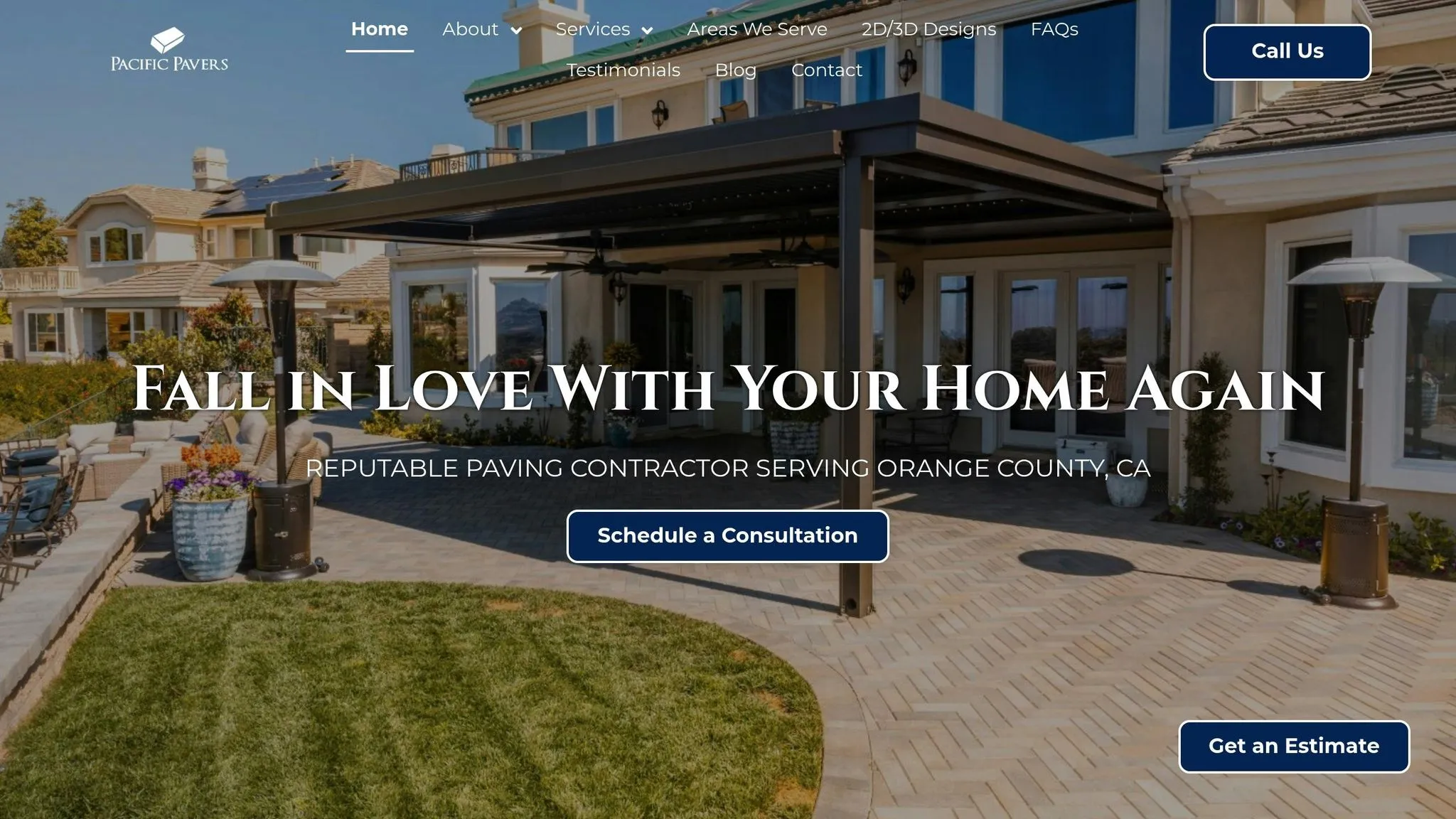
Transform your home’s curb appeal with Pacific Pavers, a top-rated hardscape contractor in Orange County with an impressive 4.9/5 rating from 127 reviews. Their expertise in custom paver installations ensures your entryway design comes to life with exceptional craftsmanship and lasting quality. Let’s take a closer look at how their expert approach elevates every project.
Tailored Material Selection and Design Expertise
Pacific Pavers helps homeowners choose materials that perfectly balance durability, local climate considerations, and personal style. Whether you prefer the classic charm of herringbone patterns, the sleek look of large-format slabs, or the sophistication of natural stone, they guide you toward the best options to match your vision.
The process starts with a personalized consultation to understand your goals. From there, their team designs custom layouts, recommends patterns, and incorporates advanced features like accent borders, built-in LED lighting, and plant gaps. The result? An entryway that’s uniquely yours and built to impress.
A Track Record of Happy Clients
Client stories highlight Pacific Pavers’ dedication to quality and customer satisfaction. In August 2023, Marcela A. collaborated with team member Sam on her outdoor project, which included her entryway. She shared:
"He understood our vision from the get-go, and was a dream to work with. He really listened to us and had great suggestions as well!"
- Marcela A., August 2023
Another client, G S., shared their experience in February 2024, saying:
"Couldn’t be more happier. Pacific paver gave me a dream front yard, back yard and driveway. Everything is A+. I am very picky and I don’t have any complaint."
- G S., February 2024
These testimonials reflect the consistent excellence Pacific Pavers brings to every project.
Precision in Every Step of Installation
Pacific Pavers follows a detailed installation process to ensure long-lasting results. Their approach includes a thorough site assessment, precise grading and base preparation, careful paver placement, and finishing touches like joint sanding and cleanup.
They also specialize in adding advanced features that enhance both aesthetics and functionality. From built-in LED lighting for nighttime appeal to multi-level entryways with custom steps, their designs bring depth and sophistication to your space.
Beyond the Basics
What truly sets Pacific Pavers apart is their ability to handle intricate design elements. They skillfully incorporate mixed materials, curved walkways, and textured surfaces, all while addressing drainage and structural needs. They also coordinate entryway designs with complementary outdoor features such as retaining walls, stone veneers, and landscaping, creating a cohesive and polished look.
Commitment to Quality and Long-Term Value
When you choose Pacific Pavers, you’re investing in more than just great design – you’re investing in quality that lasts. They conduct thorough inspections throughout the installation process, use premium materials, and adhere to industry best practices. Their workmanship warranty offers peace of mind, something DIY projects simply can’t provide.
Professional installation doesn’t just boost immediate curb appeal; it also increases your property’s long-term value. Homes with expertly installed entryways often sell faster and at higher prices, making Pacific Pavers a smart choice for homeowners in Orange County.
Ready to bring your entryway vision to life? Pacific Pavers offers free consultations, during which their team will assess your site, explore design options, review material choices, and provide a detailed project estimate. With Pacific Pavers, you’re not just upgrading your entryway – you’re making a lasting investment in your home’s beauty and value.
Conclusion
A well-designed paver entryway does more than just welcome guests – it leaves a lasting impression and adds measurable value to your property. These installations combine durability with style, creating an inviting space that enhances your home’s overall aesthetic.
The financial upside is hard to ignore. According to real estate experts, homes with standout entrances tend to sell faster and at higher prices. In fact, improving curb appeal can boost property value by 5% to 11%, depending on the market. Paver entryways are also among the top landscaping projects for homeowners aiming to maximize resale value. Beyond the financial perks, they offer practical advantages that improve daily living.
Pavers are a smart long-term choice. Unlike poured concrete, which can crack over time, individual pavers are easy to replace if damaged. Their slip-resistant surfaces provide added safety in all seasons, and their design options – ranging from timeless herringbone patterns to sleek, modern layouts – allow you to tailor the look to suit your home’s architecture.
When selecting materials, consider your local climate. In areas with freeze-thaw cycles, concrete or tumbled pavers are a durable choice, while natural stone options like granite or slate work well in milder climates. Matching the pattern and material to your home’s style is equally important. Classic brick or herringbone designs pair beautifully with traditional homes, while modern properties can benefit from large-format slabs or mixed-material combinations.
It’s essential to balance your vision with practical considerations. Think about your budget, maintenance needs, and the weather in your area before making decisions. Professional installation is worth the investment, ensuring precision and durability that DIY efforts often can’t match.
With thoughtful planning and expert craftsmanship, a paver entryway can elevate your home’s curb appeal, functionality, and market value.
FAQs
What are some affordable paver options to boost curb appeal without compromising on quality?
If you want to boost your home’s curb appeal without breaking the bank, consider using concrete or brick pavers. These materials are not only durable but also offer plenty of design flexibility, with various patterns and finishes to match your style.
To achieve a tailored and high-quality look, professional installation makes all the difference. Pacific Pavers excels at crafting beautiful entryways with custom paver designs, ensuring your home’s exterior feels both polished and inviting.
How can I choose a paver design that matches my home’s style and handles the local climate?
When choosing the ideal paver design, think about how it aligns with your home’s architectural style and how it will hold up in your local climate. Pick materials and patterns that not only enhance your home’s exterior but also stand up to the weather in your region. Pacific Pavers offers custom paver solutions designed to boost curb appeal while providing the durability needed to handle the elements, making your entryway both attractive and built to last.
How can I maintain my paver entryway to keep it looking great and lasting longer?
Keeping your paver entryway looking its best takes a bit of regular care. Start by sweeping away dirt and debris to avoid buildup that can dull the surface. For tougher cleaning jobs, mix some mild detergent with water to tackle stains or grime. Just steer clear of harsh chemicals – they can harm the pavers’ finish.
To protect your pavers from fading or weather damage, apply a sealant every few years. This is especially important for areas that see a lot of foot traffic or are constantly exposed to the elements. Don’t forget to check for weeds or plants growing between the pavers. Removing them quickly helps prevent shifting or cracks.
If you’re aiming for a polished, professional look or need repairs, reaching out to experts like Pacific Pavers can be a smart move. They specialize in creating durable, eye-catching paver designs that enhance any outdoor space.