

Synthetic grass around HOA pools is becoming a popular choice for communities looking to save money, improve safety, and maintain a polished look. Here’s why it stands out:
- Low Maintenance: Reduces water usage by up to 70%, eliminates mowing, and can save HOAs over $10,000 annually in water and landscaping costs.
- Safety: Slip-resistant and avoids muddy patches, making poolside areas safer for residents.
- Durability: Lasts 15-20 years, resists damage from pool chemicals, and stays green year-round.
- HOA Compliance: Easier approval processes with clear guidelines for pile height, face weight, and material standards.
Professional installation ensures proper drainage, seamless edges, and adherence to HOA rules, preventing costly mistakes. Companies like Pacific Pavers specialize in HOA projects, offering tailored solutions for pool areas that prioritize safety and long-term performance. If you’re considering synthetic grass for your HOA pool, this guide covers everything from benefits to compliance and installation tips.
How to Install Artificial Grass DIY | Turf for Pool Cabana and Low maintenance
Main Benefits of Synthetic Grass Near HOA Pools
Property managers and HOA boards are increasingly recognizing that synthetic grass offers advantages that extend far beyond its appealing appearance. These benefits align perfectly with HOA priorities like safety, aesthetics, and cost management.
Low Maintenance and Cost Savings
Switching to synthetic grass can significantly cut maintenance expenses for HOAs. Say goodbye to irrigation systems, lawn mowers, and landscaping crews.
HOAs can lower water usage by up to 70% and save over $10,000 annually in combined water and maintenance costs. Over time, these savings add up, making synthetic turf a wise financial decision for community spaces.
In states like California, local water districts sweeten the deal by offering rebates for synthetic turf installations, providing upfront cost relief. Beyond just saving money, synthetic grass also boosts poolside safety.
Slip Resistance and Safety Features
Natural grass around pools often turns muddy and slippery, creating a safety hazard. Synthetic grass offers a slip-resistant surface, reducing the risk of falls and injuries around pool areas.
Unlike natural grass, synthetic turf doesn’t form muddy patches or puddles, ensuring consistent traction even when wet. This makes it safer for everyone moving between the pool and its surroundings.
Compared to hard surfaces like concrete, synthetic grass is softer and less abrasive. This added cushioning not only enhances safety but also reduces liability concerns for HOA boards.
Additionally, the built-in drainage system prevents standing water, which can otherwise harbor bacteria or create slippery conditions. The surface dries quickly, staying safe and ready for use much faster than natural grass.
Long-Term Durability and Visual Appeal
Synthetic grass doesn’t just save money and improve safety – it also keeps its good looks for years. With proper maintenance, synthetic grass can last 15-20 years, making it a cost-effective long-term solution for HOAs.
Thanks to UV-resistant fibers, synthetic turf maintains its vibrant green color no matter the weather. It stays lush and green year-round, avoiding the brown patches and thinning that plague natural grass.
| Durability Factor | Natural Grass | Synthetic Grass |
|---|---|---|
| Lifespan | Requires replanting every 2-5 years | 15-20 years with proper maintenance |
| Weather Resistance | Struggles with drought, heat, cold | UV-resistant, all-weather performance |
| Chemical Tolerance | Damaged by chlorine splash | Resistant to pool chemicals |
A Watersavers Turf study revealed that a Southern California HOA saved over $10,000 annually in water and maintenance costs after installing synthetic grass.
For HOAs, selecting turf with a pile height of 1.75–2 inches and a face weight of 65 oz per square yard ensures it meets both aesthetic and performance expectations. Its longevity and minimal maintenance make synthetic turf an increasingly popular choice for communities that value both style and smart spending.
HOA Compliance Requirements for Synthetic Grass
Installing synthetic grass around HOA pools isn’t as simple as laying down turf – it requires careful attention to community regulations and approval processes. Below, we’ll dive into the rules and documentation typically required by HOAs for synthetic grass installations.
Understanding HOA Rules
HOAs often have detailed standards for synthetic grass that go beyond just getting approval. For instance, many require the turf to have a 2-inch pile height and a face weight of about 65 oz. per square yard. Other common guidelines include using specific turf types, adhering to approved color schemes that align with the neighborhood, and choosing acceptable infill materials. Additionally, the turf must usually be non-toxic and environmentally safe, especially in pool areas where children are likely to play.
Fire resistance and UV protection are also frequently mandated. In states like California, where drought is a major concern, water conservation laws (such as Civil Code §4735 and AB 349) prevent HOAs from banning synthetic turf outright. However, homeowners are still required to get HOA approval for particular installations.
Approval Process and Documentation
To get the green light from your HOA, you’ll need to submit a detailed proposal. Start by reviewing your HOA’s CC&Rs (Covenants, Conditions, & Restrictions) to ensure your plans align with their requirements. Your submission should include:
- Design plans: Layouts and details of the installation area.
- Product specs: Information on the pile height, face weight, and materials.
- Contractor credentials: Proof that the installer is qualified.
- Drainage and base preparation plans: These are especially important for poolside installations to prevent water issues.
Including warranties or certifications that highlight safety and environmental compliance can also make the process smoother. Showing your commitment to meeting HOA standards may help expedite approval. Interestingly, the approval process for synthetic grass tends to be less complicated than for other exterior projects, like roofing or painting.
"We offer comprehensive HOA renovation services that enhance community aesthetics while adhering to regulations. From entryway updates to pool deck renovations, we provide quality work that residents can take pride in. Our team collaborates with HOA boards to ensure every project meets community standards." – Pacific Pavers
Next, we’ll explore the installation standards that ensure compliance and long-lasting results.
Installation Standards
For HOAs, proper installation is critical. This means ensuring professional-grade work that includes solid base preparation, efficient drainage, and secure seams. Typical installation standards involve:
- Using a compacted gravel sub-base to provide stability.
- Ensuring the area is level to prevent tripping hazards or water pooling.
- Managing water runoff and addressing heat buildup, especially in poolside settings.
Working with experienced contractors who know HOA regulations can help you avoid costly mistakes, like denied requests, fines, or even mandatory removal. A high-quality installation not only meets HOA requirements but also enhances the overall look and functionality of the community. By focusing on premium materials and skilled labor, you can ensure your synthetic grass installation will stand the test of time.
sbb-itb-11ea599
Synthetic Grass Installation Around Pools
Installing synthetic grass near pool areas demands careful planning to ensure safety, durability, and compliance with HOA regulations. A professional approach guarantees that the installation not only looks great but also stands the test of time. Here’s a closer look at the process and key considerations.
Step-by-Step Installation Process
The installation process starts with site assessment and preparation. This involves clearing the area of existing grass, debris, and organic material. Skipping this step can lead to uneven surfaces as organic matter decomposes over time.
Next, the grading and compacting of the sub-base is carried out. Proper leveling and grading are essential to direct water away from the pool, reducing the risk of mold or surface instability. A compacted gravel sub-base is typically used to provide a stable foundation and prevent sagging or wrinkles in the turf.
After that, a weed barrier is installed to block unwanted vegetation from growing through the synthetic grass. This layer helps preserve the integrity of the installation over the long term.
The process continues with measuring, cutting, and laying the turf. Precision is key here, especially when working around pool curves and features. The turf must be cut and fitted carefully to ensure a seamless look.
Once the turf is in place, it’s secured using landscape nails or staples, and sections are joined with specialized seaming techniques. Proper seaming is critical to avoid tripping hazards and maintain a polished appearance.
Finally, infill material – like silica sand or rubber granules – is applied. This step helps keep the turf fibers upright, adds cushioning, and enhances slip resistance, which is particularly important for poolside safety.
Professional Installation vs. DIY
While tackling the installation yourself might seem like a budget-friendly option, professional installation offers distinct advantages, particularly for pool areas governed by HOA rules. Contractors like Pacific Pavers bring expertise, ensuring the job is done right the first time.
Advantages of Professional Installation
Professionals have access to commercial-grade tools and materials. They also understand the unique challenges of poolside installations, such as handling heat buildup (synthetic turf can reach up to 200°F under direct sunlight) and ensuring slip resistance on wet surfaces. Additionally, professional services typically include warranties for materials and labor, offering peace of mind.
Risks of DIY Installation
DIY projects often fall short when it comes to precision and long-term durability. Common issues include poor drainage preparation, uneven seams around curved edges, and non-compliance with HOA requirements. These mistakes can lead to costly fixes, void warranties, and even require a full reinstallation.
| Aspect | Professional Installation | DIY Installation |
|---|---|---|
| HOA Compliance | Guaranteed adherence to standards | Risk of fines for non-compliance |
| Warranty Coverage | Includes materials and labor | Limited or no warranty protection |
| Drainage Expertise | Professional-grade solutions | Results vary based on skill level |
| Installation Time | Quick and efficient | Time-intensive and prone to delays |
| Long-term Durability | Expert preparation ensures longevity | Dependent on installer’s experience |
Post-Installation Maintenance Tips
Once installed, synthetic grass around pools requires minimal upkeep to maintain its look and functionality.
- Remove debris regularly using a leaf blower or broom to prevent organic matter from accumulating, which could lead to odors or drainage problems.
- Rinse the turf periodically to wash away chlorine, dust, and other residues. A simple rinse with clean water helps preserve its appearance and texture.
- Brush the turf fibers occasionally to keep them upright, especially in high-traffic areas. This prevents matting and keeps the grass looking natural.
- Check infill levels over time, particularly in areas that see heavy foot traffic. Adding infill as needed maintains cushioning and drainage.
- Inspect seams and edges regularly for any signs of lifting or separation. Prompt repairs will prevent safety hazards and maintain the turf’s integrity.
HOA Pool Area Services with Pacific Pavers
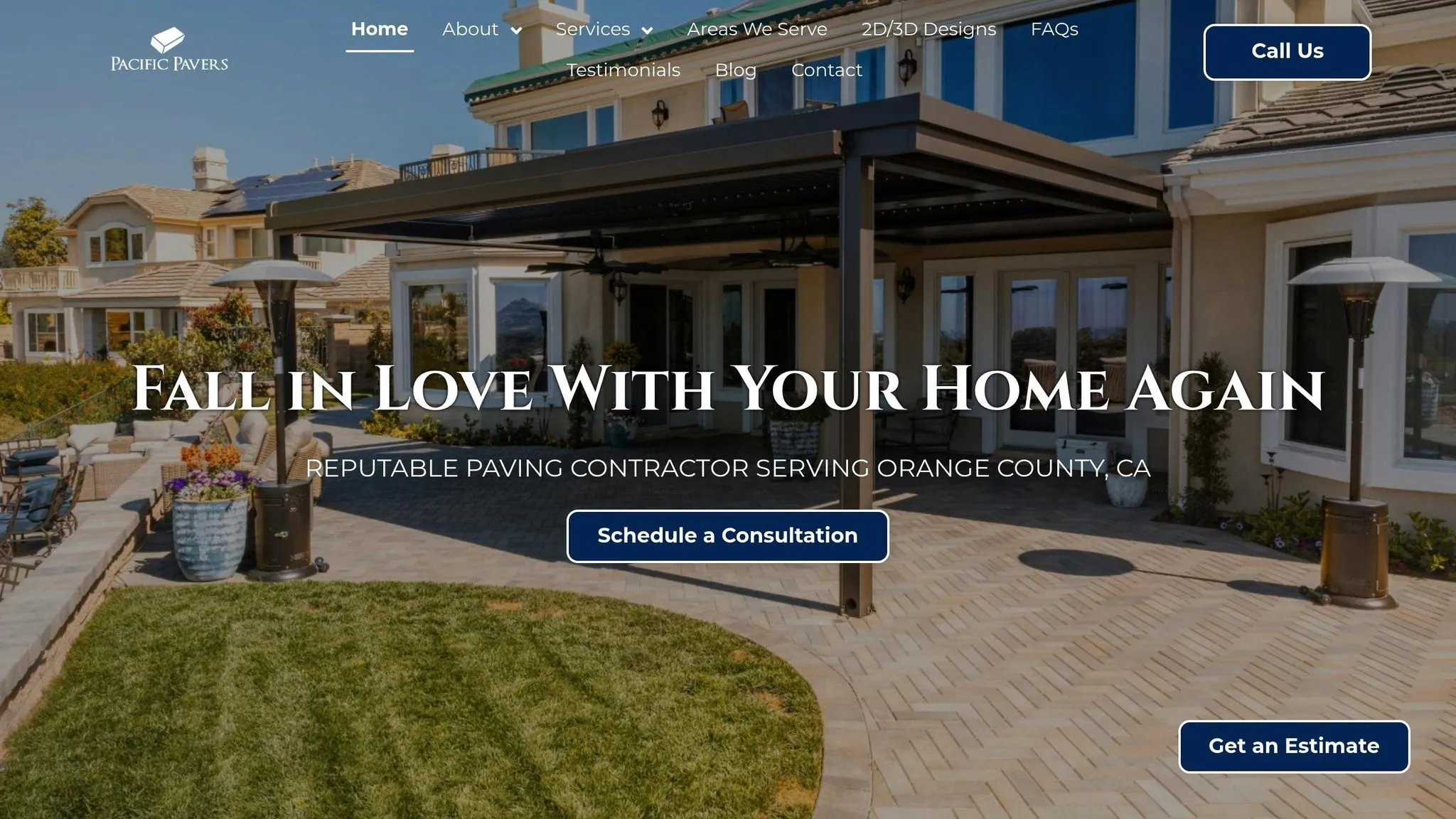
Pacific Pavers provides a wide range of synthetic grass and hardscape solutions designed specifically for HOA pool areas, all while adhering to HOA regulations and standards. Their expertise lies in addressing the unique challenges faced by HOA communities when upgrading pool areas, ensuring projects meet both aesthetic and compliance requirements.
Specialized Services for HOA Communities
Pacific Pavers tailors its services to meet the specific needs of HOA pool areas. In addition to synthetic grass installation, they offer custom paver pool decks, retaining walls, and drainage systems that prioritize safety, durability, and a cohesive look. These solutions are carefully crafted to align with HOA standards.
To simplify the process, Pacific Pavers works directly with HOA boards, reviewing CC&Rs and local regulations to ensure smooth project approvals. This proactive approach helps avoid delays and prevents compliance issues.
"We offer comprehensive HOA renovation services that enhance community aesthetics while adhering to regulations. From entryway updates to pool deck renovations, we provide quality work that residents can take pride in. Our team collaborates with HOA boards to ensure every project meets community standards."
- Pacific Pavers
Safety is a key focus. Pacific Pavers uses high-quality synthetic grass that is non-toxic, fire-resistant, and equipped with proper drainage. They also incorporate slip-resistant materials and ensure ADA accessibility compliance where required.
For instance, in May 2024, Pacific Pavers showcased their expertise by upgrading paver driveways, leveling pool deck pavers, and installing secure, grounded railings while replacing tiles as needed. This commitment to precision and quality highlights their ability to handle complex projects.
To further simplify the process, Pacific Pavers offers integrated renovation packages that bring together multiple services for a seamless transformation.
Complete Renovation Packages
Rather than tackling pool area upgrades piece by piece, Pacific Pavers provides complete renovation packages that combine services like pool remodeling, synthetic grass installation, custom paver decks, and patio covers. This all-in-one approach ensures a cohesive design that enhances both functionality and visual appeal.
By bundling services, Pacific Pavers streamlines project management for HOAs, reducing the need for multiple contractors. This method not only saves time but also ensures a unified look across the entire space.
In August 2023, Pacific Pavers completed a large-scale outdoor project for Marcela A., which included irrigation and planting. The project was finished ahead of schedule and stayed within budget, showcasing their efficiency and ability to manage complex, multi-faceted projects.
"Pacific Pavers is more than just a paving expert; we offer a variety of masonry services. These include concrete design and installation, veneer stone application, and retaining wall construction. We also create outdoor kitchens, fire pits, fireplaces, and even provide synthetic grass installations."
- Pacific Pavers
Their renovation packages often include outdoor living features such as fire pits, outdoor kitchens, and covered seating areas, transforming pool areas into complete recreational hubs. This comprehensive approach not only elevates the space but also provides better value compared to hiring multiple contractors for individual projects.
Why Choose Pacific Pavers
Pacific Pavers stands out as a trusted partner for HOA pool area upgrades. With a 4.9-star rating from 127 reviews on Google and Yelp, they are consistently praised for their professionalism, attention to detail, and high-quality work.
Their deep understanding of HOA processes ensures smooth approvals and strict adherence to community standards. They prepare detailed proposals with product specifications, drainage plans, and safety features to streamline the approval process and minimize delays.
"Exceeded our expectations, Sam was very professional, and the crew was amazing! Very pleased with the overall job", shared Alex M. in a recent review.
Pacific Pavers is committed to using premium materials and employing skilled installers who follow industry best practices. This dedication ensures long-lasting results, even in high-traffic pool areas, and helps meet the rigorous requirements of HOA communities.
To further support HOAs, Pacific Pavers provides tailored maintenance guidelines for synthetic grass and hardscape features. They also remain available for repairs and upgrades, ensuring the pool area continues to meet community standards over time.
For HOA communities in Orange County, Pacific Pavers offers a single point of contact for managing complex, multi-service projects. Their streamlined approach simplifies coordination and delivers consistent, high-quality results that enhance property values and improve resident satisfaction.
Conclusion and Main Points
Main Benefits Summary
Synthetic grass brings three standout benefits to HOA pool areas. First, it drastically reduces maintenance by eliminating the need for mowing, watering, and fertilizing, which helps lower water bills and landscaping costs over time. Second, its slip-resistant surface adds an extra layer of safety around wet pool areas by reducing the risk of accidents and preventing mud buildup. Lastly, its long-term durability holds up against heavy foot traffic, pool chemicals, and UV exposure, all while keeping a lush, green appearance year-round.
These advantages make synthetic grass an ideal solution for the unique challenges HOA communities face in managing pool areas. By cutting maintenance costs and improving safety, it offers both practical and aesthetic benefits. However, proper installation is key to ensuring these benefits last.
Importance of Professional Installation
Hiring professionals for installation is essential to achieve quality results and long-term performance in HOA pool areas. Experts address critical aspects like proper drainage, sub-base preparation, and adherence to HOA specifications – areas where DIY efforts often fall short. Without professional expertise, synthetic grass installations may suffer from issues like poor drainage, uneven surfaces, or noncompliance with HOA standards, potentially leading to expensive repairs.
Experienced contractors also navigate local regulations and HOA compliance requirements, simplifying the approval process and avoiding unnecessary delays. They ensure that installations meet community design and safety standards, including the use of non-toxic and fire-resistant materials. This level of expertise is especially valuable as many HOAs have yet to establish clear standards for synthetic grass installation, allowing skilled contractors to set the bar for quality and compliance.
By relying on professionals, HOA communities can maximize the lifespan, appearance, and functionality of their synthetic grass installations while ensuring they meet all necessary standards.
Next Steps with Pacific Pavers
Considering the benefits and the importance of professional installation, partnering with an experienced company like Pacific Pavers is the logical choice. HOA communities in Orange County looking to upgrade their pool areas can turn to Pacific Pavers for comprehensive consultations and renovation services. With a stellar 4.9-star rating from 127 reviews on Google and Yelp, Pacific Pavers has a proven track record of delivering exceptional results for HOA projects.
Their consultation process includes site evaluations, design discussions, compliance guidance, and detailed proposals tailored to HOA requirements. With extensive experience in HOA renovations, Pacific Pavers ensures smooth approval processes and adherence to community standards. Their services go beyond synthetic grass installations, offering options like pool remodeling, custom paver decks, and patio covers for complete pool area transformations.
HOA boards can count on Pacific Pavers for expert management, premium materials, and top-notch installation. Their commitment to quality and compliance makes them an ideal partner for communities seeking durable, attractive, and functional upgrades to their pool areas. Reach out to Pacific Pavers today to take the first step toward enhancing your HOA pool area.
FAQs
What HOA rules should you consider when installing synthetic grass near pool areas?
When it comes to installing synthetic grass around your pool, the rules set by your HOA can differ based on your community’s specific guidelines. Typically, these rules focus on a few key areas: ensuring the materials meet safety standards, making sure drainage systems are effective to avoid water pooling, and following any aesthetic guidelines the HOA has in place.
To make the process smoother, consider hiring professionals who specialize in HOA-compliant renovations. They can help ensure your synthetic grass installation not only meets all the required standards but also improves the overall appearance and usability of your pool area.
How can synthetic grass help HOAs save water and reduce maintenance costs around pools?
Synthetic grass is a great option for HOA pool areas because it uses far less water than natural grass, which can help reduce utility bills. Since it doesn’t need irrigation, mowing, or fertilizing, it also saves time and money on maintenance.
Another big plus? Synthetic grass is built to handle heavy foot traffic, making it a durable choice for busy poolside spaces. Its combination of minimal upkeep and water-saving advantages makes it a practical choice for HOAs aiming to upgrade outdoor areas while keeping both the environment and budget in mind.
What are the risks of installing synthetic grass yourself, and why should you hire a professional?
DIY synthetic grass installation might look like a way to save money upfront, but it can lead to some serious headaches down the line. Without the right skills or tools, you risk ending up with uneven surfaces, drainage problems, or even premature wear and tear. These issues not only ruin the look and functionality of your lawn but can also rack up repair costs later. Plus, getting that smooth, professional finish requires equipment and know-how that most homeowners simply don’t have.
Bringing in a professional can save you the trouble – and the potential extra expenses. Experts handle everything from preparing the site and leveling the ground to cutting the grass precisely for a perfect fit. They’re also familiar with HOA rules, especially for tricky spots like pool areas, ensuring everything is compliant. The result? A polished, durable lawn that looks great and lasts for years.