
Without proper drainage, water pooling on hard surfaces like patios, driveways, and pool decks can cause structural damage, slippery conditions, and even foundation issues. Hardscape drainage systems are designed to prevent these problems by controlling water flow using slopes, drains, and underground piping. Here’s what you need to know:
- How They Work: These systems collect surface water, channel it through pipes or trenches, and discharge it safely away from structures.
- Common Problems: Poor drainage can lead to uneven surfaces, erosion, algae growth, and even cracked foundations.
- Southern California Challenges: The region’s dry summers and heavy rains make proper drainage critical, especially on sloped properties.
- Design Basics: Grading, soil type, and local regulations play a big role in creating effective drainage systems.
- Types of Systems: Surface drains, subsurface options like French drains, and permeable hardscapes are common solutions.
- Installation Tips: Proper grading, compacted bases, and correctly sloped pipes are essential for long-term performance.
- Maintenance: Regular cleaning of drains and inspections before rainy seasons can prevent costly repairs.
Effective drainage ensures water doesn’t damage your outdoor spaces or nearby structures. Whether you’re installing a new patio or addressing existing issues, working with experienced professionals ensures the system functions properly and complies with local regulations.
Drainage in Hardscaping!
Design Principles for Hardscape Drainage
When it comes to drainage design, the key lies in planning systems that effectively collect, channel, and release water using gravity. These three functions form the backbone of any drainage setup. Without careful planning, even the most expensive drains and pipes can fail to protect outdoor spaces.
Site Grading and Water Flow
A successful drainage system starts with understanding how water naturally moves across your property. This requires a detailed site survey to map out elevations and existing slopes. Using precise leveling tools and running a hose over the area can help you visualize water flow and identify potential problem spots before construction begins.
To ensure proper drainage, surfaces must be graded with continuous downward slopes that direct water away from buildings and hardscape features. For example, driveways can be designed with a single slope to one side or crowned in the middle so water sheds to both sides. Flat areas and depressions should be avoided, as they tend to trap water and cause long-term issues. In Southern California’s hillside neighborhoods, contractors like Pacific Pavers often incorporate retaining walls and raised patios into grading plans. This approach not only manages water effectively but also maintains clean, modern design lines. Once slopes are established, understanding the soil type becomes crucial to ensuring water is conveyed properly.
How Soil Types Affect Drainage
Soil composition plays a major role in how water is managed. Clay soils, for instance, drain slowly and tend to hold water, leading to pooling and saturation. In such cases, surface drainage solutions like swales, channel drains, and area drains – combined with subsurface pipes – are often necessary to move water away efficiently. On the other hand, sandy soils allow water to infiltrate quickly, making them ideal for systems like French drains, infiltration trenches, and permeable pavers. Loam soils strike a balance, working well with most standard residential drainage setups.
To better understand your soil’s drainage capacity, perform a simple percolation test. Fill a small hole with water and measure how long it takes to drain. Additionally, observe how your yard reacts to rainfall – if puddles linger around foundations or hardscape areas, more robust drainage measures might be required.
Property and Regulatory Requirements
Local regulations also play a significant role in drainage design. Many areas in the U.S. prohibit directing runoff onto neighboring properties, requiring instead that excess water be discharged to public streets, storm drains, or approved on-site facilities. Projects that involve grading changes or increase impervious surfaces often require permits.
In Southern California, drainage design manuals provide detailed guidelines on pipe slopes, hydraulic capacities, and stormwater quality measures. Hillside properties come with additional rules, such as restrictions on directing water onto natural slopes and requirements for erosion control behind retaining walls. Partnering with experienced contractors like Pacific Pavers can help ensure compliance with these regulations and secure any necessary permits before installation begins. These steps set the stage for the precise installation techniques covered in the next section.
Types of Hardscape Drainage Systems
Protecting outdoor spaces from water damage requires a mix of surface, subsurface, and permeable drainage systems. Each type addresses water management differently, tackling issues like runoff, groundwater, and pooling. The most effective designs combine these methods to handle both visible water flow and hidden groundwater challenges.
Surface Drainage Solutions
Surface drainage systems are the first line of defense, dealing with water as soon as it hits hardscape surfaces. These systems are designed to move water off patios, driveways, and walkways quickly, preventing pooling and slippery conditions. The key to effective surface drainage is proper grading – sloping surfaces away from structures, typically at a 1–2% incline, so gravity directs water to designated discharge points.
Swales, or shallow channels, guide runoff to safe outlets, while channel drains (also called trench or linear drains) are embedded in hardscape surfaces like driveways or pool decks to handle high volumes of water. Additionally, area drains with grates are placed in low-lying spots to collect standing water and connect to underground pipes, ensuring water is moved away efficiently. Together, these components keep water from pooling near foundations or creating hazards.
Subsurface Drainage Systems
Subsurface systems are designed to manage groundwater, redirecting it before it becomes a problem. A French drain is a common solution, consisting of a perforated pipe placed in a gravel-filled trench, often wrapped in geotextile fabric. This setup collects groundwater and channels it to a safe discharge point. French drains are particularly useful in areas with clay-heavy or poorly draining soils, around foundations vulnerable to hydrostatic pressure, and on slopes prone to water seepage.
These systems work in a hierarchy: laterals collect water from the soil, feeding it into submains, which then connect to mains that discharge water at approved outlets like storm drains or curbside points. To function effectively, gravity-based pipes need a minimum slope of about 1% (or 1/8 inch per foot). In areas like Southern California, contractors such as Pacific Pavers often install French drains behind retaining walls, along uphill patio edges, or under persistently wet spots to protect the hardscape from water damage.
Permeable Hardscape Options
Permeable hardscapes are a functional and visually appealing way to handle drainage. These surfaces allow water to filter through into a stone base rather than running off. Options like permeable interlocking pavers or open-joint systems are popular choices. Water seeps through the joints or gaps, filling a layer of open-graded aggregate below. From there, it either soaks into the ground or exits through an underdrain – a perforated pipe at the base of the stone layer.
These systems are excellent at reducing surface pooling and easing the load on storm drains, all while maintaining the durability needed for vehicles and foot traffic. They’re particularly effective in areas where regulations encourage on-site water infiltration or where aesthetics and functionality are equally important. Pacific Pavers frequently incorporates permeable pavers into driveways and patios, offering Southern California homeowners a sleek, modern look while enhancing drainage. In regions with clay-heavy soils, adding an underdrain ensures water drains completely within 24–48 hours after heavy rainfall, avoiding prolonged saturation issues.
sbb-itb-11ea599
Installation Techniques for Hardscape Drainage
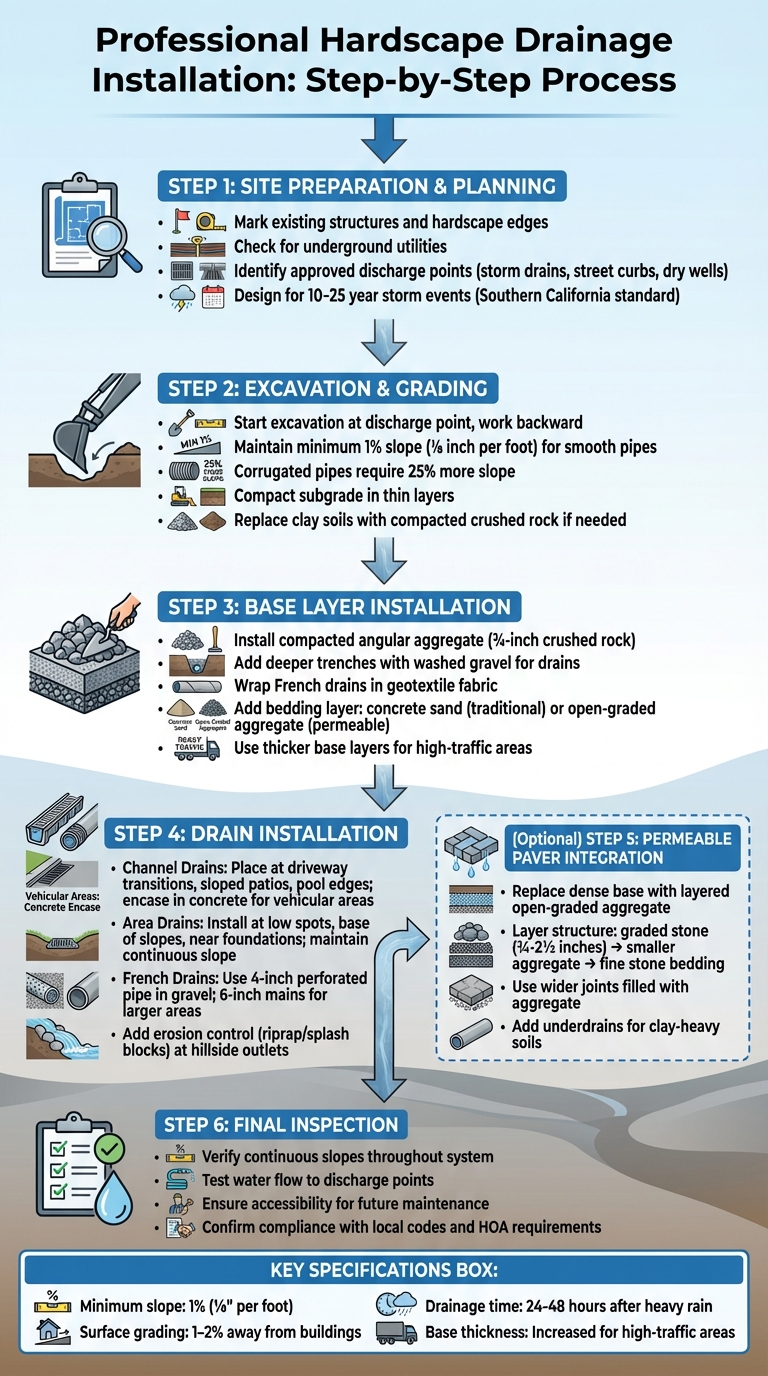
Step-by-Step Hardscape Drainage Installation Process
Getting drainage right during installation is crucial for long-term performance. Mistakes in slopes, materials, or connections can lead to costly fixes down the road. Whether you’re working with surface drains, French drains, or permeable pavers, the basics are the same: start with a strong foundation, maintain consistent slopes, and ensure water flows to a proper discharge point.
Preparing the Site and Base
Start by marking existing structures, hardscape edges, and planned drain locations to guide water away from buildings. Check for underground utilities and mark them according to local regulations. Identify approved discharge points, such as storm drains, street curbs, or dry wells, and confirm they meet local codes and HOA requirements. For example, in Southern California, drainage systems are often designed to handle intense rainstorms, including events that occur once every 10 or 25 years.
Excavation begins at the discharge point and works backward, shaping the subgrade to maintain a steady slope. Smooth interior pipes like PVC or HDPE need at least a 1% slope (⅛ inch per foot), while corrugated pipes require about 25% more slope due to higher internal friction. Compact the subgrade in thin layers to avoid settlement or reverse slopes. In areas with expansive clay soils, contractors often replace the soil with compacted crushed rock to create a stable, free-draining base.
The base layer typically consists of compacted, angular aggregate (like ¾-inch crushed rock) laid over the graded subgrade. This layer provides both support and water movement. For drains running beneath or alongside paving, deeper trenches filled with washed gravel can improve flow and reduce settlement risks. When using French drains, wrapping the gravel in geotextile fabric prevents fine particles from clogging the system. For paver installations, a bedding layer of concrete sand (for traditional pavers) or washed, open-graded aggregate (for permeable pavers) is added on top of the base. Careful screeding and compaction ensure proper drainage slopes. In high-traffic areas, contractors often use thicker base layers to minimize movement and protect both the hardscape and the drainage system.
Installing Drains
Channel drains work best in areas where water naturally collects, such as driveway-to-garage transitions, sloped patios, or along pool deck edges. These drains should be placed on a compacted base and encased in concrete in vehicular areas for added stability. Make sure the connection between the channel and the drainpipe maintains the proper slope using adhesives or fasteners.
Area drains, like catch basins with grates, are ideal for localized low spots such as the base of slopes, planters near walls, or recessed courtyards. Install these starting at the discharge point, setting them on a firm base at a depth that ensures pipes maintain a continuous slope toward the outlet. French drains, designed to intercept subsurface water or address soggy areas, are typically placed along slopes, behind retaining walls, or near foundations. These systems often use a 4-inch perforated pipe surrounded by washed gravel and wrapped in geotextile fabric to prevent silt buildup. For larger runoff areas, designers may use 6-inch mains with multiple inlets to prevent overloading. On sloped lots, outlets discharging on hillsides should include erosion control measures like rock riprap or splash blocks to slow water flow and stabilize the ground. Contractors also handle permits and HOA coordination to address concerns about visible outlets or grading changes. Lastly, make sure outlets remain accessible for future maintenance. Pairing these drainage systems with permeable pavers can further improve water management and durability.
Combining Permeable Pavers with Drainage
Permeable paver systems replace traditional dense bases and sand with a layered, open-graded aggregate structure that stores and moves water. A typical setup includes a thick layer of graded stone (¾ to 2½ inches) over a compacted subgrade, followed by a smaller aggregate layer and topped with a fine stone bedding layer instead of concrete sand. The pavers themselves have wider joints filled with aggregate, allowing water to seep into the base rather than running off the surface. When installed according to manufacturer guidelines, these systems can handle vehicle loads while managing water effectively.
In areas with clay-heavy or slow-draining soils, increasing the base thickness or adding underdrains (pipes placed near the bottom of the aggregate layer) can help manage heavy rain without prolonged saturation. This hybrid approach, which combines surface infiltration with subsurface drainage, ensures the system works even during intense storms. Contractors like Pacific Pavers often incorporate permeable pavers into driveways and patios, offering homeowners a sleek, modern look while enhancing water management through careful base construction and underdrain integration.
Maintenance and Long-Term Care
Keeping your drainage and hardscape systems in good shape requires regular maintenance to clear debris and sediment. Neglecting this can lead to clogged drainage, erosion, or even damage to the foundation of your hardscape. For areas like Southern California, where winter storms can be particularly harsh, a consistent maintenance routine can save you from costly repairs down the line. Regular inspections are essential to ensure these systems remain efficient.
Regular Inspections and Cleaning
Plan to inspect your property twice a year – once before the rainy season and again after winter. Look for debris buildup in drains, grates, and paver joints. After heavy storms, check for signs like ponding water, erosion channels forming, or water backing up at inlets. These could indicate developing clogs or shifts in your system.
When cleaning, remove grates (and note their original position for reinstallation), clear out visible debris by hand or with tools, and flush out the lines using a garden hose. Open catch basins to remove sediment buildup, and clean permeable paver joints with a vacuum or air blower before refilling them with fresh aggregate. For example, a project completed in May 2024 showed how professional cleaning, re-leveling, and sealing can rejuvenate an older paver driveway, patio, and pool deck.
Repairs and System Upgrades
If issues arise, here are some common repair tasks: clearing clogged pipes with a snake or hydro-jet, re-leveling pavers with fresh bedding material, or replacing damaged grates. Be on the lookout for persistent standing water (lasting more than 24–48 hours), water backing up during moderate rains, or unusual staining and moss growth on pavers. Addressing these problems early can prevent more serious structural damage.
For ongoing problems like frequent clogs or standing water, consider upgrading your system. Options include adding surface inlets, installing continuous channel drains, or retrofitting with permeable pavers. A qualified contractor can evaluate whether a partial retrofit or a full replacement would provide better long-term results. For example, companies like Pacific Pavers in Orange County specialize in drainage and hardscape solutions and can offer expert advice tailored to your needs.
Preventing Future Damage
To minimize future issues, maintain a consistent slope of 1–2% away from buildings. Protect discharge points by using riprap, splash blocks, or vegetation to control erosion. Ensure planting beds near hardscapes remain stable to prevent soil from washing into the drainage system, and periodically clear swales and other drainage paths.
In Southern California, scheduling an annual professional inspection before winter storms can help ensure your system complies with HOA and local regulations. For seamless integration of drainage maintenance into your outdoor renovation plans, reach out to experts like Pacific Pavers for guidance.
Conclusion: Professional Drainage Solutions for Your Outdoor Space
A properly designed drainage system is key to maintaining a durable and functional outdoor space. By directing water away from foundations, patios, pool decks, and retaining walls, you can avoid issues like cracking, settling, and expensive structural repairs that could compromise your investment. In Southern California, where sudden, heavy storms can overwhelm inadequate drainage, having a professionally designed system ensures your property can handle intense rainfall effectively. The success of such a system, however, depends heavily on expert installation and careful integration.
Experienced contractors bring essential knowledge of grading, soil conditions, and local regulations – areas where DIY approaches often fall short. They also ensure that drainage systems blend seamlessly with your outdoor features, whether you’re adding a paver patio, pool deck, outdoor kitchen, or retaining wall. The result is a system that not only works efficiently but also complements the aesthetics of your space.
Pacific Pavers, based in Orange County, offers a full range of outdoor solutions that incorporate drainage into paver installations, pool renovations, retaining walls, and other outdoor projects. Their team uses top-quality materials, adheres to industry standards, and performs detailed inspections to deliver long-lasting results. With proper drainage integrated into your outdoor design from the beginning, you’ll enjoy a cohesive system that protects your property, enhances functionality, and keeps your outdoor space looking great for years to come.
FAQs
What are the key signs that your hardscape drainage system isn’t working properly?
If your hardscape drainage system isn’t doing its job, you’ll likely spot some telltale signs. Look out for standing water on surfaces, erosion along edges, or shifting and uneven pavers caused by water accumulation. You might also notice water pooling in certain spots, damage to plants or landscaping nearby, and visible issues with water runoff. Tackling these problems early can save your outdoor space from more extensive damage down the line.
How does soil type influence the choice of a hardscape drainage system?
When it comes to choosing the right drainage system for your hardscape, the type of soil you’re working with makes all the difference. Sandy or gravelly soils, known for their quick drainage, usually only need basic solutions since they naturally prevent water from collecting. On the other hand, clay soils, which are dense and hold onto water, call for more advanced systems like French drains or gravel beds to keep water from pooling and to protect your hardscape from potential damage.
Knowing how well your soil handles water is key to maintaining the durability and functionality of your outdoor space over time.
How do you maintain a hardscape drainage system to keep it working properly?
To ensure your hardscape drainage system works as it should, regular upkeep is a must. Start by removing debris such as leaves, dirt, and anything else that might cause clogs. Pay special attention to catch basins, grates, and filters – clean these thoroughly so water can flow without obstruction. Look for cracks or other damage in the drainage components, and address any issues right away to prevent bigger problems down the line.
It’s also important to check that the slope and grading are still directing water away from your property as designed. Keep cleanout points clear and easy to access. Staying on top of maintenance not only prolongs the system’s lifespan but also helps you avoid expensive water damage repairs.
Related Blog Posts
- Retaining Walls with Built-In Drainage Systems
- Top Drainage Solutions for Synthetic Sports Fields
- Why Proper Drainage Matters for Outdoor Living Spaces
- How To Design Patios With Proper Drainage

Jeff Tobin is the founder of Pacific Pavers, an award-winning outdoor living company serving Orange County, California. With a 30-person team of ICPI-certified professionals, Jeff specializes in transforming residential and HOA properties through custom paver installations, pool remodeling, and complete outdoor living spaces. His company philosophy—”Flawless craftsmanship. Clear communication. Zero stress.”—reflects his commitment to delivering premium results and exceptional customer experiences. As a BBB-accredited business and Belgard Master Craftsman, Pacific Pavers has become known for process-driven operations and elite craftsmanship in the hardscape industry.