
Choosing between permeable pavers and concrete for outdoor spaces? Here’s what you need to know:
- Permeable pavers allow rainwater to seep into the ground, helping reduce runoff, filter pollutants, and recharge groundwater. They also stay cooler and reduce heat buildup, making them better for hot climates like Southern California.
- Concrete slabs, while durable, block water absorption, increase runoff, and contribute to urban heat islands. Their production also releases significant carbon emissions.
Quick Comparison
| Feature | Permeable Pavers | Concrete Slabs |
|---|---|---|
| Water Management | Absorbs rainwater; reduces runoff | Impermeable; increases runoff |
| Pollutant Filtration | Traps contaminants through gravel layers | Pollutants flow into storm drains |
| Heat Retention | Cooler surfaces; reduces heat buildup | Retains heat; contributes to heat islands |
| Carbon Footprint | Lower due to modular design | Higher due to cement production |
| Durability | Flexible and easy to repair | Prone to cracking |
Takeaway: Permeable pavers are a smarter choice for eco-conscious homeowners seeking water management, cooler surfaces, and reduced environmental impact. Concrete slabs, while durable, fall short in these areas.
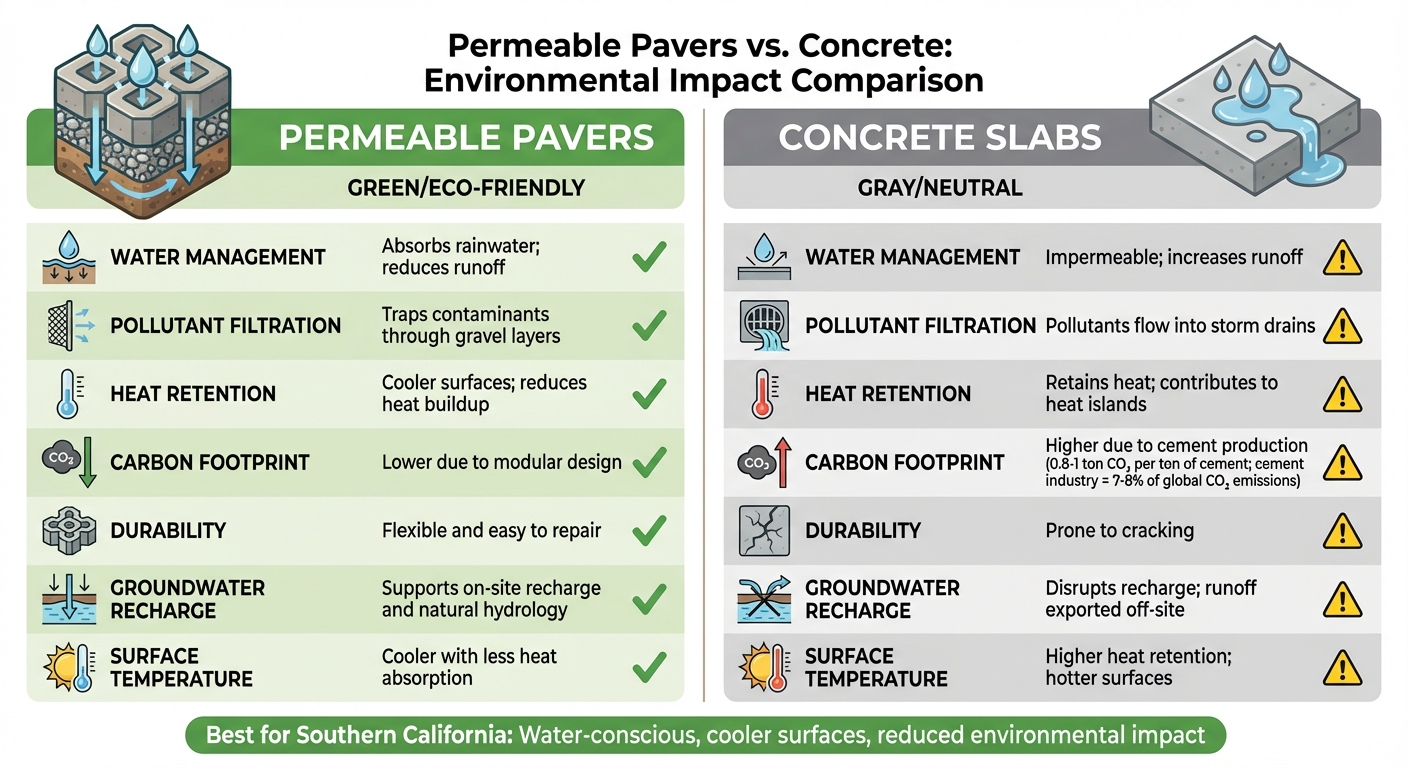
Permeable Pavers vs Concrete Environmental Impact Comparison
Advantages of Using Porous Pavement vs Concrete or Asphalt with Brian Holers of Root Cause Seattle
Environmental Benefits of Permeable Pavers
In water-conscious Orange County, permeable interlocking concrete pavers offer much-needed relief for environmental challenges. They provide practical solutions for stormwater runoff, water quality issues, and heat reduction – problems that traditional hardscaping often makes worse.
Stormwater Management and Reduced Runoff
Permeable pavers excel at managing rainwater by letting it seep through the joints into a specially designed gravel base, instead of rushing into gutters or storm drains. The U.S. EPA highlights permeable pavement as a green infrastructure practice because it helps reduce runoff and keeps water on-site for natural absorption.
Research from the University of California shows that permeable systems can handle stormwater infiltration at rates far exceeding typical U.S. rainfall intensities. For Orange County homeowners, this means driveways or patios with permeable pavers can direct water into a gravel reservoir, allowing it to gradually recharge the soil. This reduces stress on municipal storm systems and helps prevent localized flooding and erosion.
Many residential designs also incorporate grading to direct excess water toward bioswales or rain gardens. These setups let permeable pavers handle everyday storms, while vegetated areas manage more extreme weather events. This approach meets local stormwater regulations without relying on large, unsightly drainage systems. As a bonus, these measures improve water quality, which we’ll explore next.
Pollutant Filtration and Groundwater Recharge
Beyond managing runoff, permeable pavers also improve water quality by filtering pollutants. As water seeps through the joints into the gravel and sand below, it traps suspended solids, hydrocarbons, and heavy metals. Microbial activity in the substrate helps break down these contaminants.
According to the EPA, permeable pavements act as an effective first-stage filter, reducing pollutant loads that would otherwise flow into storm drains and nearby waterways. This not only protects streams but also enhances groundwater quality. By allowing water to soak into the ground rather than being quickly diverted, these systems also help recharge local aquifers and maintain stream baseflows – critical benefits for urban and suburban areas.
Lower Surface Temperatures and Urban Heat Reduction
Permeable pavers stay cooler than solid concrete surfaces. Thanks to airflow through the system, they promote evaporative cooling, which reduces heat buildup. Additionally, the use of lighter-colored, high-albedo pavers and open-graded aggregates reflects more sunlight, keeping surface temperatures lower compared to traditional gray concrete slabs.
This cooler surface temperature can lower surrounding air temperatures and even reduce energy demands for nearby buildings by decreasing cooling loads. Outdoor spaces like patios, pool decks, and walkways also remain more comfortable during hot summer afternoons.
Thoughtful design choices can amplify these cooling effects. Using light-colored or high-albedo pavers enhances solar reflection, while a deep, open-graded stone base improves water infiltration and boosts passive cooling through better air circulation. Pairing permeable pavers with planting beds, shade trees, and drought-tolerant landscaping creates outdoor spaces that not only manage stormwater effectively but also reduce ambient temperatures – a smart and eco-friendly solution for Southern California’s climate.
Environmental Impact of Concrete Slabs
Compared to permeable pavers, traditional concrete slabs come with notable environmental drawbacks. These slabs hinder water absorption, contribute to rapid runoff and localized flooding, and have a considerable carbon footprint due to their production.
Stormwater Runoff and Local Flooding Risks
Traditional concrete slabs prevent rainwater from soaking into the ground, forcing it to flow quickly into gutters and storm drains. This rapid runoff can overwhelm stormwater systems during heavy rains, leading to ponding, clogged drains, and even flooding. The fast-moving water also increases erosion and damages downstream ecosystems.
Additionally, concrete surfaces channel pollutants like oil, pesticides, and debris straight into storm drains, bypassing natural filtration. This contaminates water supplies, harms aquatic ecosystems, and drives up water treatment expenses. In areas dominated by concrete, aquifer recharge is disrupted, often leaving communities to rely on alternative water sources or deeper wells.
But the challenges don’t stop at runoff – concrete production itself is a major environmental concern.
Carbon Emissions from Concrete Production
The manufacturing process for concrete, particularly Portland cement, is a significant source of carbon emissions. For every ton of cement produced, approximately 0.8–1 ton of CO₂ is released into the atmosphere. With the cement industry accounting for about 7%–8% of global CO₂ emissions, large-scale use of concrete contributes heavily to climate change.
Heat Retention and Reduced Comfort
Concrete’s ability to absorb and slowly release heat makes it a contributor to urban heat islands. Large concrete surfaces, such as patios, walkways, and pool decks, can become unbearably hot under the sun, reducing outdoor comfort. This retained heat also affects nearby buildings, increasing cooling demands and energy use.
sbb-itb-11ea599
Permeable Pavers vs. Concrete: Environmental Comparison
When comparing permeable pavers and traditional concrete, their environmental impacts reveal stark differences. These distinctions matter significantly for creating sustainable outdoor spaces in Southern California. Key areas of difference include water management, heat regulation, and carbon emissions, which we’ll break down further.
Stormwater Management and Water Quality
Permeable pavers shine when it comes to managing stormwater. They allow water to seep through the gaps between the pavers, filtering it through gravel and soil layers. This natural process traps pollutants like oils, sediments, metals, and bacteria, improving water quality before it recharges the groundwater. In contrast, traditional concrete is impermeable, forcing water to run off its surface. This runoff carries pollutants straight into storm drains, harming downstream water systems. For Southern California, where efficient stormwater management is critical, permeable pavers offer a clear advantage by supporting groundwater recharge and maintaining natural hydrology.
Heat Regulation and Outdoor Comfort
Concrete slabs are notorious for absorbing and holding onto heat, making them unbearably hot in the summer. This heat retention contributes to urban heat islands and reduces the usability of outdoor spaces like patios and pool decks during peak heat. On the other hand, permeable pavers stay cooler. Their open joints, lighter colors, and air gaps allow for better airflow and even evaporative cooling when the base retains moisture. This cooling effect makes outdoor areas more comfortable for longer periods, a huge plus in Southern California’s warm climate. Additionally, cooler surfaces can slightly lower the cooling demands of nearby buildings.
Carbon Footprint and Long-Term Impact
Concrete’s environmental downside is its high carbon footprint, primarily due to the energy-intensive cement production process, which releases significant amounts of CO₂. Although permeable pavers also use cement, their modular design and reliance on locally sourced materials for the base can reduce transportation emissions and lower their overall carbon impact.
Permeable paver systems also offer added environmental benefits. Unlike concrete, they allow water and air to reach the soil, promoting microbial activity and root growth. This improves soil health and supports natural carbon cycling and sequestration. When paired with features like rain gardens, bioswales, or drought-resistant plants, these systems can further enhance carbon storage and organic matter buildup – benefits that solid concrete slabs simply can’t match.
| Environmental Metric | Permeable Pavers | Traditional Concrete Slabs |
|---|---|---|
| Water Infiltration | High – water passes through joints into the base and soil | Very low – nearly impermeable; water sheds off the surface |
| Stormwater Runoff & Flooding | Significantly reduced; mitigates local flooding | Increased runoff; higher flooding risk |
| Pollutant Filtration | Gravel and soil filter oils, sediments, and bacteria | Pollutants wash directly into storm drains |
| Groundwater Recharge | Supports on-site recharge and natural hydrology | Disrupts recharge; runoff is exported off-site |
| Surface Temperature | Cooler with less heat absorption; more comfortable | Higher heat retention; hotter surfaces |
| Embodied Carbon | Local aggregates and modular design lower lifecycle CO₂ | High due to cement production and energy use |
| Soil Health & Carbon Cycling | Allows water/air exchange; supports microbial activity | Seals soil; limits biological activity and carbon storage |
Designing Eco-Conscious Outdoor Spaces with Permeable Pavers
Combining Permeable Pavers with Low-Water Landscaping
Permeable pavers pair perfectly with drought-resistant plants and synthetic turf to create outdoor areas that conserve water and reduce stormwater runoff. In Orange County, these pavers can be used for driveways, patios, and walkways, while surrounding landscapes feature native plants that need little irrigation. Rainwater seeps through the pavers, nourishing the soil and hydrating plant roots, which cuts down on the need for additional watering. When paired with drip irrigation, which delivers water directly to the roots, evaporation is minimized. For synthetic turf, installing it over a permeable, open-graded aggregate base allows rainwater to penetrate the ground below. Designers often combine pavers and synthetic turf in patterns like grids or bands to create low-maintenance patios, play spaces, or sleek courtyards that encourage water absorption. This thoughtful approach not only conserves water but also supports healthier soils and improved carbon storage.
Maximizing Carbon Sequestration in Outdoor Designs
Permeable paver systems contribute to better soil health by allowing water and oxygen to reach plant roots and soil microbes, which helps store carbon over time. These systems use an open-graded aggregate base without plastic liners, keeping the soil connected to natural rainfall and air circulation. Redirecting roof runoff to these areas boosts soil moisture and enhances the activity of microbes that transform carbon. Placing paver systems near deep-rooted trees, shrubs, and native grasses encourages greater root growth and biomass, increasing carbon capture in both the plants and the soil. Avoiding heavy chemical use, such as excessive herbicides or de-icing salts, helps protect the beneficial microbes that are essential for long-term carbon storage.
Pacific Pavers‘ Experience in Eco-Friendly Hardscapes

Pacific Pavers takes the technical advantages of permeable paver systems and translates them into stunning, sustainable outdoor designs. Their projects in Orange County focus on creating functional, eco-conscious spaces tailored to homeowners’ needs. By integrating custom paver installations, synthetic grass, retaining walls, and drought-tolerant landscaping, Pacific Pavers delivers hardscape solutions that prioritize sustainability. As the company states:
Our design service creates functional, sustainable outdoor spaces by integrating synthetic grass, patios, and distinctive features.
Their retaining walls not only manage sloped terrain but also guide stormwater toward permeable paved areas or planted swales, enhancing water capture on-site. By combining permeable pavers with synthetic turf over well-draining bases and native plant beds, Pacific Pavers helps homeowners conserve water, reduce surface heat, and cultivate healthier soils that store carbon for the long term.
Conclusion
Permeable pavers bring undeniable benefits to Southern California’s environment when compared to traditional concrete slabs. Concrete surfaces block water absorption, increasing stormwater runoff, contributing to local flooding, and sending pollutants straight into storm drains. In contrast, permeable pavers allow rainwater to seep naturally into the ground, helping to recharge aquifers, reduce strain on municipal drainage systems, and filter out contaminants through the soil.
These pavers also help combat the urban heat island effect by absorbing less heat, making outdoor spaces more comfortable during scorching summers. Plus, their production requires less energy and results in a smaller carbon footprint compared to concrete. On top of that, they’re built to last – designed to flex with ground movement and allowing for easy, piece-by-piece repairs when needed.
For homeowners looking to address water scarcity, comply with stormwater regulations, and adapt to rising temperatures, permeable pavers combined with drought-tolerant landscaping provide a practical, sustainable solution. Together, they reduce water use, promote healthier soil, and create outdoor spaces that stay cooler and more enjoyable throughout the year.
FAQs
What are the environmental benefits of permeable pavers for stormwater management?
Permeable pavers are a smart choice for managing water flow in outdoor spaces. These pavers allow water to pass through their surface, which helps reduce stormwater runoff and lowers the chances of flooding. As the water filters through, it naturally replenishes groundwater supplies while trapping pollutants, keeping them from reaching nearby rivers and streams.
By handling stormwater efficiently, permeable pavers also ease the pressure on city drainage systems. This makes them a practical and environmentally friendly option for driveways, patios, and other outdoor areas.
How are permeable pavers better for the environment compared to concrete?
Permeable pavers offer an environmentally conscious alternative to traditional concrete. Their design allows water to seep through the surface, filtering out pollutants while helping to recharge groundwater supplies. This natural process reduces stormwater runoff, which in turn helps to prevent flooding, curb soil erosion, and ease the burden on local drainage systems.
On top of that, the production and installation of permeable pavers often result in a lower carbon footprint compared to standard concrete. Opting for these pavers is a step toward a greener, more sustainable approach to outdoor landscaping.
Do permeable pavers help lower surface temperatures in cities?
Permeable pavers play a role in keeping surface temperatures lower in urban settings. Unlike standard concrete, these pavers let water seep through, which reduces heat absorption and encourages natural cooling. This helps combat the urban heat island effect, creating outdoor areas that are more comfortable and environmentally considerate.
Related Blog Posts
- Concrete vs Pavers: Which Costs Less Long-Term?
- How Permeable Pavers Work for Pool Decks
- Top 7 Paver Materials for Frost Resistance
- Permeable vs. Traditional Pavers: Key Differences

Jeff Tobin is the founder of Pacific Pavers, an award-winning outdoor living company serving Orange County, California. With a 30-person team of ICPI-certified professionals, Jeff specializes in transforming residential and HOA properties through custom paver installations, pool remodeling, and complete outdoor living spaces. His company philosophy—”Flawless craftsmanship. Clear communication. Zero stress.”—reflects his commitment to delivering premium results and exceptional customer experiences. As a BBB-accredited business and Belgard Master Craftsman, Pacific Pavers has become known for process-driven operations and elite craftsmanship in the hardscape industry.