
An Orange County driveway price can change before the first paver is laid. Base depth, slope, access, and drainage determine whether a beautiful surface performs for years.
Schedule your complimentary paver driveway design consultation.
Paver driveway cost in Orange County depends on the driveway size, chosen pavers, demolition, access, grading, drainage, and the base needed for vehicle loads. National guides report installed paver driveways at $10 to $30 per square foot, but local conditions make a site plan more useful than a broad range. A sound proposal should identify compaction, edge restraints, slope, and water control. Those details are tied to accepted interlocking pavement practice from ICPI. For Pacific Pavers projects, the price reflects careful planning, material selection, and an in-house team accountable for a driveway built to last. A consultation can define the right scope for your Orange County home before materials and construction are scheduled.
Learn more about our paver driveway installation.
The practical question is not only what your driveway will cost, but what the proposal includes beneath the finished pattern. What paver driveway cost means in Orange County starts with the site factors and installation details that shape a clear estimate. Here is how.
What paver driveway cost means in Orange County
A site-specific project price
Paver driveway cost is the price to prepare the site and build a stable pavement system. It also includes finishing a driveway that fits the home. In Orange County, it should not mean a national price multiplied by square footage. A useful estimate reflects the property, selected pavers, and work below the visible surface.
National averages can set an early reference point. They cannot show whether an existing driveway needs removal or whether the drive slopes toward a garage. Site access can also limit excavation and material handling. These details change labor, material quantity, equipment needs, and the construction sequence.
Local conditions that shape an estimate
Two driveways of the same size can require different work. A flat replacement on sound soil differs from a sloped entry with runoff concerns. An Orange County estimate should define site conditions, rather than treat every home as alike.
- Base preparation: Excavation depth, soil condition, compaction, and edge restraints affect support under vehicle loads.
- Drainage and slope: Grading, drains, or permeable choices may direct water and protect nearby areas.
- Materials and layout: Paver selection, borders, curves, inlays, and patterns affect cuts and installation time.
- Property requirements: HOA review, community standards, and design drawings can shape approvals and final scope.
This is why local pricing is best read as a plan for the property, not only a material quote. Homeowners can review Orange County driveway paver cost guide with site and neighborhood factors in mind. A clear estimate lists included work and marks choices that are still open.
Installation standards behind the number
The surface is only one part of a driveway. Under it, a compacted base, bedding material, edge restraints, and drainage planning support repeated vehicle use. The Concrete Masonry and Hardscapes Association provides technical resources for segmental pavement projects, including permeable pavers.
A higher proposal may include work that a simple quote leaves unclear. This can include base preparation, runoff planning, detailed borders, or HOA-ready design documents. Comparing scope makes paver driveway cost easier to understand. Ask what will be removed, what base and drainage work are planned, and which pavers are specified.
For a premium Orange County home, the aim is not to force the project into a generic cost band. The estimate should define a driveway that suits the architecture and site conditions. It should also show accountable installation steps. Pacific Pavers’ driveway installation standards guide explains the build process in more detail.
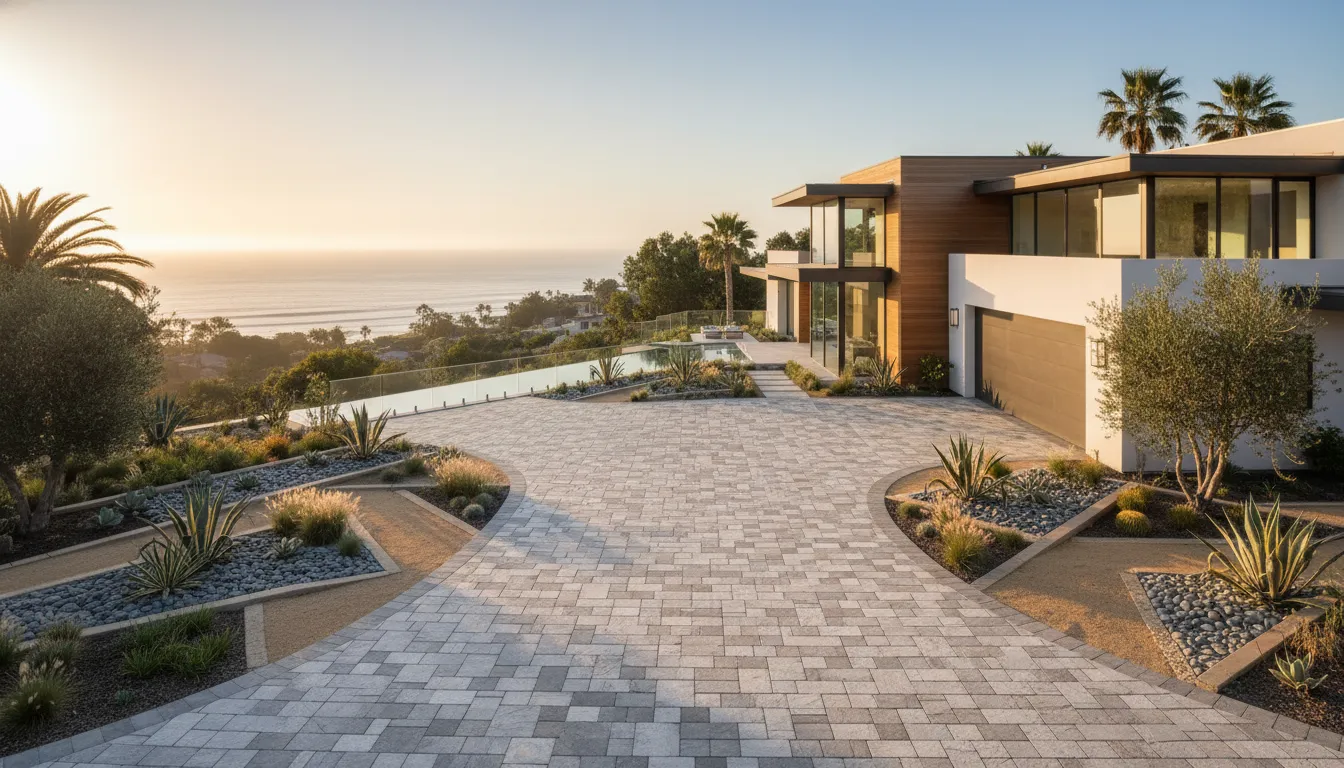
Which factors move the price up or down?
A planning range, not a project quote
Paver driveway cost starts with area, but square footage is only the first input. A national cost guide reports many projects from $6,000 to $18,000, with an average near $12,000. It also lists $10 to $30 per square foot, based on size, material, and complexity. These are planning markers from a national driveway cost guide, not an Orange County bid.
A driveway of the same size can still carry a different scope. Existing paving may need removal and disposal before new work begins. Slope, drainage, access, and required approvals can add planning or labor. The exact price depends on what the property needs.
Site and design cost drivers
The table shows conditions that tend to move a quote up or down. Some items are visible, such as the paver and pattern. Others sit beneath the finished drive, where careful work supports use by vehicles.
| Cost driver. | Typically simpler scope. | Typically added scope. | What changes. |
|---|---|---|---|
| Size and demolition. | Smaller clear area. | More area or old drive removal. | Materials, breaking, hauling, and labor. |
| Compacted base. | Stable subgrade. | More excavation or base preparation. | Aggregate placement and compaction. |
| Bedding sand and edge restraints. | Straight edges. | Curves or many transitions. | More setup and restraint detail. |
| Drainage and slope. | Simple surface flow. | Grade or drainage correction. | Site shaping or drain components. |
| Material and pattern. | Standard paver and layout. | Special finish, border, or pattern. | Supply cost, cuts, and layout time. |
| Access, permits, and HOA. | Open access, no added review. | Limited access or review steps. | Staging, plans, and approvals. |
Demolition and access often affect a quote early. A crew needs room to remove existing hardscape, deliver base material, and compact the area. If equipment access is limited, more staging or hand work may be required. That is why a measured site review matters.
The work below the finished surface
Base preparation is a cost driver because the driveway must carry daily vehicle loads. Bedding sand, edge restraints, and water flow are also parts of the build. The concrete paver industry group presents standards and expertise for hardscape work, including permeable paver applications.
Design decisions also affect time on site. A simple pattern may need fewer cuts than borders or detailed layouts. Material finish, color blend, and edge detail can change ordering and installation. These choices should be priced alongside base and drainage needs, not after them.
Orange County projects can involve slopes, coastal site conditions, existing hardscape, or HOA review. Reviewing installation sequence and base prep guide explains why a careful quote includes the hidden build steps. A consultation can confirm the scope, access, plans, and finish choices for one property.
How installation standards affect long-term value
What a standard installation protects
Paver driveway cost is not only the price of the pavers you see. It also covers the prepared structure below them. A well-built driveway spreads vehicle loads and directs water away from weak spots. Those steps help protect the finished surface from settling, rocking pavers, and open joints.
Installation standards give the crew a clear sequence for this hidden work. The former ICPI, now part of CMHA, publishes hardscape standards and research for concrete paver applications. For homeowners, the key point is simple. A driveway needs a planned base, stable edges, filled joints, and drainage.
The work beneath the finished driveway
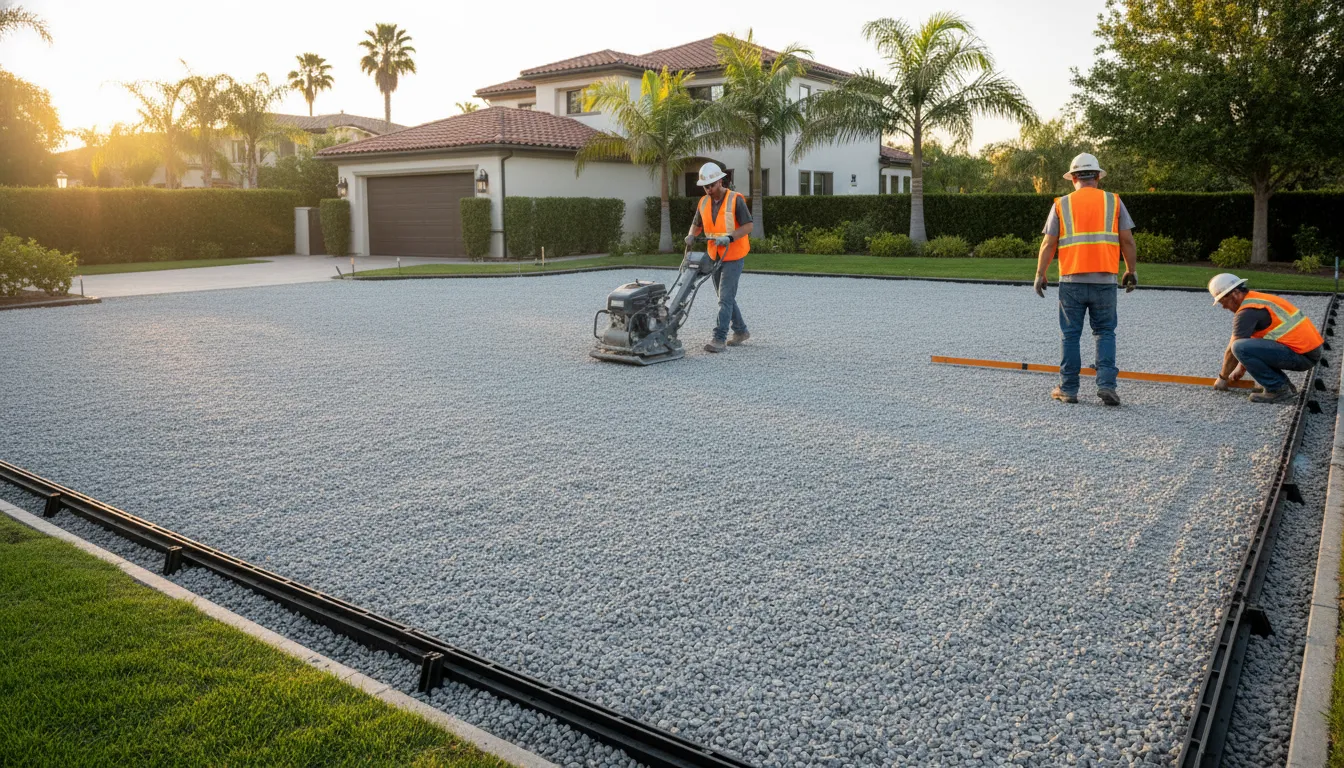
For Pacific Pavers projects, a driveway scope may call for a 6-8 inch compacted aggregate base. The depth is matched to the site, load, and drainage plan. This is why bids with the same paver style can differ in price. The full process is explained in Pacific Pavers’ guide to the full paver driveway build sequence.
The visible paver is the final layer, not the whole driveway. Before it is placed, the crew builds support and sets the path for runoff. Each stage must be ready before the next layer begins.
- Excavate to the planned depth and remove soft or unstable material. A sound starting surface makes later layers more even.
- Set the grade before adding the base. A 1-2% drainage grade moves surface water instead of letting it sit in low areas.
- Place aggregate base in controlled lifts and compact each lift. The finished base must stay firm under driveway traffic.
- Screed a consistent bedding layer over the compacted base. This layer seats the pavers; it does not correct poor excavation.
- Install pavers in the selected pattern, then secure the perimeter with edge restraints. Stable edges keep the field from spreading.
- Sweep joint sand into the paver joints. Filled joints help the units work together under tires and turning movement.
- Compact the finished paver field and check grade, joints, and edges. Final checks catch movement before regular use begins.
Why shortcuts reduce value
Most installation savings are hard to see at completion. Less excavation, thin base material, skipped compaction, or weak restraints may reduce labor at first. Later, these choices can show as dips, loose borders, standing water, or uneven joints. Fixing those faults can require lifting finished pavers and rebuilding the support below them.
Drainage is part of value, not an extra detail. Water that collects near the driveway or beneath shifting joints adds stress to the base plan. In Orange County, slope, lot layout, and HOA needs can shape the installation approach. These details should be settled before materials are placed.
Learn more about our paver driveway installation.
A clear proposal should state excavation, base depth, compaction, bedding, restraint, joint sand, and drainage steps. That detail helps homeowners compare paver driveway cost on the same basis. It shows whether the price supports a driveway built for steady use. The goal is not a surface that only looks complete on installation day.
How material choice changes paver driveway cost
Material choice shapes paver driveway cost because it changes the finish, layout, cuts, and installation plan. Concrete pavers, clay brick, natural stone, and permeable systems can each suit an Orange County home. The right choice starts with architecture, driveway use, drainage needs, and any HOA review.
Concrete pavers and clay brick
Concrete pavers offer a broad design palette for coastal, transitional, and modern homes. They can echo walkway or patio tones without making the entry feel busy. This option supports a refined look with clear control over pattern and border details.
Brick or clay pavers bring a warm, established character that can pair well with traditional architecture. Their shape and color can tie a driveway to an older home or a formal streetscape. The decision may also affect layout time, border planning, and the scope submitted for HOA review.
Compare the setting as well as the paver itself. Our guide to local paver driveway pricing factors explains local project factors that sit beside material selection.
Natural stone and curb appeal
Natural stone creates a distinct surface because each piece can show its own color and texture. It is often considered when the driveway must relate to premium masonry, coastal landscaping, or a custom entry court. Material selection should account for the desired pattern, cuts, borders, and replacement matching over time.
For stone, a tailored layout can be part of the design intent. For manufactured pavers, repeating sizes can support a consistent border and field pattern. Neither choice stands alone; the home style and arrival experience help set the right direction.
A driveway also needs a practical repair plan. With unit paving, a contractor can plan access to specific areas rather than treating the entire surface as one visual field. Ask how replacement pieces will be matched, and whether spare material should be held for future work.
Permeable options and site needs
Permeable pavers change the discussion from surface appearance alone to water management as well. Permeable paver driveway installation cost breakdown — our guide covers materials, labor, and more. The Concrete Masonry and Hardscapes Association describes permeable pavers as a hardscape project type. For an Orange County driveway, drainage and site planning become part of the material choice from the start.
Material is only one part of a complete quote. The driveway still needs a base, edge restraint, grading, drainage planning, and a pattern suited to vehicle use. Review base preparation and installation details when weighing a surface against its full installation scope.
See your driveway in 3D before installation with a design review that aligns curb appeal, coastal style, HOA documents, repair goals, and material scope before pricing is finalized. That approach makes the comparison clear without reducing the decision to the surface alone.
Why Orange County site conditions matter
Water, slope, and the driveway base
A paver driveway cost estimate should start with the site, not only the paver style. In Orange County, a contractor should check coastal moisture exposure, slope, runoff paths, and the soil below the planned driveway. These conditions shape excavation, grading, drainage, and base work.
A sloped drive may need grade control so water moves away from buildings and does not collect on the paving. Sites near the coast also call for close review of moisture and drainage details. TheConcrete Masonry and Hardscapes Association guidance on permeable pavers presents stormwater management as part of paver planning.
Soil conditions also affect the scope. Soft, uneven, or moisture-prone subgrade may call for more preparation before pavers can carry vehicle traffic. That review matters because hidden base and drainage needs can change an early quote before work begins.
Removal and jobsite access
An existing concrete driveway changes the work plan. Crews must break up, load, haul, and dispose of old material before the new surface can be built. If removal reveals damaged edges or poor drainage, the new plan may need correction work.
Access affects labor and equipment use as well. A wide, open drive is different from a narrow side approach, steep entry, gated property, or site with protected landscaping. Limited staging space can require smaller loads, careful material placement, and more hand work.
Even the route from street to driveway deserves review. Low branches, gates, walls, and occupied parking areas can affect how crews bring in pavers and remove debris. These details help explain why two driveways of similar size may not require the same work.
These factors are easy to miss when comparing prices by area alone. Pacific Pavers’ driveway paver budgeting in Orange County guide gives local context for choosing a driveway plan that fits the property.
Design review and local planning
In many Orange County neighborhoods, the driveway is part of the home’s front view. Entryway paver options, including color, border details, pattern, and transitions, should fit the architecture and nearby hardscape. For an HOA property, drawings may help reviewers see the layout, finish, and drainage approach before work starts.
Permitting and HOA review should be checked for each address and project scope. A change involving drainage, curb connections, or other site features may need added review before installation. A local contractor can flag these questions early and quote from observed conditions, not broad assumptions.
That is why local knowledge matters when reviewing paver driveway cost. The meaningful number is tied to the actual drive: its soil, water flow, access, existing concrete, design expectations, and review needs.
Are pavers more expensive than concrete?
Upfront price and project scope
In many driveway projects, pavers cost more upfront than poured concrete. That answer helps, but it is not the full way to compare paver driveway cost. A paver quote covers a finished hardscape system, not just the visible surface.
The price reflects demolition, excavation, base work, drainage planning, edge restraint, laying patterns, joint material, and final compaction. Poured concrete has its own site work, but its finish is formed and poured as one slab. Pavers require individual placement and more design choices.
For homeowners deciding between surfaces, the key question is what each proposal includes. A lower initial price may not include the same base plan, water control, pattern detail, or access needs. Clear scope matters more than comparing one bottom-line figure to another.
What the premium is paying for
A premium paver installation is often driven by work below the surface. Driveways must bear vehicle loads while moving water away from the paved area and nearby structures. Pacific Pavers plans base preparation, slope, drainage, and edge restraint as parts of a complete installation.
These details also explain why two paver proposals may differ. Site access, removal needs, grade changes, drainage fixes, and chosen patterns can change the labor involved. The Pacific Pavers’ installation guide guide explains how the installation sequence supports a stable finished driveway.
Industry standards matter because performance depends on the full pavement structure. The hardscape industry publishes specifications for interlocking concrete pavement applications and related performance practices. Homeowners can review this background in the concrete block paving technical paper.
Repairability and long-term value
Concrete offers a clean, familiar driveway surface, while pavers add pattern, texture, border detail, and color range. That visual change can matter when the driveway is a large part of the front approach. It can connect the drive to walkways, entry details, and other outdoor spaces.
The repair approach is also different. If a paver area settles or becomes damaged, individual units can be lifted and replaced in a local repair. A poured surface is continuous, so a repair may leave a patch line or involve a larger section.
That does not mean pavers remove upkeep or make every project the right fit. It means the upfront comparison should include appearance, repair access, site conditions, and the installation scope. For Orange County properties, Orange County paver driveway cost planning can also reflect drainage, slope, access, and HOA review needs.
So, are pavers more expensive than concrete? They are often priced higher at installation, because the result includes unit-by-unit craftsmanship and design choice. The value case rests on a well-built base, a repairable surface, and a finished look designed for the home.
What should a paver driveway estimate include?
A sound estimate explains the full job, not just a final price. To compare paver driveway cost fairly, confirm that each proposal covers the same site work, paving system, design needs, and service terms.
Learn more about our paver sealing and maintenance.
Learn more about our paver sealing and maintenance.
Scope and site preparation
Start with the measured driveway area and the limits of work. The estimate should state whether it includes demolition, haul-away, excavation, grading, cleanup, and any repair where new paving meets existing surfaces.
Base work is easy to hide in a short proposal, yet it supports the driveway under daily vehicle use. Ask for the planned base material, compacted depth, bedding layer, and site-specific changes for soft soil or poor conditions.
- Existing driveway removal and debris disposal
- Excavation depth and compacted base specification
- Bedding and joint material specifications
- Allowances for utility access, permits, or HOA review
Drainage should appear as a clear plan, not an afterthought. Ask how water will move from the driveway and away from nearby structures. Guidance from the Concrete Masonry and Hardscapes Association places performance and water management within sound paving practice.
Materials, edges, and drawings
A proposal should name the paver brand, product line, material, color, finish, and laying pattern. Without these details, two prices may reflect two different surfaces, with different appearance and sourcing expectations.
Look for edge restraints and cut details in the scope. Edge restraints help hold the finished field in place. The estimate should also show border work, transitions at the garage and sidewalk, and treatment around drains or utility covers.
- Paver manufacturer, product, color, texture, and pattern
- Edge restraint type and border layout
- Drain placement, slope intent, and runoff path
- Plan drawings or renderings for the approved layout.
Drawings give homeowners and an HOA a shared record of the design before installation starts. For added installation context, review Pacific Pavers’ guide to how a paver driveway is built while checking a proposed scope.
Accountability after approval
The estimate should define who performs the work, who manages the project, and how questions are handled. Pacific Pavers completes projects with its in-house crew, which supports consistent oversight from site preparation through final walkthrough.
Read the warranty terms with care. Confirm what the installation warranty covers, what material warranties come from the maker, and what maintenance or site conditions could affect coverage. A clear proposal also states deposit terms, progress payments, schedule expectations, and change-order approval.
- Named project contact and expected update schedule.
- Work sequence, access needs, and cleanup plan.
- Written warranty coverage and exclusions.
- Process for scope changes and added costs.
For a qualified driveway project, a design review can turn broad pricing into a scope that is easier to compare. Pacific Pavers offers a complimentary design consultation with drawings for qualifying work; request a consultation to review the site and design goals.
Book a complimentary Orange County driveway consultation with Pacific Pavers.
Frequently Asked Questions
How much does a paver driveway cost to install?
Installed paver driveway cost depends on area, paver selection, removal, base preparation, drainage work, and design detail. As a national planning reference, Angireports a typical range of $6,000 to $18,000, or $10 to $30 per square foot. Orange County properties require a site-specific estimate because slope, access, HOA requirements, and coastal conditions can change the work required.
Is it reasonable to pay $23,000 for a 1200 sq ft paver driveway?
A $23,000 proposal for 1,200 square feet equals about $19.17 per square foot. That falls within the $10 to $30 installed range reported by Angi. Review the scope before comparing proposals. It should list demolition, excavation, compacted base, drainage, edge restraint, paver product, pattern cuts, permits, HOA documents, and warranty.
How do site conditions impact the final cost of a paver driveway?
Site conditions affect both labor and materials. Removing an old driveway, correcting weak soil, handling a steep slope, improving drainage, or working with limited equipment access adds preparation time. Orange County projects may also require attention to HOA approvals or coastal requirements. A complete estimate should describe excavation depth, base preparation, grade, drainage approach, edge restraints, and any removal or access charges.
Can I save money on a paver driveway by doing it myself?
DIY installation may reduce labor charges, but a driveway must support vehicle loads and move water safely. Costs can rise if excavation depth, compaction, slope, edge restraint, or joint sand is handled incorrectly and repairs are needed later. Before choosing DIY, compare equipment rental, disposal, base material delivery, cutting tools, and time. For a detailed Orange County scope, request a consultation.
For an interactive breakdown of your project investment, use our paver driveway cost estimator to explore material options and pricing before your consultation.
Ready to plan your Orange County paver driveway?
Waiting to understand driveway costs can leave your project exposed to avoidable scope changes and delayed decisions later in planning. Starting now gives you time to review materials, base preparation, and drainage needs for your site before you commit to construction. A clear plan helps you compare options around the driveway you want and the property you own from the start.
Ready to plan a driveway that fits your home and priorities? Schedule a complimentary design consultationto discuss your project goals, desired materials, site conditions, and next steps with Pacific Pavers. Bring your questions about cost, preparation, and drainage, so your consultation can focus on practical decisions for your driveway project.

Jeff Tobin is the founder of Pacific Pavers, an award-winning outdoor living company serving Orange County, California. With a 30-person team of ICPI-certified professionals, Jeff specializes in transforming residential and HOA properties through custom paver installations, pool remodeling, and complete outdoor living spaces. His company philosophy—”Flawless craftsmanship. Clear communication. Zero stress.”—reflects his commitment to delivering premium results and exceptional customer experiences. As a BBB-accredited business and Belgard Master Craftsman, Pacific Pavers has become known for process-driven operations and elite craftsmanship in the hardscape industry.