
Muddy side yards and patchy dog runs create a recurring headache for many Orange County homeowners. The choice between synthetic grass and pavers depends on how you plan to use your transition space.
Read the 400 sq ft artificial grass cost guide for a project-specific budgeting example.
Synthetic Grass vs Pavers for Side Yards
When comparing synthetic grass vs pavers for an Orange County side yard, choose turf for a soft, low-water dog run and pavers for a firm, durable path. A hybrid layout often works best: pavers carry bins and foot traffic, while synthetic grass adds a comfortable green surface. Proper grading and base preparation determine how well either option drains.
Schedule a complimentary Pacific Pavers design consultation to compare side-yard materials, drainage, and layout options for your home.
Synthetic grass vs pavers: the side-yard decision at a glance
Choosing between synthetic grass and pavers for your Orange County side yard depends on how you use the space. Narrow side yards often serve as dog runs, walking paths, or utility access areas. Both materials offer distinct benefits for these tasks. While a professional turf installation provides a soft surface for pets, stone pavers offer high durability for heavy foot traffic and trash bin storage.
Learn more about our paver patio options.
Learn more about our paver patio options.
Comparing core features
Side yards are often forgotten spaces, but the right material makes them useful. Synthetic grass stays green all year without water. It drains well if the base is built right. Pavers can also help with water flow. If you use permeable joints, water can soak into the ground instead of pooling. For yards with pets and heavy use, learn about synthetic turf drainage for pets and busy yards. This is key for meeting local drainage standards and keeping your foundation dry.
| Feature | Synthetic Grass | Stone Pavers |
|---|---|---|
| Best Use | Dog runs and soft play | Paths and utility storage |
| Durability | 10 to 15 years | 30 years or more |
| Heat Level | Can get very hot in sun | Stays cooler if light color |
| Drainage | Excellent with proper base | Good with permeable joints |
| Maintenance | Rinse and brush often | Occasional sweep or wash |
Foot traffic and utility access
If you move trash bins or heavy gear through your side yard, pavers are a great pick. They create a flat, solid surface that will not shift or sink under weight. This makes it easy to roll carts or walk without tripping. For homeowners focused on turf-and-paver design ideas, a mix of both can work. You might use pavers for the main walk and grass for the edges to add a soft look.
Pet safety and surface heat
Pet owners often pick grass for its soft feel. But synthetic turf can get very hot in direct sun. This can lead to heat stress for pets or people. Research from the National Institutes of Health shows that these surfaces get much hotter than natural grass. If your side yard gets full sun, you may need to rinse the turf to cool it down or choose a light-colored paver instead.
What does a narrow side yard need to do?
A narrow side yard must provide safe access, move water away from the home, and support its main daily use. Pavers are usually stronger for rolling bins and utility traffic. For dedicated pathways, explore our paver patio installation options designed for durability. Synthetic grass is usually more comfortable for pets. Pacific Pavers evaluates slope, shade, gates, utilities, and drainage before recommending either surface or a hybrid layout.
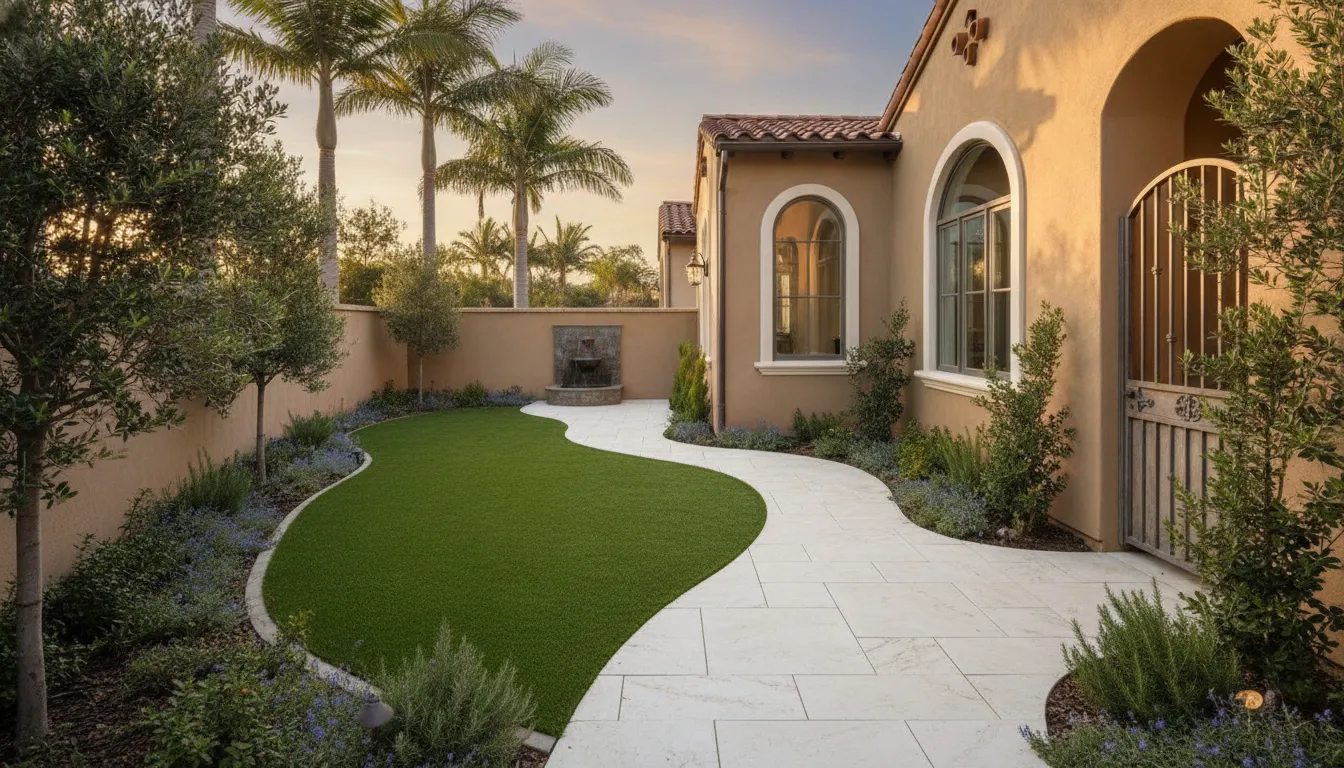
Handling foot traffic and access
Most side yards serve as the main path for big items. You likely move heavy trash bins or garden tools through this space. A surface must be flat and stable to keep your bins from tipping. It also needs to stay clear for workers to reach meters or AC units. If the ground is uneven, it can lead to trips or slow down your chores. Choosing between synthetic grass vs pavers depends on how much weight the path will carry.
When you have a tight space, every inch counts. You may need to fit a gate or a box for tools. A well-laid path keeps your shoes clean and stops mud from tracking into your home. It also gives you a smooth shift from the front yard to the back. When combining turf with pavers, you can create a look that is both pretty and tough.
Solving drainage and shade issues
Side yards often sit in the shade of your house or a tall fence. This lack of sun makes it hard for real grass to grow. Without sun, the soil stays wet. This can lead to moss or mud. You must ensure the ground slopes away from your home to stop water damage. Proper grading is a key part of the turf base preparation to keep your side yard dry.
Heat is also a factor in narrow spaces with little air flow. Hard surfaces can trap warmth and raise the heat near your walls. Some materials can absorb a lot of solar energy. This adds to the heat around your home. You can learn more about how surfaces affect heat from the Environmental Protection Agency. Using the right materials helps keep your home cooler and your side yard more pleasant to use.
Ensuring clean shifts and durability
A good side yard design connects parts of your yard without a break in style. You want your paths to look like they belong with your patio or driveway. Tough materials like pavers can last for decades with very little care. They handle the wear of daily use better than loose rocks or wood chips. When you plan for the long term, you save money and time on repairs.
Synthetic grass is another great choice for a low-care side yard. It stays green even in deep shade where nothing else grows. It also drains well if it is set up right on a stone base. Both pavers and turf give you a clean look that adds value to your home. By choosing the best fit for your needs, you turn a narrow alley into a useful part of your home.
Which is better for a dog run?
Choosing between synthetic grass vs pavers for a dog run depends on your pet’s needs and your yard’s layout. Each material offers good perks for busy pets. You must weigh comfort against ease of care to find the best fit. A well-built dog run stays clean and keeps your pup happy for years.
Comfort and paw safety
Most pets prefer the soft feel of synthetic grass under their paws. It gives a soft surface that is easy on a dog’s joints during play. But heat is a big worry for many pet owners in sunny areas. Research shows that synthetic grass can get much hotter than real grass, which may cause heat stress (nih.gov). You should check the heat of the surface before letting your dog out on hot days.
Pavers stay cooler to the touch than synthetic grass, mostly if you choose light colors. This helps prevent burnt paws during the peak of summer. Solid areas also stop dogs from digging, which saves your yard from damage. If you live in a hot city, be aware that many outdoor materials soak up sun and add to the heat island effect (epa.gov). Choosing “cool” paving options can help keep the area safer for your pet.
Waste cleanup and odor control
Cleanup is much simpler on a hard surface like pavers. You can easily pick up waste and hose down the area to keep it fresh. Paver joints need care often to stay stable and keep weeds away. But for some owners, the green look of turf is worth the extra work. You can read about the installing artificial turf correctly to see how these systems work.
Synthetic grass for dog runs needs special care to stop smells from building up. You should use special infill or cleaning products to manage dog urine well. This infill helps with drainage and keeps the area smelling clean even with heavy use. Good turf also has UV protection to prevent fading in direct sun. Good base layers are needed to ensure liquids flow through the top and into the ground below.
Durability and drainage performance
Both choices offer great drainage when you set them up with the right base. Synthetic grass often drains better than solid, non-porous areas. It lets water and waste pass through fast to avoid puddles. Pavers can also allow for plain water flow if you use permeable joints. You might think about planning mixed-material yards to get the best of both worlds in one space.
Dogs can be tough on a yard, but both choices stand up well to high traffic. Pavers are strong and can last for decades with little upkeep. They won’t tear or wear down if your dog runs in the same path every day. Synthetic grass stays green all year without the need for water or mowing. It gives a steady play space that stays mud-free even after a heavy rain.
- Synthetic grass gives a soft, cushioned feel for active dogs.
- Pavers provide a cool, dig-proof area that is easy to wash.
- Turf needs special infill to prevent bad smells from urine.
- Both choices need a solid sub-base to ensure water drains well.
- Pavers offer long-term strength and are simple to fix if one piece breaks.
How do synthetic grass and pavers handle drainage?
Both synthetic grass and pavers can manage runoff when installed over the right base and slope. Turf drains through its backing into a prepared aggregate layer. Pavers move water across a graded surface or through permeable joints. For dedicated guidance on drainage, see our guide on synthetic turf drainage for high-use yards. Pacific Pavers treats the visible surface and the drainage system beneath it as one coordinated design.
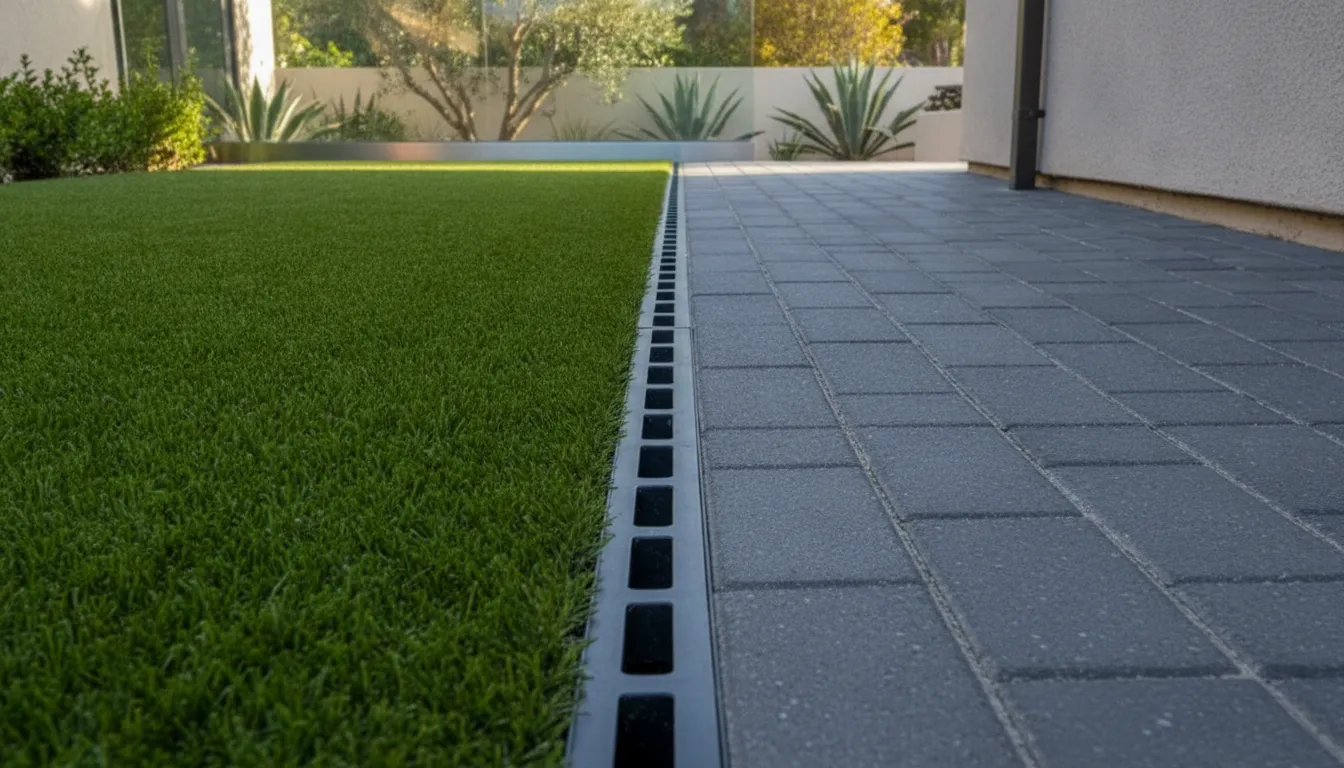
Drainage systems for synthetic turf
Synthetic turf is more than just a green rug. It is a porous system made to let water pass through. Most turf has a backing with small holes or a special mesh. This lets water drain at a fast rate. From there, the water moves into a sub-base made of crushed rock and stone dust. This layer holds the water until the soil can soak it up.
A high-quality how synthetic turf is installed often requires digging down about 75mm. This space is filled with a sub-base that acts like a sponge. For pet owners, this flow is vital. It helps wash away urine and prevents smells. But keep in mind that these surfaces can get hot. Studies on synthetic grass heat stress show that these areas can reach higher heat levels than natural lawns.
How paver joints manage water
Pavers are also great for handling water. Unlike a solid concrete slab, pavers have joints. These are the small gaps between each stone. In a standard setup, these gaps are filled with sand. Water can seep through the sand and into the ground. For even better drainage, you can choose permeable pavers. These have larger gaps filled with tiny rocks that let water through even faster.
This type of setup helps stop water from pooling on your patio or driveway. It also helps the local area. When water soaks into the ground, it does not pick up oil and trash from the street. This reduces the load on local storm drains. Choosing items that allow water flow also helps lower the heat island effect in busy spots. This makes your outdoor living space more pleasant and green.
The role of base preparation
The base is the most vital part of the build. For pavers, workers often dig down at least 160mm. They fill this area with layers of road base and bedding sand. This creates a flat surface that will not sink over time. It also gives water a clear path to move down. When you are hybrid side-yard layouts, the base layers must be tied together the right way.
You should talk to your contractor about how they plan to handle runoff. Ask if they will add a slight slope to the area. A good slope moves water away from your house and towards a drain or garden bed. You might also need channel drains or French drains in low spots. A pro team will look at your whole yard to find the best plan. This keeps your new space dry and safe for years to come.
Maintenance and long-term value
Maintenance is different rather than absent. Synthetic grass needs debris removal, brushing, rinsing, and prompt pet-waste cleanup. Pavers need occasional sweeping, joint maintenance, and spot repairs. Compare each routine with the expected service life and daily use of the side yard before deciding.
See your paver-and-turf layout before installation with Pacific Pavers’ 2D and 3D design service.
Caring for your synthetic grass
Caring for synthetic grass is simple. You do not need to mow, edge, or water the yard to keep it green. To keep the area clean, you should clear away leaves and twigs. This keeps the turf looking neat and prevents dirt from building up. You should also do these tasks:
- Use a leaf blower or rake to clear debris.
- Brush the grass blades to keep them standing up.
- Rinse the turf with water if you have pets.
- Add more infill if the blades start to lean.
Good drainage is a key part of the turf installation details. While turf is easy to care for, it can get hot in the sun. Some studies show that these surfaces reach high heat levels in the summer. You can read more about heat on outdoor surfaces from health groups. Spraying the area with water can cool it down fast.
Protecting your paver upgrade
Pavers are strong and nice to look at. They can last for many years with little help. You should sweep the stones often to keep the cracks clear of dirt. This helps stop weeds from growing in the joints. If you see a weed, pull it out so it does not push the stones apart. Here are a few ways to care for your pavers:
- Sweep the surface to remove dirt and dust.
- Check the joints for missing sand.
- Look for any stones that have shifted or sunk.
- Seal the stones to protect the color.
Every few years, you might need to put new sand in the joints. This keeps the pavers in place. If you notice low spots or sinking, you can lift the stones and add more to the base. Hard paving stones are a top choice for durable outdoor surfaces. If a single stone breaks, you can swap it for a new one.
Looking at long-term value
Both choices offer great value over time. Pavers are a fixed choice that can last for decades. They do not need to be replaced and can hold heavy weight from cars or patio sets. This makes them a great pick for paths and driveways. They also keep their look for a long time without much change.
Synthetic grass often lasts about 10 to 15 years. While it may not last as long as stone, it saves you money on water and yard care. You will not have to pay for a mower or seed. When the turf reaches the end of its life, you can replace the top layer. Both choices help your home value by making your yard clean and ready to use.
When should you combine synthetic grass and pavers?
In many Orange County homes, the choice between synthetic grass and pavers is not about picking one. Instead, it is about how to use both. A hybrid design often works best for narrow spaces like side yards. This mix gives you the strength of a hard surface and the soft look of a lawn. You get a space that looks good but does not need much work.
Creating useful side yards
Side yards are often wasted space. They are too narrow for a full lawn but too long to leave empty. A common fix is to lay a long paver path with synthetic grass on the side. This creates a clean way for people to walk. The pavers provide a flat, stable spot for trash cans or heavy gear. Meanwhile, the turf adds a splash of green that stays bright all year.
When planning this layout, think about how the parts handle heat. Research shows that synthetic grass surfaces can get much hotter than natural grass. This can change how you use the yard on sunny days. Mixing turf with cool-toned pavers can help balance the heat. It makes the side yard more nice for pets and people alike. You can walk on the stones while the grass stays green nearby.
Using paver pads in turf
Another popular choice is placing large paver pads within a turf field. These are sometimes called “stepping stones.” This design breaks up the look of a solid green block. It adds a modern feel to your outdoor living area. The gap between pavers is filled with synthetic grass, which keeps mud and weeds away. It also keeps the soil from packing down over time.
This way is great for areas that see light use. By mixing turf and stone, you create a path that guides guests through the yard. It also helps with drainage. Since water can move between the stones, you avoid puddles after a heavy rain. To keep the yard sharp, builders use a solid edge to hold the parts in place. This prevents the stones from moving and the grass from fraying.
Planning with 3D design tools
Before you start digging, it helps to see the result. Pacific Pavers offers landscape design services that integrate synthetic grass, pavers, plantings, and drainage into one plan. A 2D or 3D model can show how the path will curve, where the turf will sit, and whether the planned clearances work before installation begins.
3D planning helps avoid costly errors. It lets you test new patterns and sizes before any supplies arrive. You can check if the path is wide enough for your needs. This step ensures that your hybrid yard fits your life and your home’s style. It takes the guesswork out of the build. You can feel sure about the final look before the first stone is laid.
How to choose the right side-yard surface
Choosing the best surface for a narrow side yard needs a clear look at your needs each day. This space often sits hidden from view, but it serves many roles for your home. You might use it as a simple path, a dog run, or a spot for trash bins. In Orange County, the right pick makes sure your yard stays cool and dry all year. Proper ground prep is also needed to make sure both turf and pavers last a long time.
Know your yard’s main use
Before you pick between synthetic grass vs pavers, you must decide how you will use the area. A side yard that sees high foot traffic needs a hard, stable base. Pavers give a non-slip floor that stops wear from heavy use over many years. This is key for spots where you store heavy bins or tools. If you want a soft spot for pets or kids to play, synthetic grass might be better. This pick often comes down to a soft green look versus a firm, multi-use floor. You can also mix them to define paths and play areas.
Check for heat and drainage
Site factors like sun and water flow are key for any outdoor project. Synthetic grass stays green without water, but it can get very hot in direct sun. Studies show that synthetic floors can get very hot which may cause heat strain. This can make the area hard to use on summer days. Pavers often feel cooler to the touch, which helps if you walk there in the mid-day heat. Both choices need a good base for drainage to keep water from pooling near your home walls. Poor drainage can lead to moisture issues and smells, mostly in narrow spots.
The step-by-step picking process
Follow these steps to find the best fit for your home:
- Start by checking how much you will walk in the area. High-use paths or storage spots for heavy bins work best with a firm paver base.
- Think about your pets and their daily habits in the yard. Synthetic grass for dog runs needs special infill to stop smells and help with drainage.
- Look at where your water lines and pipes sit under the ground. You must make sure you can reach these pipes if you ever need to make a repair.
- Judge how much sun the yard gets during the peak of the day. If the space is always in the sun, light-colored pavers can help lower the heat in your yard.
- Think about the level of care you want to give the surface each month. Pavers need a quick wash and new sand now and then to stay firm and stable.
- Review how the new surface fits your whole home style and look. Many people like mixing turf and pavers to get the best of both worlds.
- Talk with a pro to get a full design for your side yard. A turnkey team can help you plan for drainage and pick the right look for your home.
Picking the right surface makes your side yard both pretty and useful. Whether you choose the soft feel of turf or the firm strength of pavers, a good plan makes sure you get a long-lasting result. A pro can help you pick the best setup for the Orange County climate.
Frequently Asked Questions
Is it cheaper to install synthetic grass or pavers?
Mostly, synthetic grass costs less to set up because it needs less digging. A turf project only needs about 75mm of depth. In contrast, a standard paver project needs at least 160mm to fit the base layers. This extra work and material make paving more costly at first. However, pavers offer great value over time since they are so durable. You can see the setup details from industry experts who compare these costs.
Does synthetic grass get hotter than pavers in the sun?
Yes, synthetic grass often feels much hotter than stone or brick in direct light. According to the EPA, many yard surfaces absorb solar heat, but turf can reach very high temperatures. Pavers, especially in light colors, stay much cooler to the touch. This makes paving a better choice for sunny spots where you plan to walk barefoot. If you pick turf, using a special infill can help lower the heat slightly.
How long do pavers last compared to synthetic grass?
Well-built pavers can last for decades with very little care. They are very strong and hold up well under heavy furniture. In contrast, high-quality synthetic grass usually lasts about 15 to 20 years before it needs to be replaced. One big plus for pavers is that they are made of single units. If one stone breaks, you can swap it out easily. This makes paver systems a smart, long-term choice for your Orange County home.
Can you install artificial grass and pavers together?
Yes, you can blend these two materials to create a yard that is both pretty and useful. Many owners use pavers for firm paths and turf for soft, green areas. This hybrid look works great in side yards where you want a walkway and a low-care garden. You can find tips on coordinating grass and hardscape to ensure both surfaces drain well. This will help them stay flat for many years to come.
Ready to upgrade your side yard with pavers or synthetic turf?
Leaving a narrow side yard as bare dirt often leads to muddy paws and constant weeds that only get worse as the seasons change. If you wait to fix these drainage issues, the ground can become more packed and you will continue to lose your great outdoor space. Starting your project now ensures your home is ready for the rain and lets you stop wasting time on yard work to enjoy your home.
Ready to get started? Call Pacific Pavers at (714) 718-3970 to schedule a complimentary design consultation with our local Orange County team. We will help you compare materials, resolve drainage concerns, and plan a side-yard layout that fits your home.

Jeff Tobin is the founder of Pacific Pavers, an award-winning outdoor living company serving Orange County, California. With a 30-person team of ICPI-certified professionals, Jeff specializes in transforming residential and HOA properties through custom paver installations, pool remodeling, and complete outdoor living spaces. His company philosophy—”Flawless craftsmanship. Clear communication. Zero stress.”—reflects his commitment to delivering premium results and exceptional customer experiences. As a BBB-accredited business and Belgard Master Craftsman, Pacific Pavers has become known for process-driven operations and elite craftsmanship in the hardscape industry.