

Outdoor site analysis is the first and most important step in designing any outdoor space. It helps identify potential challenges, ensures compliance with local rules, and highlights opportunities to make the most of your property. Here’s a quick breakdown:
- Key Focus Areas: Soil type, drainage, sunlight, wind patterns, and property boundaries.
- Why It’s Important: Avoid costly mistakes like violating zoning laws or hitting utility lines. Up to 30% of project costs can come from preventable errors.
- Local Challenges in Orange County, CA: Mediterranean climate, clay-heavy soil, HOA restrictions, and water conservation mandates.
- What to Document: Property lines, existing structures, utility locations, and site conditions like slopes or pooling water.
- Common Problems: Poor drainage, privacy issues, limited space, and uneven terrain.
- Opportunities: Mature trees for shade, scenic views, and natural slopes for terraced designs.
- Planning Features: Outdoor kitchens, firepits, patios, and synthetic grass, considering climate and budget.
Next Steps: Start with a detailed checklist, document your site, and consult professionals for complex issues like drainage or HOA compliance. For Orange County residents, contractors like Pacific Pavers specialize in local regulations and site-specific designs.
This preparation ensures a functional, attractive, and regulation-compliant outdoor space.
Landscape Tutorial: Site Analysis
Important Information to Document on Site
Thorough documentation during a site analysis lays the groundwork for a successful outdoor project. The information you gather will steer design choices, help avoid costly errors, and ensure the project aligns with all necessary requirements. Here’s what to focus on during your site visit.
Site Features and Existing Structures
Begin by mapping out property boundaries using official parcel maps and survey data. Be sure to note any setback requirements or easements that could restrict design possibilities, especially in areas like Orange County. Identify all existing structures and hardscapes, such as your home, garage, sheds, patios, walkways, driveways, retaining walls, pools, spas, and decorative elements. Additionally, document the location, size, and condition of trees, shrubs, and other significant plantings. Determine which vegetation should be preserved and which may need removal to improve traffic flow or access.
Accurate utility mapping is critical to avoid unexpected hazards or extra expenses. Before any digging begins, call 811 for free utility marking services. This will help you locate water, gas, electric, and sewer lines, ensuring your plans account for existing infrastructure and identifying connection points for new installations like outdoor kitchens or fire pits.
Once you’ve mapped the site, consider how natural conditions and climate factors will influence your design.
Climate and Natural Conditions
Sunlight and wind patterns play a major role in determining where to place outdoor living elements. Walk the property at different times of the day to observe how sunlight and shade shift across the area. Also, note prevailing wind directions, as strong winds can make specific areas unsuitable for seating, cooking, or entertaining features like fire pits.
Drainage is another crucial factor. Check for pooling water, erosion signs, or existing drainage systems, especially during or after rain. In regions with clay-heavy soils, like those found in many parts of Orange County, extra attention may be needed to manage water effectively.
Soil testing is essential for understanding soil conditions. Test for texture, pH levels, and nutrient content to identify potential challenges. For instance, soil with a pH above 7.5 may require amendments to support healthy plant growth. Clay soils often demand improved drainage, while sandy soils may need added organic matter to retain moisture.
Finally, familiarize yourself with local regulations to ensure your project stays compliant from the outset.
Local Rules and Regulations
Using your site data, dive into local zoning laws and HOA guidelines to finalize a compliant design. Zoning codes vary by city in Orange County and can significantly shape your project. Look into setback rules, height restrictions, and permitted uses for outdoor features.
If your property falls within a homeowners association (HOA), pay close attention to their specific guidelines. Pacific Pavers works directly with HOA boards to ensure projects align with community standards regarding materials, colors, and allowable features. Some key considerations include:
- Architectural guidelines and approval processes
- Restrictions on materials and colors
- Height and setback limitations
- Rules for permitted outdoor features
Permits are often required for elements like outdoor kitchens, electrical work, plumbing, and structural features such as retaining walls. Research these requirements early to account for both the timeline and costs of permits in your project plan.
Finally, document everything with detailed photographs from various angles. These images will serve as a valuable reference for future planning and decision-making.
Finding Opportunities and Challenges
Understanding your site’s features can reveal both hurdles and hidden possibilities, shaping practical and inspiring design goals.
Common Site Problems
Poor drainage affects nearly 30% of residential landscaping projects in the U.S., throwing a wrench into outdoor living plans. If you notice water pooling after rain, soggy soil, or erosion patterns, it’s time to act. Solutions like French drains, proper grading, or permeable pavers can help redirect water effectively.
Privacy concerns often arise when neighboring views compromise your outdoor spaces. Fences, tall shrubs, trees, or pergolas with climbing plants can create the privacy you need while enhancing the overall aesthetic.
Limited space requires clever, multi-purpose designs. Think built-in seating with hidden storage, raised planters that double as dividers, or compact water features that add charm without eating up space. Vertical gardens and carefully zoned areas for dining, relaxing, or play can help smaller yards feel bigger and more functional.
Uneven terrain presents challenges like erosion, reduced usability, and construction difficulties. But it also opens doors to creative solutions – terraced gardens, natural water features, or eye-catching retaining walls can turn a slope into a standout feature.
Utility proximity can limit your options and pose safety risks. Overhead cables, underground lines, or utility boxes might restrict where you can build features like outdoor kitchens or plant large trees. Professional utility marking early in the process helps you avoid costly mistakes and find creative ways to work around these constraints.
While these challenges may seem daunting, they often pave the way for innovative design solutions.
Making the Most of Your Site
Mature trees are a treasure. Use them to anchor seating areas, frame picturesque views, or provide natural shade for outdoor dining spaces.
Natural shade patterns can help you create comfortable zones for specific activities. For instance, areas with morning sun and afternoon shade are ideal for breakfast patios, while spaces with dappled light make for perfect relaxation spots. Observing these patterns during site analysis ensures you position features where they’ll be most enjoyable.
Scenic views, whether it’s a distant mountain range, lush landscaping, or striking architecture, can become the centerpiece of your design. Frame these vistas with seating arrangements or pathways that guide visitors toward the best perspectives. Even partial views can shine by pruning or selectively removing vegetation.
Existing hardscape elements like patios, walkways, or retaining walls can often be integrated into your new design. Assess their condition and style before deciding to keep, update, or replace them. Sometimes a simple refresh or extension can save money while preserving a cohesive look.
Rock outcroppings and natural slopes offer exciting opportunities for dramatic features. Use natural stone in retaining walls or water features, and take advantage of slopes for terraced gardens or amphitheater-style seating.
Every obstacle presents a chance to think creatively. Poor drainage could inspire a rain garden or water feature. Privacy concerns might lead to beautiful screening solutions. Limited space pushes you toward multi-functional designs that make every inch count.
Pacific Pavers specializes in turning these challenges into stunning outdoor spaces. With their expertise in Orange County’s varied terrain and climate, they craft custom solutions using permeable pavers, retaining walls, and thoughtfully integrated landscape features to transform any site into a functional, inviting oasis.
sbb-itb-11ea599
Planning for Outdoor Living Elements
Now that you’ve got a clear understanding of your site’s conditions and climate, it’s time to turn that analysis into a plan. This phase focuses on selecting and positioning outdoor features that bring both functionality and visual appeal to your space. The goal? To strike a balance between your dream design and practical factors like space, budget, and how you intend to use the area. With the site’s strengths and limitations in mind, you can start choosing features that work together to create a cohesive outdoor environment.
Choosing Which Features to Include
Think about your lifestyle needs when deciding what to include. For example, families with kids might prioritize synthetic grass play areas and safety-focused layouts, while those who love hosting gatherings may lean toward outdoor kitchens and plenty of seating. According to the American Society of Landscape Architects, outdoor kitchens, firepits, and patios are among the most sought-after features in U.S. residential designs, based on their 2023 survey.
Your space and budget will shape your options. A smaller yard might be perfect for a cozy patio and a firepit, while larger properties can accommodate multiple zones. For reference, custom patios typically cost $15–$35 per square foot, outdoor kitchens can range from $5,000 to over $30,000, and synthetic grass installation averages $8–$15 per square foot. If your budget is tight, consider tackling the project in phases – start with the essentials, like patios or pathways, and add features like water elements or outdoor kitchens later.
Climate plays a big role in feature selection. In Orange County’s Mediterranean climate, outdoor kitchens and dining areas are usable year-round. However, features like pools or lush plantings may require extra attention to water management, especially during droughts. Synthetic grass, for instance, can be a smart choice in water-restricted areas, potentially cutting outdoor water use by up to 50%.
Work with what’s already there. Mature trees can provide natural shade for seating areas, and sloped terrain can be used to create terraced zones. Incorporating existing site elements not only saves resources but also makes new features blend seamlessly with the environment.
Practical Design Factors
Once you’ve decided on the features you want, it’s time to think about how they’ll fit together and function in your space.
Lighting enhances both safety and ambiance. Use a mix of path, spot, task, and ambient lighting to make your space more functional and inviting. Task lighting is essential for outdoor kitchens and grilling areas, while string lights or low-voltage LED systems add a warm, welcoming glow for evening gatherings. Plus, LED options are energy-efficient and easy to install, making them a favorite for many homeowners.
Proper drainage is a must. Patios should have a slight slope to channel water away, and synthetic grass installations need a well-prepared base to prevent pooling. Poor drainage affects nearly 30% of residential landscaping projects, so addressing it upfront can save you headaches later.
Accessibility ensures everyone can enjoy the space. Pathways should be at least 36 inches wide with slip-resistant surfaces, and level changes should include gentle slopes or ramps. Around pools or water features, non-slip pavers are essential, and seating or dining areas should allow enough space for wheelchair access.
Plan for utilities early. Outdoor kitchens require proper connections for gas, electricity, and water, while lighting systems need reliable electrical setups. Before finalizing any placements, map out existing underground utilities to avoid potential conflicts.
Choose durable materials. UV-resistant materials are ideal for outdoor furnishings and synthetic grass to withstand sun exposure. In areas with freeze-thaw cycles, opt for pavers designed to handle thermal expansion. For Orange County’s sunny climate, focus on materials that can endure intense heat and occasional heavy rain without wearing down.
Traffic flow matters. Position outdoor kitchens near indoor cooking spaces for easy food prep and cleanup. Create clear pathways between key areas like dining zones, firepits, and play spaces. Avoid placing high-traffic features in tight spots where congestion could become an issue.
Working with Professional Contractors for Site Analysis
Hiring experienced contractors for site analysis can save you from expensive mistakes down the road. These professionals have the tools, expertise, and knowledge to identify issues that might escape the notice of homeowners. They’re also well-versed in local regulations and building codes, ensuring your project complies with all requirements. Their systematic approach adds an extra layer of precision to the process.
What Professional Contractors Do
Professional contractors handle site analysis with a methodical approach, relying on specialized tools and techniques. They assess topography, test soil, and evaluate drainage. They also use utility marking services to locate underground lines before any excavation begins. This thorough process helps uncover potential risks, such as unstable soil, flood zones, or utility conflicts, that could disrupt your project later.
One of their key strengths is ensuring regulatory compliance. By mapping utilities and confirming zoning regulations, contractors help you avoid costly setbacks. Poor site analysis can lead to delays and budget overruns – problems that experienced contractors are skilled at preventing.
Contractors also excel at problem-solving. For instance, if a site has poor drainage due to clay-heavy soil, they might suggest installing French drains, adding organic matter to improve soil quality, and regrading the area to redirect runoff away from structures. This proactive approach not only solves immediate issues but also prevents future damage. They can even turn challenges into creative opportunities, like using natural slopes for terraced seating or incorporating mature trees as standout features.
Their data collection process is equally meticulous. Contractors document everything from topography and soil conditions to climate data, utility locations, and property boundaries. They also consider factors like sun and wind patterns, traffic flow, and the surrounding neighborhood to ensure designs are practical and well-suited to the site. This level of detail ensures your outdoor features are not only functional but built to last.
According to industry reports, using a professional site analysis checklist can boost project accuracy and efficiency by up to 40%. This means fewer change orders, shorter construction timelines, and better overall results for your project.
Specialized contractors, such as Pacific Pavers, take this process even further by combining technical expertise with local knowledge.
Pacific Pavers: Your Partner in Outdoor Living
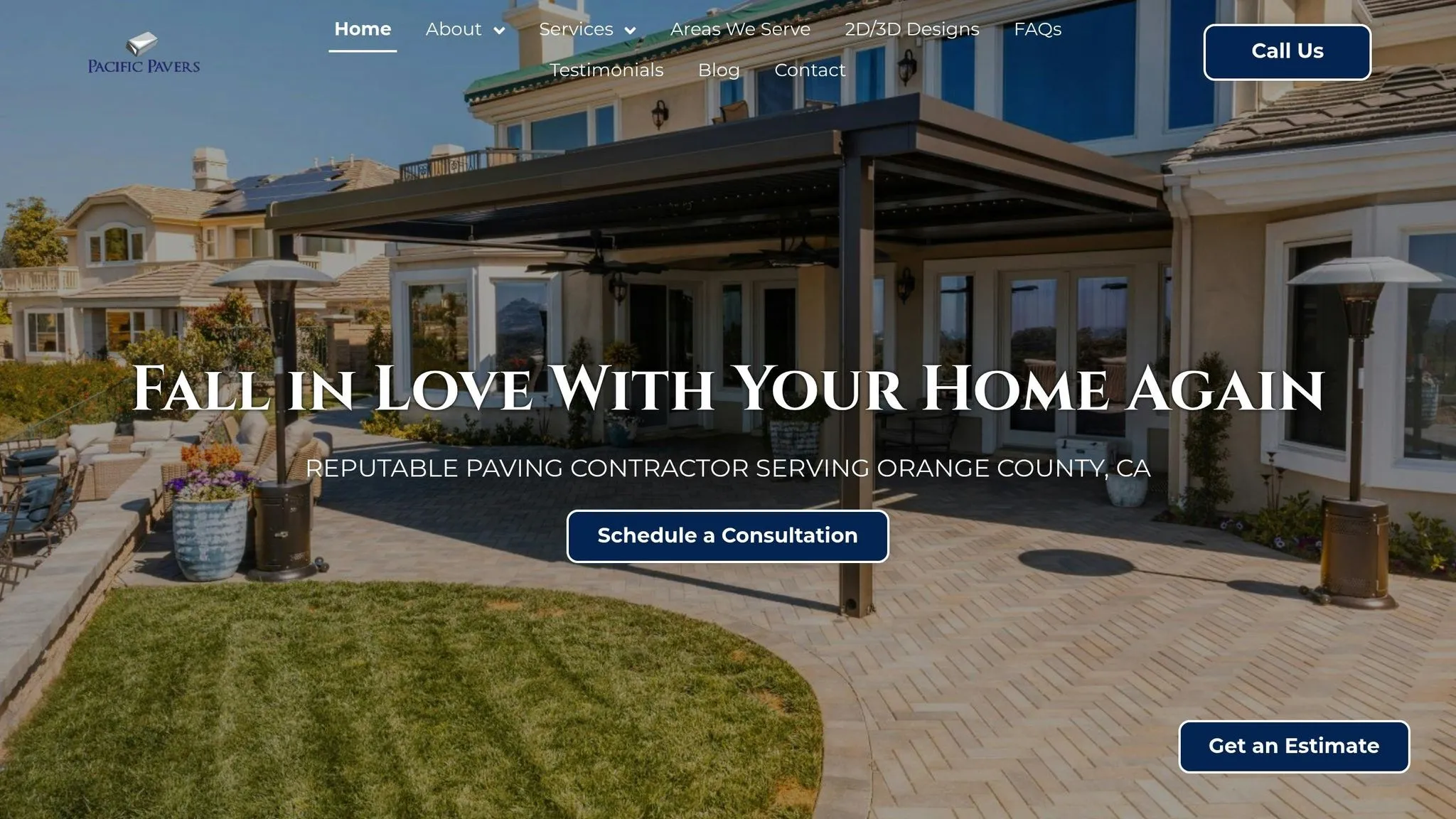
Pacific Pavers stands out as a top hardscape and outdoor living contractor in Orange County, CA. They leverage detailed site analyses to turn challenges into design opportunities, addressing the unique conditions of Southern California, including its climate, soil, and regulatory environment.
Their approach is all-encompassing. Pacific Pavers evaluates sites for the seamless integration of outdoor features like custom paver installations, outdoor kitchens, firepits, patios, pool remodeling, synthetic grass, veneer stone, and retaining walls. This ensures that every element works together, even when site-specific constraints are in play.
Pacific Pavers states, "As a trusted leader in the industry, we bring expertise and innovation to every project, ensuring exceptional results."
What makes Pacific Pavers exceptional is their in-depth understanding of local regulations and community standards. They specialize in HOA renovation projects, working closely with HOA boards to ensure designs meet community guidelines while enhancing overall aesthetics. Their expertise is invaluable when navigating the often-complicated approval processes in Orange County’s planned communities.
Collaboration is at the heart of their design and planning process. During the site analysis phase, Pacific Pavers works closely with clients to align the project vision with practical, site-specific solutions. Their landscape design services focus on creating outdoor spaces that are both functional and visually appealing. They consider factors like sun exposure, natural wind protection, and optimal views, all while balancing client goals with site limitations.
Pacific Pavers has earned a 4.8/5 rating on verified local review platforms as of 2025. Clients frequently commend their attention to detail and ability to deliver custom solutions that comply with local regulations. Their expertise extends to specialized installations like Alumawood and Struxure patio covers, which require careful planning for wind loads, drainage, and structural integration during the site analysis process.
The cost of a professional site analysis with Pacific Pavers typically ranges from $500 to $2,500, depending on the project’s size and complexity. This upfront investment often saves money in the long run by avoiding costly redesigns or delays caused by overlooked site conditions.
Pacific Pavers’ commitment to quality is evident in their use of premium materials and highly skilled installers. They follow industry best practices, ensuring their recommendations are not only practical but also durable enough to perform well in Orange County’s unique environmental conditions.
Conclusion and Next Steps
Key Points Summary
A thorough site analysis is the backbone of any outdoor project. By using a checklist, you can ensure that every critical factor influencing your design and construction decisions is accounted for. Documenting site features minimizes the risk of installation conflicts. Evaluating elements like climate, sun exposure, wind patterns, and soil conditions helps you select materials and plants that thrive in your specific environment.
Being aware of local regulations is crucial to avoid costly delays or redesigns. Identifying both opportunities and challenges early on allows you to address potential issues, such as drainage problems, with creative solutions while making the most of positive site features like scenic views or natural slopes that are perfect for terraced designs.
When planning for outdoor living elements – like firepits, outdoor kitchens, retaining walls, or synthetic grass – it’s important to consider how these features will interact with your site’s unique characteristics. Research shows that a systematic site analysis checklist can cut down on change orders and rework by up to 30%, as it ensures all conditions are assessed before any construction begins.
Keep an eye out for common issues like poor drainage, steep slopes, or utility conflicts, along with opportunities such as sunny areas, natural privacy, or appealing views. These observations will guide the next steps of your project.
Getting Started
Armed with your checklist, start your site walkthrough. If you encounter challenges like unstable soil or drainage concerns, it’s wise to seek professional advice.
For more complex situations – such as significant drainage issues, unstable terrain, or unclear zoning laws – consulting a licensed contractor or landscape architect is essential. Their expertise is invaluable for projects that involve structural elements, utility coordination, or navigating local regulations.
For residents in Orange County, CA, specific considerations include HOA rules and water use restrictions, which can influence plant and feature choices. Pacific Pavers is well-versed in these local factors and offers a range of services, from custom paver installations and outdoor kitchens to pool remodeling and Alumawood patio covers.
Let your completed checklist serve as the foundation for your outdoor project. Reach out to a professional contractor like Pacific Pavers to schedule a consultation. They can help you turn your site analysis findings into actionable plans that align with your functional needs and aesthetic goals. With their deep knowledge of Orange County’s unique conditions and regulations, they deliver tailored solutions that make the most of your site while ensuring full compliance with local standards.
FAQs
What are common mistakes to avoid when conducting an outdoor site analysis?
When analyzing an outdoor site, it’s essential to pay attention to details that might impact your project’s success. For instance, overlooking drainage issues can lead to water pooling, flooding, or even structural damage. Similarly, ignoring sun exposure and shade patterns might leave you with outdoor spaces that are too hot, too cold, or prone to material wear over time. And don’t forget, skipping over local regulations or HOA guidelines can result in delays or expensive changes down the road.
To avoid these pitfalls, take a close look at the site’s topography, soil condition, and access points. If you’re looking for expert guidance, companies like Pacific Pavers can help bring your vision to life with tailored outdoor solutions that fit your specific needs.
What are the best ways to address drainage problems in clay-heavy soils common in Orange County, CA?
Clay-heavy soils can make managing water a bit tricky, especially in places like Orange County, CA, where keeping outdoor spaces properly drained is crucial. One way to tackle this issue is by installing a drainage system. Options like French drains or channel drains are great for redirecting water away from areas prone to pooling. Another effective approach is grading the area to create a slight slope, encouraging water to flow naturally away from your space.
For a longer-lasting fix, consider using permeable pavers. These pavers let water seep through, cutting down on pooling and runoff while maintaining a functional and visually appealing surface. Companies like Pacific Pavers specialize in custom hardscaping projects, including paver installations, to help you design a durable, well-drained outdoor area that fits your specific needs.
How can I make sure my outdoor project follows local zoning laws and HOA requirements?
Before kicking off your outdoor project, it’s essential to check local zoning laws and HOA guidelines. This means looking into permits, setback requirements, and any design standards that apply to your area or community. Taking the time to review these rules upfront can save you from potential headaches later.
Pacific Pavers can lend a hand with HOA renovation projects, guiding you through the maze of regulations. Their experience with outdoor projects makes it easier to stay within the rules while bringing your vision to life. You can focus on designing your ideal space while they help ensure everything stays compliant.