

When winter hits, your outdoor spaces face a tough challenge: freeze-thaw cycles. The wrong paver materials can crack, shift, and cost you big in repairs. But the right ones? They stay durable, safe, and low-maintenance, even in harsh conditions. Here’s a quick look at the best frost-resistant paver options:
- Concrete Pavers: Affordable, durable, and slip-resistant. Ideal for most climates.
- Brick Pavers: Classic look with high density for freeze-thaw durability.
- Granite Pavers: Premium choice for extreme durability and style.
- Porcelain Tile Pavers: Nearly waterproof and frost-proof with minimal maintenance.
- Permeable Plastic Pavers: Drain water efficiently, preventing frost heave.
- Rubber Pavers: Flexible material that resists cracking and offers excellent traction.
- Sandstone/Limestone Pavers: Elegant natural stones, but require sealing for frost resistance.
Each option balances durability, cost, and maintenance differently. Whether you prioritize longevity, affordability, or style, there’s a frost-resistant paver to suit your needs.
Quick Comparison:
| Material | Cost per sq ft | Maintenance | Slip Resistance | Frost Durability |
|---|---|---|---|---|
| Concrete Pavers | $8–$15 | Low | High | High |
| Brick Pavers | $10–$20 | Moderate | Moderate–High | High |
| Granite Pavers | $15–$30 | Very Low | High | Very High |
| Porcelain Tile Pavers | $12–$25 | Very Low | Moderate–High | Very High |
| Permeable Plastic Pavers | $8–$16 | Very Low | Very High | Very High |
| Rubber Pavers | $10–$18 | Low | Very High | High |
| Sandstone/Limestone Pavers | $12–$25 | Moderate | High | Moderate–High |
Choose materials that match your climate, budget, and maintenance preferences. Proper installation and drainage are just as important to ensure your pavers last through freezing winters.
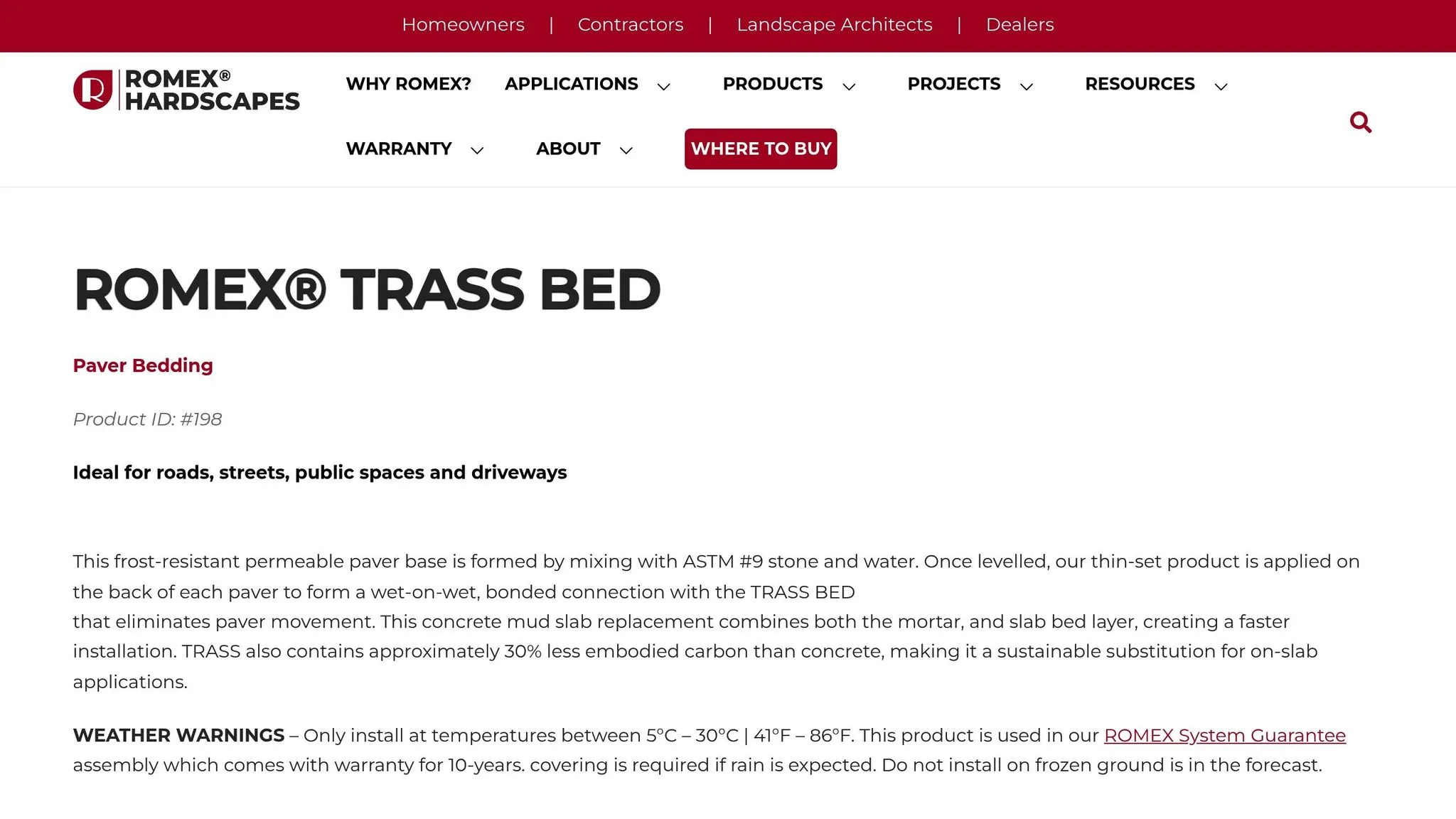
ROMEX Trass Bed – Water Permeable Paver Base Installation | Frost Resistant Drainage Mortar
1. Concrete Pavers
Concrete pavers are a go-to option for outdoor surfaces, thanks to their toughness and affordability. Their dense composition and low water absorption make them especially good at handling freeze-thaw cycles, a critical factor in cold climates. Let’s dive into how they hold up under these conditions.
Freeze-Thaw Durability
When it comes to winter durability, concrete pavers are engineered to last. Their high cement content and interlocking design work together to resist the damage caused by freeze-thaw cycles. If you’re looking for proven performance, go for pavers that meet the ASTM C1645-16 standard. The interlocking design also allows for slight movement, which helps prevent cracking when temperatures fluctuate.
Slip Resistance
Safety is another strong point for concrete pavers. Textured finishes and anti-slip additives ensure better traction, even on wet or icy surfaces, making them a practical choice for walkways and driveways during winter.
Maintenance Requirements
One of the best parts about concrete pavers is how easy they are to maintain. If one gets damaged, you can simply replace it without disturbing the rest. For permeable systems, minimal cleaning can keep them in great shape for 40–50 years. Unlike natural stone, which often requires regular sealing, concrete pavers generally need just occasional cleaning and re-leveling to stay in good condition.
Cost per Square Foot
Concrete pavers offer excellent bang for your buck, typically costing between $8 and $15 per square foot. This affordability, paired with their frost-resistant properties, makes them a favorite for both homeowners and businesses. For expert advice and installation, you can always turn to professionals like Pacific Pavers.
2. Brick Pavers
Brick pavers bring a classic look and impressive durability to outdoor spaces, making them a smart choice for regions with tough winters. Made from high-density clay and fired at high temperatures, these pavers have earned a reputation for holding up well in cold climates, especially in areas like the Northeast and Midwest.
Freeze-Thaw Durability
One of the key reasons brick pavers excel in winter is their dense structure and low porosity. The high-temperature firing process reduces their ability to absorb water, which helps prevent freeze-thaw damage like cracking or surface flaking. To ensure maximum durability, look for pavers that meet ASTM C67 standards, as these have been tested for their resistance to freezing, thawing, and de-icing salts. Their low water absorption makes them a reliable option, standing strong alongside concrete pavers in harsh weather.
Slip Resistance
Thanks to their naturally textured surface, brick pavers provide solid slip resistance. This rough texture offers dependable traction, even when conditions turn wet or icy, making them a safe choice for winter walkways and driveways.
Maintenance Requirements
Brick pavers are as low-maintenance as they are durable. Basic upkeep includes sweeping, occasional power washing, and re-sanding the joints to prevent weeds and maintain stability. When it comes to de-icing, stick with sodium chloride (rock salt), which is safe for brick surfaces. Avoid products like magnesium chloride or calcium magnesium acetate, as they can lead to deterioration. After winter, inspect your pavers for any damage and replace individual bricks if needed. For more thorough upkeep, professional services like Pacific Pavers can handle cleaning and repairs.
Cost per Square Foot
Installing brick pavers usually costs between $8 and $15 per square foot. While they may be slightly more expensive than basic concrete pavers, they are still more budget-friendly than high-end natural stones like granite. With a lifespan ranging from 25 to 100 years and minimal maintenance needs, brick pavers are a solid long-term investment, particularly for areas prone to freeze-thaw cycles.
3. Granite Pavers
Granite pavers are a top-tier option for cold climates, offering unmatched durability and timeless style. Known for their ability to withstand harsh winters, granite has become a favorite in cities like Boston, Minneapolis, and Chicago. These areas see heavy foot traffic and endure relentless freeze-thaw cycles, yet granite surfaces remain intact year after year.
Freeze-Thaw Resilience
Granite’s ability to handle freeze-thaw cycles comes down to its natural composition. Its high density and low porosity mean it absorbs very little water, reducing the risk of cracks or surface damage caused by expanding ice. This makes granite one of the most dependable choices for regions that face severe winter conditions.
Slip-Resistant Surfaces
Granite excels in slip resistance, especially when treated with textured finishes like flamed or bush-hammered surfaces. These finishes create a rough texture that provides excellent traction, even in icy weather.
However, polished or smooth granite should be avoided outdoors in cold climates, as they can become dangerously slippery. For both safety and style, a flamed surface finish is a smart choice. It offers a natural roughness that enhances grip while maintaining granite’s refined appearance.
Low Maintenance Needs
Granite’s natural density and resistance to stains make maintenance a breeze. Regular sweeping and occasional washing are usually all that’s needed. Plus, granite stands up well to de-icing salts, which can degrade other materials like concrete over time.
Thanks to its resistance to chemicals, you won’t need special cleaners or treatments after applying winter salts. While sealing is optional, it can boost stain resistance for those who want extra protection.
In May 2024, Pacific Pavers cleaned, sanded, and sealed a paver driveway for Sheila F. in Orange County, CA. They also leveled stone pavers on a patio and pool deck, then cleaned, sanded, and sealed them.
For ongoing care, professional contractors can handle occasional cleaning and sealing, ensuring granite retains its beauty for decades.
Cost per Square Foot
Granite pavers range in cost from $10 to $25 per square foot installed, reflecting their premium quality and performance. For higher-end options with thicker cuts or specialized finishes, prices can climb to $50 per square foot, depending on the granite variety and project complexity.
While the initial investment is higher than materials like concrete or brick, granite’s 50+ year lifespan and minimal upkeep make it a long-term value. Its resistance to cracking, chemical wear, and weathering means fewer repairs or replacements over time, making it a cost-effective choice for homeowners in freeze-prone areas.
When you consider the durability, low maintenance, and longevity granite offers, the yearly cost of ownership often rivals or beats less durable alternatives.
4. Porcelain Tile Pavers
Porcelain tile pavers, with water absorption rates below 0.5%, are designed to be nearly waterproof and resistant to freeze–thaw damage. This durability has made them a top choice for areas that experience harsh winters, such as Long Island, NY, and the Midwest.
Freeze–Thaw Durability
What makes porcelain pavers so resistant to frost? It’s all about their dense composition and the way they’re manufactured. These tiles are fired at extremely high temperatures, creating a non-porous surface that prevents water from seeping in. This feature eliminates the risk of freeze–thaw damage. As a result, porcelain pavers often perform better than materials like marble or travertine in cold climates, which typically require more sealing and maintenance. Some manufacturers even incorporate nano-materials to make the tiles even tougher. This durability not only protects the pavers but also improves safety by maintaining a reliable surface.
Slip Resistance
Porcelain pavers also excel in slip resistance. Many come with textured finishes that provide extra grip, making them a smart option for areas prone to ice or snow, such as pool decks, patios, and walkways. Whether you need a smooth finish for a covered space or a textured one for high-traffic zones, porcelain offers the flexibility to match your specific needs.
Maintenance Requirements
One of the standout benefits of porcelain pavers is how easy they are to maintain. Their non-porous surface resists stains, mold, and mildew. Unlike natural stone, porcelain doesn’t require sealing, and it holds up well against de-icing salts, avoiding the chemical damage often seen in concrete. For regular upkeep, a quick clean with water and a mild detergent is usually enough to keep them looking fresh.
In June 2023, Shaun F. shared that Pacific Pavers provided "background upkeep for our existing pavers" and did an excellent job.
For those who prefer professional care, occasional deep cleaning by contractors can help maintain the pavers’ appearance for many years.
Cost per Square Foot
Porcelain pavers typically cost between $7 and $15 per square foot, with high-end options exceeding $20. Their combination of durability, low maintenance, and competitive pricing makes them a solid investment for cold climates. Compared to granite, which ranges from $10 to $25 per square foot, porcelain offers similar performance while potentially saving money over time, thanks to its lack of sealing requirements and reduced maintenance costs.
sbb-itb-11ea599
5. Permeable Plastic Pavers
Permeable plastic pavers offer a modern approach to combating freeze-thaw damage. Unlike traditional materials that resist water penetration, these pavers are designed to let water drain directly through the system and into the ground. By working with water rather than against it, they reduce the risks associated with freezing temperatures. This design not only minimizes water retention but also enhances their durability in extreme cold.
Freeze-Thaw Durability
The key to the frost resistance of these pavers lies in their exceptional drainage system. Water flows through the pavers instead of being trapped inside, leaving little moisture to freeze and expand during cold weather. For instance, TRUEGRID PRO PLUS pavers can endure temperatures as low as -58°F without deteriorating. Their impressive 98% permeability ensures water drains away almost immediately, which helps prevent frost heave by slowing the freezing of the soil beneath them.
Slip Resistance
Thanks to their efficient drainage and textured surface, these pavers offer excellent slip resistance, even in icy conditions. The gravel infill further improves traction, reducing the likelihood of slips and falls. Since water doesn’t pool or refreeze on the surface, they create a safer environment, making them ideal for busy areas like walkways and patios.
Maintenance Requirements
One of the standout features of permeable plastic pavers is their low maintenance. Over their 40–50 year lifespan, they typically require only occasional checks to ensure the infill remains evenly spread and the drainage system stays clear. Unlike concrete or natural stone pavers, they don’t demand regular sealing, de-icing treatments, or repairs for cracks, which simplifies upkeep significantly.
Cost per Square Foot
The cost of permeable plastic pavers ranges from $5 to $15 per square foot, with material costs alone falling between $2 and $5 per square foot. Their affordability, combined with minimal maintenance needs, makes them a cost-effective long-term option for both residential and commercial projects.
6. Rubber Pavers
Rubber pavers are a durable and eco-friendly paving solution made from recycled tires. They’re designed to handle freeze–thaw cycles with ease, thanks to their flexibility, which prevents cracking. Their adaptability makes them a practical choice for both residential and commercial spaces, especially in areas where fluctuating temperatures can cause problems for more rigid materials.
Freeze–Thaw Durability
What sets rubber pavers apart in cold weather is their ability to flex rather than crack. Unlike traditional materials, these pavers adjust to temperature changes and absorb pressure from frost heave. When water freezes beneath the surface and pushes upward, rubber pavers bend to accommodate the movement, avoiding the damage that rigid surfaces often experience. Many rubber pavers are built to last through decades of harsh winters, with warranties typically extending up to 10 years for outdoor use.
Slip Resistance
Safety is a top priority during icy conditions, and rubber pavers deliver excellent traction. Their naturally grippy surface, combined with textured finishes, provides reliable slip resistance – even when wet or icy. This makes them an ideal choice for walkways, patios, and pool areas where winter safety is a concern, helping to reduce the risk of slips and falls during snowy or icy weather.
Maintenance Requirements
Rubber pavers are impressively low-maintenance. They resist cracking and chipping during freeze–thaw cycles, and their upkeep is straightforward – sweeping, rinsing, and occasional spot cleaning are typically all that’s needed. Unlike concrete or stone, they don’t require sealing or special winter treatments. Standard snow removal methods, like shoveling or using a snow blower, won’t damage their flexible surface, and common de-icing agents like rock salt are safe to use. Plus, UV-resistant formulations help maintain their color, and individual tiles can be easily replaced if needed. This combination of durability and ease of care makes rubber pavers a practical and cost-effective option.
Cost per Square Foot
Rubber pavers typically range from $6 to $12 per square foot installed. While they may be pricier than basic concrete pavers, they’re a competitive alternative to mid-range concrete and premium natural stone options. When you consider their long lifespan and minimal maintenance needs, they offer excellent value over time, particularly in climates with freeze–thaw cycles.
For professional installation of frost-resistant pavers in Orange County, visit Pacific Pavers (https://pacificpavers.com).
7. Sandstone and Limestone Pavers
Wrapping up the list, natural stone options like sandstone and limestone bring a mix of elegance and durability to outdoor spaces, especially in frost-prone areas. These materials not only boost the visual appeal of your landscape but also offer varying degrees of frost resistance. However, their performance heavily depends on selecting the right type and ensuring proper installation techniques.
Freeze-Thaw Durability
When it comes to freeze-thaw cycles, the density and porosity of sandstone and limestone are key factors. Stones with higher density and lower water absorption are less likely to crack during these cycles.
Sandstone, while capable of withstanding harsh winters, tends to have a higher porosity. This means it absorbs more water, increasing the risk of spalling unless a denser, less porous variety is chosen and sealed properly. On the other hand, limestone is naturally denser and less porous, making it a better option for freeze-thaw resistance. When sealed correctly, limestone holds up well against repeated freeze-thaw cycles with minimal damage. For example, projects in colder regions like Minnesota and upstate New York have successfully used sealed limestone for patios and outdoor spaces, provided they include proper sealing and drainage systems.
Slip Resistance
Limestone is a standout choice for areas prone to ice, thanks to its naturally non-slip surface, which works well for pool decks and patios. Sandstone can also offer good slip resistance, especially if treated with a textured or flamed finish. However, smoother sandstone surfaces can become slippery when wet or icy, making textured limestone a safer bet for icy conditions.
Maintenance Requirements
Both sandstone and limestone pavers need sealing every 2–3 years to minimize water absorption and protect against damage. Routine cleaning is also important to clear away debris and prevent moss or algae buildup. Winter inspections are essential to catch and address any damage early. Sandstone generally requires more upkeep due to its porous nature, while limestone, when properly sealed, demands moderate maintenance. With regular care, these stones can combine lasting durability with timeless beauty.
Cost per Square Foot
The cost of sandstone pavers ranges from $10 to $25 per square foot installed, while limestone pavers typically fall between $12 and $30 per square foot. When installed and maintained properly, these natural stone pavers can last 20–30 years or more, making them a solid long-term investment for cold climates.
For professional installation tailored to frost-resistant natural stone, Pacific Pavers offers expert services to help you choose and install the best materials for your specific needs and climate.
Material Comparison Chart
Here’s a breakdown of key traits for various paver materials, including their costs, maintenance needs, slip resistance, and frost durability.
| Material | Pros | Cons | Cost (USD/sq ft) | Maintenance Needs | Slip Resistance | Frost Durability |
|---|---|---|---|---|---|---|
| Concrete Pavers | Durable; handles freeze-thaw cycles well; replaceable; slip-resistant textures available | May need occasional re-leveling; labor-intensive installation | $8–$15 | Low | High | High |
| Brick Pavers | Dense construction; performs well in freeze-thaw conditions; classic look | Susceptible to salt damage (some clay types); requires periodic inspections | $10–$20 | Moderate | Moderate–High | High |
| Granite Pavers | Extremely dense; low maintenance; resistant to frost and salt damage | Expensive; heavy weight demands a strong base | $15–$30 | Very Low | High | Very High |
| Porcelain Tile Pavers | Frost-proof (<0.5% water absorption); easy to clean; highly durable | Higher upfront cost; can be slippery if not textured | $12–$25 | Very Low | Moderate–High | Very High |
| Permeable Plastic Pavers | Freeze-thaw damage resistant; 98% permeable; withstands extreme cold (-58°F) | Industrial look may not fit all designs | $8–$16 | Almost Zero | Very High | Very High |
| Rubber Pavers | Excellent slip resistance, even when wet; comfortable; eco-friendly options | Not ideal for heavy loads; potential fading over time | $10–$18 | Low | Very High | High |
| Sandstone/Limestone Pavers | Natural appearance; good slip resistance when textured; timeless aesthetic | Porous; requires sealing every 2–3 years; prone to spalling | $12–$25 | Moderate–High | High | Moderate–High |
Performance in Extreme Conditions:
TRUEGRID permeable plastic pavers are exceptional in handling extreme temperatures, enduring lows of -58°F with minimal maintenance over a lifespan of 40–50 years. Similarly, porcelain pavers thrive in cold climates, such as New England winters, due to their frost-proof design and long-lasting durability.
Salt Resistance and Long-term Value:
Granite and porcelain pavers are naturally resistant to salt damage, while sealed concrete and permeable plastic pavers also mitigate chemical wear. Though granite, porcelain, and permeable plastic pavers come with higher initial costs, they require little upkeep and last over 30 years. Concrete pavers, on the other hand, strike a balance between affordability and manageable maintenance needs.
Proper installation and regular care can further bolster the frost resistance and longevity of all these materials.
Conclusion
Choosing paver materials that can withstand frost is a smart way to protect your investment and keep your outdoor spaces safe during winter. In colder climates, freeze-thaw cycles can wreak havoc on weaker materials, leading to cracks, shifting, and expensive repairs. Picking the right materials from the start can help you avoid these headaches.
Your local climate plays a big role in deciding which material is best. For areas with frequent freezing and thawing, options like granite, porcelain, and permeable plastic pavers are excellent choices. They’re built to handle temperature swings without breaking down.
But it’s not just about the material – site conditions matter, too. Poor drainage or areas that stay shaded for long periods can undermine even the most durable frost-resistant pavers. To combat this, ensure proper drainage, maintain a good slope, and consider slip-resistant materials for spots that tend to stay icy.
Budget and maintenance preferences also come into play. While materials with a higher upfront cost, like natural stone, often require less upkeep and last longer, budget-friendly choices like concrete pavers can still offer great frost resistance with reasonable maintenance. For example, natural stone pavers can last over 50 years, concrete pavers can endure for 25–50 years, and porcelain pavers often exceed 30 years when properly installed and cared for.
Speaking of installation, even the best materials won’t perform well if they’re not installed correctly. Hiring experienced contractors who understand local weather challenges and follow ASTM standards for freeze-thaw testing is crucial. This ensures your paver system stays durable and functional through the toughest winters.
FAQs
What should I consider when selecting pavers that can handle freezing temperatures?
When selecting pavers for cold climates, it’s important to choose materials that can handle freeze-thaw cycles without cracking or breaking down. Opt for sturdy, non-porous materials like concrete, natural stone, or brick. These options are less likely to absorb moisture, which helps minimize the risk of frost-related damage. Make sure the pavers are frost-resistant and installed with proper drainage to prevent water from collecting underneath.
For professional guidance, companies like Pacific Pavers can assist in selecting and installing the right materials, ensuring your outdoor area remains functional and visually appealing, even in harsh winter conditions.
How do permeable plastic pavers prevent frost heave, and are they a good choice for residential properties?
Permeable plastic pavers are a smart solution for combating frost heave, a common issue in colder climates. By allowing water to drain through their surface and into the ground, these pavers help reduce the amount of water that gets trapped beneath. This prevents freezing and expansion, which can otherwise lead to cracks or uneven surfaces due to freeze-thaw cycles.
Ideal for residential use, these pavers are particularly useful in areas with harsh winters. Beyond their practicality, they offer environmental advantages like better stormwater management, making them a great choice for driveways, patios, and walkways. To achieve the best results, it’s worth consulting professionals who specialize in custom paver designs and installations tailored to your specific needs.
How can I maintain natural stone pavers to ensure they last in freeze-thaw climates?
To keep your natural stone pavers in great shape in freeze-thaw climates, consistent care is essential. Begin by applying a high-quality, weather-resistant sealant to shield the pavers from moisture, which can seep in and cause cracks when temperatures fluctuate. Make sure to reapply the sealant every 1-2 years or follow the manufacturer’s guidelines for the best results.
Keep the surface tidy by regularly sweeping away debris and quickly clearing snow and ice. When removing snow, use a plastic shovel instead of a metal one to avoid scratching the stone. Choose de-icing products that are safe for natural stone to prevent any chemical damage. Also, address any drainage problems to stop water from pooling, as standing water can worsen freeze-thaw damage. With proper maintenance, your pavers will stay strong and beautiful for years to come.