
Veneer stone is a lightweight material that mimics the look of natural stone without the structural challenges of full-thickness stone. It’s perfect for outdoor spaces like kitchens, fire pits, patios, and pool surrounds. Here’s why:
- Durability: Withstands weather, UV exposure, and temperature changes without cracking or fading.
- Curb Appeal: Offers a variety of colors, textures, and patterns to match any home style.
- Cost-Effective: Less expensive than full-thickness stone due to reduced material and labor needs.
- Low Maintenance: Requires minimal cleaning and upkeep, retaining its look over time.
- Versatility: Works seamlessly with outdoor features like fireplaces, retaining walls, and kitchen islands.
For homeowners in Southern California, professionals like Pacific Pavers specialize in veneer stone installations, blending style and functionality for year-round outdoor enjoyment.
Behind the Design: How to Pick the Perfect Stone Veneer
1. Long-Lasting Performance in Outdoor Conditions
Veneer stone is built to handle the harshest outdoor elements, from heavy downpours and snowstorms to scorching sunlight and sudden temperature swings. Its low porosity makes it highly water-resistant, reducing the risk of freeze-thaw damage and cracking during cold winters.
Thanks to its natural, stable minerals, veneer stone also stands up to UV exposure, keeping its colors and textures intact season after season. Unlike materials with surface coatings that fade or peel, the stone’s coloration runs through its entire structure, ensuring a lasting appearance.
Unlike wood siding that can rot or vinyl that may warp, veneer stone holds its form under extreme conditions. Its natural fire resistance adds an extra layer of safety, especially around outdoor kitchens, grills, or fire pits.
The material’s dense structure blocks moisture, lowering the chances of mold growth or structural damage. This makes it especially useful in areas with frequent rain or irrigation, where it requires only minimal upkeep to maintain its look. These qualities not only highlight its durability but also pave the way for its aesthetic and cost benefits, which are explored further in the following sections.
Pacific Pavers’ projects in Orange County showcase how veneer stone’s resilience can elevate outdoor spaces.
2. Enhanced Curb Appeal and Design Options
Veneer stone brings a whole new level of charm to outdoor spaces by adding depth, texture, and dimension. Unlike flat finishes like stucco or painted concrete, veneer stone creates a dynamic look with its natural shadowing and color variations. Even small touches – like wrapping porch columns or adding a stone wainscot to your home’s front exterior – can significantly boost curb appeal without requiring a full-scale renovation. These enhancements naturally open the door to a variety of design possibilities.
With a wide range of colors, textures, and patterns, veneer stone fits seamlessly into any architectural style. Whether you’re drawn to warm earth tones, cool grays, soft creams, or mixed blends, there’s a shade to complement your roof and siding. The texture options are just as versatile, ranging from rugged, split-face ledgestone for a rustic feel to smooth, lightly textured surfaces for a more polished, modern look. And with patterns like stacked stone panels, ashlar blocks, fieldstone, or dry-stack arrangements, you can craft a style that’s uniquely yours – whether you’re aiming for a cozy cottage aesthetic or a sleek, contemporary vibe.
Matching veneer stone to your home’s design is straightforward. For example, Craftsman homes pair beautifully with earthy, textured stones, while modern designs shine with clean lines and neutral tones. Veneer stone not only enhances the overall style but also reinforces the character of your home.
Outdoor features also benefit greatly from veneer stone’s elegant appearance. Imagine a stone-clad fireplace or fire pit serving as the centerpiece of your patio, creating a cozy gathering spot. Outdoor kitchens, retaining walls, and fire pits take on a cohesive, high-end look when finished with veneer stone, transforming patios into complete outdoor living spaces.
Professionals like Pacific Pavers make integrating veneer stone effortless. Based in Orange County, Pacific Pavers specializes in blending veneer stone with custom paver installations, outdoor kitchens, and fire features. Their expertise lies in selecting stones that align with your home’s architectural style and coordinating with existing materials – like pavers, concrete, and roofing – to create a balanced and visually stunning landscape. The result? A home that not only looks more inviting but also increases in value.
3. Lower Cost Compared to Full-Thickness Stone
Veneer stone doesn’t just boost curb appeal – it also slashes project costs. One of its biggest advantages is the lower price tag compared to traditional full-thickness stone. Veneer stone typically measures ¾ inch to 1¼ inches thick, while full-thickness stone is much bulkier at 3–5 inches thick. This thinner profile uses far less raw material, which naturally cuts down on material expenses.
Its lightweight nature speeds up installation and reduces labor time. Plus, interlocking panel systems simplify the process even further, saving additional labor costs. On the other hand, full-thickness stone requires skilled masons to handle its heavy pieces, driving up labor expenses.
There’s more: the lighter weight of veneer stone eliminates the need for costly structural reinforcements. Full-thickness stone is so heavy that it often requires engineered footings, thicker foundations, and reinforced framing to support the load. Veneer stone, however, can usually be applied over standard framed or block walls with proper backing. This avoids the need for massive footings in most outdoor applications. For tall features like outdoor fireplaces or elevated facades, this can be a game-changer, as full-depth stone would often require additional engineering and permitting, further inflating costs. The best part? These savings don’t mean compromising on quality.
Veneer stone also delivers a premium look for outdoor spaces. Natural veneer stone maintains the same authentic texture and color as full-thickness stone. Whether you’re designing fire pits, outdoor kitchens, seating walls, or home facades, veneer stone achieves that high-end stone aesthetic while keeping your budget in check.
When planning your project, ask contractors for detailed estimates that break down material, labor, and structural costs. This will help you see exactly how veneer stone saves money compared to full-thickness options. In Southern California, companies like Pacific Pavers can even provide side-by-side design options – one using full-thickness stone and another with veneer – so you can compare costs and visual results before making a decision. By using veneer stone on focal points like fireplaces and kitchen islands, and pairing it with complementary materials elsewhere, you can create a polished, upscale outdoor space without the hefty price tag of full-depth stone on every surface.
sbb-itb-11ea599
4. Minimal Maintenance Requirements
Veneer stone makes it easy to keep outdoor spaces looking great with very little effort. A simple rinse with a garden hose is usually enough to wash away dust and pollen. For tougher grime, all you need is mild soap, water, and a soft brush – no fancy or specialized cleaners required.
Thanks to its natural toughness, veneer stone is incredibly low-maintenance. It stands up to staining, chipping, and fading, even when exposed to extreme weather like intense heat, freezing cold, or heavy moisture. Unlike painted surfaces that can crack or peel under harsh conditions, veneer stone retains its finish over time. This means features like outdoor fireplaces, kitchen islands, and patio walls stay attractive year after year without constant upkeep.
In most cases, veneer stone doesn’t even need sealing. Its built-in resistance to moisture and stains makes sealing optional for many residential outdoor settings. If sealing is desired – like in high-use areas such as outdoor kitchens prone to grease spills or spaces exposed to de-icing salts – it typically only needs reapplication every few years. That said, in many modern installations, the stone performs just fine without sealing at all.
Compare this to materials like wood siding, which requires regular staining or painting to protect against moisture and UV damage, or composites that need periodic protective coatings. Veneer stone, by contrast, just needs an occasional wash. This simplicity not only saves time but also cuts down on long-term costs by eliminating the need for paint, stain, or sealers – and the labor involved in applying them.
For high-traffic areas like fire pits and outdoor kitchens, this low-maintenance quality is especially important. Quickly wiping away soot or grease spills keeps the stone looking fresh. It’s also smart to avoid harsh chemicals or high-pressure washing directly on mortar joints, as these can cause damage. A quick annual check for issues like cracked mortar or loose pieces can help prevent bigger problems down the line. If you’re working with experienced professionals like Pacific Pavers in Southern California, don’t hesitate to ask for care tips tailored to your local climate and the specific stone used in your project.
With its durability and easy upkeep, veneer stone is a practical and cost-effective choice for outdoor spaces.
5. Works with Various Outdoor Features
Veneer stone is a go-to material for a wide range of outdoor projects. You’ll often see it used on fire pits, fireplaces, outdoor kitchens, grill islands, retaining walls, accent walls, columns, seat walls, and patio surrounds.
What makes veneer stone so practical? Its slim profile and lightweight design allow it to be installed on framed walls, concrete blocks, or existing masonry without requiring deep footings or heavy structural reinforcements. This makes it a great choice for many outdoor applications.
For outdoor kitchens and grill islands, veneer stone is often used to cover the base of appliances, counters, or bar fronts. The result? A polished, custom look that pairs beautifully with stainless steel and stone or concrete countertops. On fire pits and fireplaces, it’s applied over a concrete block or masonry shell using mortar, creating a heat-resistant, noncombustible surface that can handle high temperatures. Thanks to its thin and modular design, it can even be used on curved surfaces like round fire pits, making installation quicker and easier.
Retaining walls and landscape walls also benefit from veneer stone. It’s applied to the face of engineered wall systems – such as concrete blocks or poured concrete – giving the appearance of full stone without adding unnecessary weight. Because veneer stone is lighter and thinner, it typically doesn’t require deep foundations, provided the base wall is properly designed to handle soil loads and drainage.
Even for remodeling projects, veneer stone is a smart option. It can be installed over existing surfaces like concrete block walls, outdated stucco, or worn concrete seat walls. This allows you to modernize an outdoor space without tearing down the original structure. Experts like Pacific Pavers often recommend this method for refreshing older designs. Whether you’re starting from scratch or updating an existing area, veneer stone makes it easy to bring together pavers, concrete finishes, and other hardscape materials into a unified, stylish look.
Comparison Table
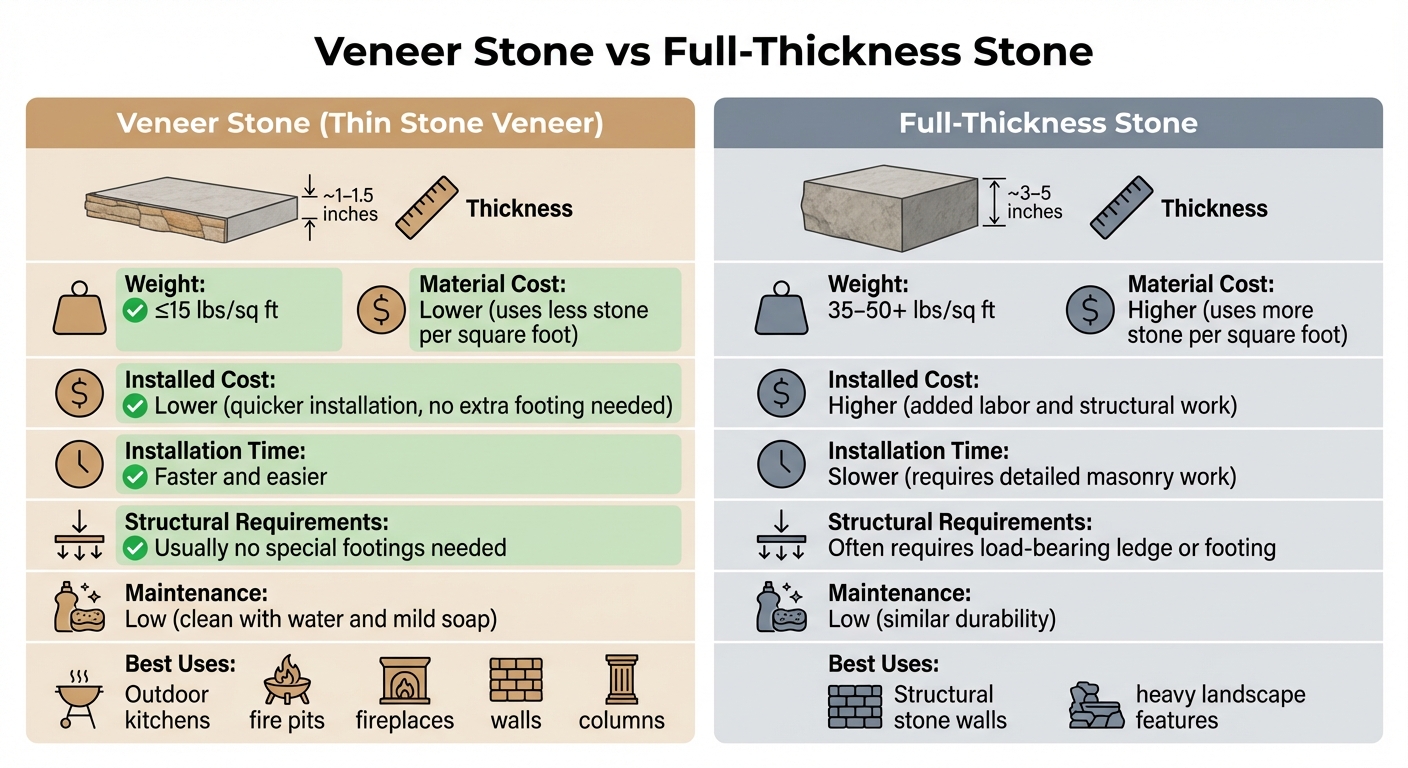
Veneer Stone vs Full-Thickness Stone: Cost, Weight & Installation Comparison
The table below highlights the main differences between veneer stone and full-thickness stone, as detailed earlier.
Veneer stone stands out for its efficient material use and simpler installation process. Typically, veneer stone is about 1–1.5 inches thick and weighs 15 lbs per square foot or less, making it lightweight and easier to handle. On the other hand, full-thickness stone is 3–5 inches thick and weighs between 35–50+ lbs per square foot. This significant weight difference directly impacts the structural requirements and the time needed for installation.
Because veneer stone uses less material, it offers savings in both cost and installation time. Full-thickness stone, however, often requires additional structural support, such as load-bearing ledges or footings, and involves more extensive masonry work. As a result, the total installed cost for veneer stone is generally lower, making it an appealing option for many projects.
Here’s a quick breakdown of the key specifications:
| Aspect | Veneer Stone (Thin Stone Veneer) | Full-Thickness Stone |
|---|---|---|
| Typical Thickness | ~1–1.5 inches | ~3–5 inches |
| Approximate Weight | ≤15 lbs/sq ft | 35–50+ lbs/sq ft |
| Material Cost | Requires less stone per square foot | Uses more stone per square foot |
| Installed Cost | Lower due to quicker installation and no extra footing | Higher because of added labor and structural work |
| Installation Time | Faster and easier to install | Slower; requires more detailed masonry work |
| Structural Requirements | Usually doesn’t need special footings if within weight limits | Often requires a load-bearing ledge or footing |
| Maintenance Needs | Low; clean with water and mild soap as needed | Low; similar durability |
| Best Outdoor Uses | Great for cladding outdoor kitchens, fire pits, fireplaces, walls, and columns | Ideal for structural stone walls and heavy landscape features |
This comparison clearly shows how veneer stone provides a more cost-effective and time-efficient solution for many outdoor applications.
Both options are low-maintenance, needing only occasional cleaning with water and mild soap. For outdoor kitchens, fire pits, or decorative walls, veneer stone delivers the authentic look of natural stone without the extra structural challenges or higher costs associated with full-thickness stone.
Conclusion
Veneer stone brings a range of benefits to outdoor spaces. It holds up against harsh weather without fading or cracking, enhances curb appeal with realistic stone textures that can boost resale value, and costs less than full-thickness stone thanks to its thinner material and quicker installation process. Plus, it’s low-maintenance – an occasional rinse is all it needs – and works beautifully in various applications, like outdoor kitchens, fire pits, fireplaces, retaining walls, pool surrounds, and façades. These qualities make veneer stone a popular choice, especially in Southern California, where professionals turn ideas into stunning realities.
In Orange County, CA, Pacific Pavers stands out as a trusted name in veneer stone installation. Beyond veneer stone, they specialize in custom pavers, concrete design, outdoor kitchens, fire features, pool remodeling, and retaining walls. Their team focuses on critical details like substrate preparation, moisture management, and precision work to ensure long-lasting results. With a 4.9/5 rating from 127 reviews, their craftsmanship and customer service are highly regarded. As Marcela A. shared in August 2023:
They finished earlier than predicted and stayed within our budget. They worked hard, fast, kept the site neat and tidy, and we absolutely love how everything came out!
Professional installation is key to ensuring your veneer stone looks stunning and performs well for years to come. Pacific Pavers can help you explore design ideas, integrate veneer with pavers and landscaping, and even navigate HOA guidelines for a smooth approval process.
If you’re ready to transform your outdoor space, visit pacificpavers.com to schedule a consultation and start planning a project tailored to your Southern California home.
FAQs
What are the differences between veneer stone and natural stone in terms of installation and cost?
Veneer stone is often simpler and quicker to install than natural stone. Its lighter weight and pre-cut pieces make it easier for contractors to handle, which can translate to reduced labor costs and shorter project timelines.
When it comes to expenses, veneer stone tends to be more budget-friendly than natural stone. Natural stone involves costly quarrying and transportation processes, while veneer stone is manufactured to replicate the look of natural stone at a much lower price. This makes it a great option for achieving an upscale look without stretching your budget.
How do I maintain veneer stone in outdoor spaces?
Veneer stone is a great choice for outdoor spaces because it requires minimal upkeep. To maintain its appearance, simply clean the surface now and then with a mild detergent and water to get rid of dirt and debris. It’s also a good idea to check for any loose or damaged stones and take care of repairs quickly to avoid bigger problems.
For added protection over time, consider applying a sealant every few years. This creates a barrier against moisture, stains, and weather-related wear, helping your veneer stone stay strong and visually appealing for the long haul.
Is veneer stone suitable for outdoor kitchens and fire pits, especially in high-temperature areas?
Veneer stone works wonderfully for outdoor kitchens and fire pits, even in areas with high temperatures. Its construction allows it to handle heat without losing its strength or appearance, making it a reliable choice for spaces exposed to flames or intense heat.
Beyond its durability, veneer stone adds a touch of natural elegance to your outdoor setup. It combines practicality with visual appeal, elevating the look and feel of your outdoor living area.
Related Blog Posts
- Benefits of Using Natural Stone for Fire Features
- Stone Veneer vs. Natural Stone: Key Differences
- Benefits of Veneer Stone for Retaining Walls
- Benefits of Built-In Seating for Outdoor Kitchens

Jeff Tobin is the founder of Pacific Pavers, an award-winning outdoor living company serving Orange County, California. With a 30-person team of ICPI-certified professionals, Jeff specializes in transforming residential and HOA properties through custom paver installations, pool remodeling, and complete outdoor living spaces. His company philosophy—”Flawless craftsmanship. Clear communication. Zero stress.”—reflects his commitment to delivering premium results and exceptional customer experiences. As a BBB-accredited business and Belgard Master Craftsman, Pacific Pavers has become known for process-driven operations and elite craftsmanship in the hardscape industry.