
Standard turf lawns are no longer enough for active Orange County estates. More homeowners are replacing unused grass with premium recreation spaces that bring the family together.
A custom backyard pickleball court is a premium outdoor hardscape upgrade that brings professional-grade play and lasting home value to high-end family estates located right across Orange County. While a regulation court is twenty by forty-four feet, a total concrete pad of thirty by sixty feet is best for safe, active family play in your yard. Total build costs for a home court usually range from $35,000 to $80,000, based on the needed ground grading, premium surface finishes, and your custom sports lighting plans. Our expert design-build team handles the strict HOA approval process and detailed site preparation to ensure a beautiful, completely stress-free home court installation experience for your active family.
Designing a custom backyard court requires careful planning to get the exact playing dimensions and layout right. We will detail these layout steps in the section that follows, starting with the exact playing dimensions and recommended footprint.
Request your complimentary 2D/3D backyard court design to see exactly how a custom pickleball court fits your Orange County property before any ground is broken.
What Size Do You Need for a Backyard Pickleball Court?
Regulation Dimensions and Recommended Playing Footprint
Adding a backyard pickleball court can convert your property into a private health and fitness retreat. Active play promotes long-term wellness, and the Centers for Disease Control and Prevention urges active sports to support heart health. Designing a prime play space in Corona del Mar allows you to enjoy outdoor workouts steps from your back door.
To build a standard court, you must first plan for official rules. The official playing zone measures 20 feet wide by 44 feet long. However, a total footprint of 30 feet by 60 feet is advised by USA Pickleball for safe play. This buffer zone gives players enough room to run and chase deep shots without hitting fences or nearby landscape walls.
Planning the nearby space is just as critical as mapping the court lines. High-end backyard designs often feature custom seating areas, viewing pergolas, and bright lighting systems around the outer edge. Ensuring you have several feet of clear space beyond the advised limits keeps the area feeling open and complete.
Court Orientation and Sun Glare Mitigation
When designing a custom outdoor living area, you must watch the path of the sun. Outdoor courts should always run north and south to ensure clean sightlines. This north-south setup keeps the sun out of players’ eyes during early morning or late afternoon games. Facing east or west can lead to blinding glare, which creates a constant safety hazard for fast-paced play.
Terrain Grading, Drainage, and Soil Stability
Many hillside estates in Coto de Caza or Anaheim Hills feature uneven slopes and varied soil types. To prevent a sports court from shifting or cracking over time, the land must be firm and flat. Proper site prep and grading are vital first steps to protect your new court from shifting soil.
Hilly terrain or poor soil can add $10,000 or more to your scope for grading and drainage. This note from AMG World highlights why you need an expert site check. Official maps from the U.S. Geological Survey help identify underlying land patterns and water tables before any earth is moved.
For homeowners who already have a full tennis court, converting is an excellent and smart option. A single tennis court footprint can hold up to four separate pickleball courts. This layout lets you get the most from your space while making coordinated backyard hardscape improvements. By remaking this space, you can host vibrant multi-court tournaments for family and friends in Ladera Ranch.
Which Surface and Paver Option Is Right for a Backyard Pickleball Court?
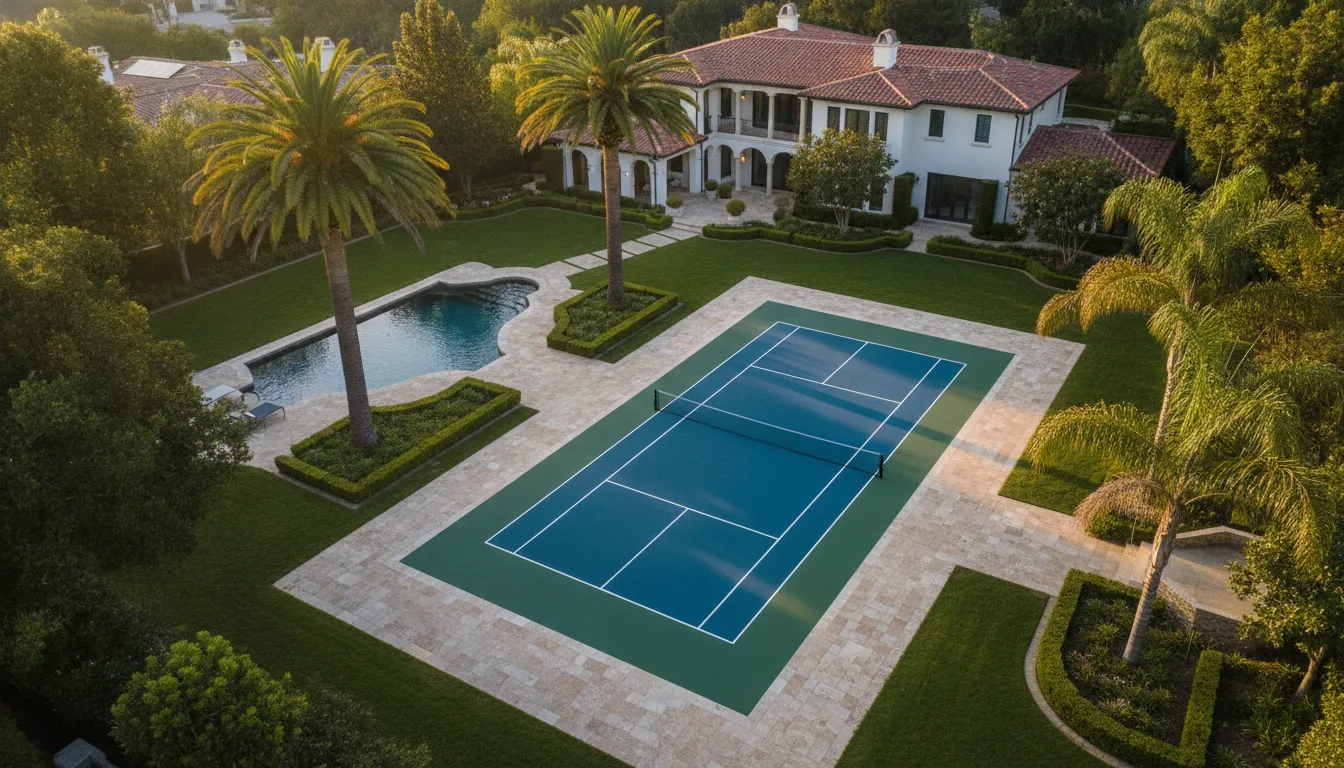
Choosing the right base is the first step in building a backyard pickleball court. Your court needs a flat, hard, and stable surface to ensure a true ball bounce. While any hard surface works well if it stays clean and clear of dirt, some options last much longer than others. For example, a grass lawn is not a good choice because grass will not let the ball bounce. Instead, most high-end courts use a strong, solid base to keep play fast and safe.
Concrete and Asphalt Court Bases
Most home courts use either concrete or asphalt as their core base. Post-tensioned concrete is the top choice for long-term strength. It resists cracks and handles ground shifting very well, though it costs $20,000 or more to install. Asphalt is a cheaper initial option, but it needs more care over time to keep it in good shape. Whichever base you select, the surface must stay clean and free of debris for safe play. This is detailed in the USA Pickleball court construction guide.
Your choice of base will affect how much you spend on upkeep. Post-tensioned concrete needs very little work after it is put in. Asphalt costs less at first, but it can soften in the hot sun and crack over the years. Over time, those asphalt repairs can add up, making concrete the smarter choice for a permanent home court.
Acrylic Surfacing and Ball Bounce
Once your base is set, you must apply a proper top coat to make it playable. A bare concrete or asphalt slab is too slick for a safe game. Most courts need a textured acrylic coating to give players good traction and a consistent bounce. This specialized pickleball court surfacing layer typically costs between $5,000 and $15,000 to apply. This coat adds the right grip so players do not slip during fast matches.
A look at these options shows how costs and care needs differ for each court material.
| Surface Material. | Estimated Base Cost. | Durability Level. | Main Benefit. |
|---|---|---|---|
| Post-Tensioned Concrete. | $20,000+. | Highest. | Resists cracks and shifting. |
| Asphalt. | $10,000+. | Medium. | Lower upfront price. |
| Acrylic Coating. | $5,000 – $15,000. | High. | Provides grip and bounce. |
Premium Paver Borders and Edging
A sports court should not look like an afterthought in your yard. To make the space feel like a natural part of your home, you can border it with elegant stone work. Surrounding your play area with premium paver patios helps the court blend with your landscape. A custom paver edge creates a clean transition between the court and the rest of your yard.
Using beautiful stone borders is a great way to link your sports area to other features. You can match the court edging to your pool deck or outdoor kitchen. These coordinated backyard hardscape improvements will raise your home value. By planning a full design, you turn a simple court into a luxury retreat.
How Much Does a Backyard Pickleball Court Cost in Orange County?
Planning a sports upgrade in your yard needs clear cost plans before building begins. The total pickleball court installation cost often depends on site conditions, court size, and your choice of materials. For a dedicated backyard pickleball court, homeowners in Orange County should plan for several core expenses. These include earthwork, surfacing, and play accessories. Adding a custom court can also enhance your home value and blend with your other outdoor living features.
Base Construction and Surfacing Costs
Building a dedicated backyard pickleball court often costs between $35,000 and $80,000. This price range depends heavily on the court size and the base materials you select. Post-tensioned concrete lasts the longest for home sports surfaces. This material uses steel cables to prevent cracking over time. Asphalt remains another option with lower initial costs but higher long-term upkeep needs. Most upscale projects use concrete to ensure a perfectly flat court. Beyond play, a dedicated home court encourages daily exercise and healthy social time for families. Research from the National Institutes of Health shows that regular play supports physical health. This activity also improves general well-being across all age groups.
Site Preparation and Earthwork Costs
Orange County terrain varies, and site conditions are the primary factor in overall project costs. Hilly terrain or poor soil can add $10,000 or more in grading and drainage systems. These steps ensure a stable, flat playing surface. Flat land keeps initial costs lower because crews do not need to move as much dirt. Proper site prep prevents standing water that can damage the acrylic finish. This step protects the long-term lifespan of your court. Poor drainage can cause the surface to bubble or crack. Every residential yard has unique slopes and soil conditions. Because of this, cost ranges vary by site. Exact pricing comes from a direct design consultation.
Lighting and Accessories Costs
To increase your playing hours during mild Southern California evenings, expert lighting is a key choice. High-quality systems range from $2,500 for basic LED lights to $12,500 for tournament-quality lighting. Fencing is also needed to keep balls from leaving the court area. Heavy-duty net posts and windbreaks will also impact your final layout. These items ensure your court feels like a professional facility. Using a professional 2D and 3D design service helps you see these features. This planning lets you layout your space before any ground is broken.
What Netting, Lighting, and Court Accessories Make a Court Play-Ready?
Setting up a backyard pickleball court needs careful focus on the net, lines, and other gear. Using standard play rules makes sure your court lasts for years. It also gives you a great space that feels like a real club court. When you plan well, you build a fun, safe space for family play.
Regulation net and post standards
To meet standard rules, your pickleball net must be at least 21 feet 9 inches long. It must be 36 inches tall at the sidelines and 34 inches at the center. This keeps play fair for all.
You also need to set up the posts right to hold the net. USA Pickleball rules say posts must stand 22 feet apart. They must not be more than 3 inches thick to keep the play area clear.
The posts must hold the net tight so it does not sag. The top net edge needs a strong cord or cable. This cord must be covered with 2-inch tape to help players see it during fast play.
Court lines and kitchen boundary markings
Once your posts are set, laying out the exact court lines is the next key step. Every backyard pickleball court must have a clear Non-Volley Zone. This 7-foot area is the kitchen. Players cannot volley the ball while standing inside this space, so clean lines are key.
Beyond the kitchen, the court is split into service zones. This includes the area from the kitchen line to the back baseline and outer sidelines. The center line runs down the middle.
This splits the court into even left and right service areas. Each box must be clearly marked so players know where to stand when they serve. Painting these lines well helps players make quick calls during fast games on your court.
Lighting systems and average cost ranges
Adding the right lighting lets you play past sunset. High-quality lights are very useful in the fall and winter when the sun sets early. Good lights also make your home court safer by reducing dark spots on the court. If you plan other upgrades, you can group this with coordinated backyard hardscape improvements to build a complete play area.
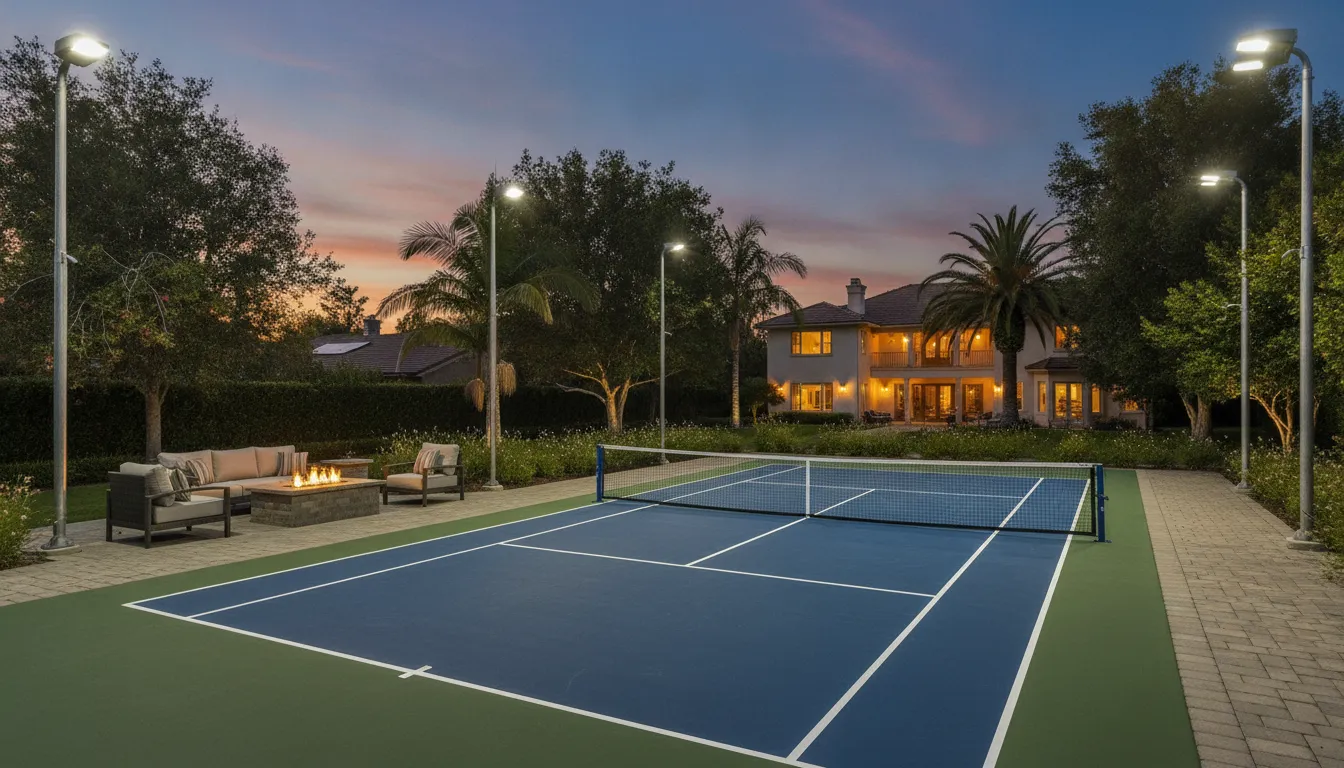
Lighting costs vary based on the power and type of system you choose. According to reports on court costs, a basic LED setup often starts at about $2,500. For a premium, pro system, the price can reach up to $12,500. Buying high-grade lights makes sure you can enjoy matches safely at any time of night.
How to Get HOA Approval for a Home Pickleball Court
Installing a backyard pickleball court in Orange County can be a great way to enjoy active sports. But if you live in a community with a homeowners association, you must get approval first. Neighborhoods in Newport Coast, Coto de Caza, Ladera Ranch, and Anaheim Hills have strict rules. If you do not follow these rules, you could face costly fines or have to remove your court. Planning ahead will help you get board approval without stress.
Zoning codes and noise studies
HOA boards care most about how a new court will affect the neighborhood. They often worry about noise, visual changes, and property values. Research from Temple University shows that the sound of a paddle hitting a ball can cause friction in close communities. Boards must think about these sounds and check how they affect neighbors before they vote. You should address these noise concerns in your initial plan.
Besides noise, you must think about local zoning and drainage laws. In Orange County, you may need a building or grading permit depending on your soil and slope. The county regulates grading under the Orange County building code. Working with a team that knows these rules keeps your project legal. It also prevents water runoff from damaging neighboring properties.
Steps for board approval
To get your project approved, you must follow a clear path. Each HOA has its own covenants, conditions, and restrictions, or CC&Rs. These rules are legally binding. Under California Civil Code Section 5975, the court can enforce CC&Rs, so following them is a must. Following these five steps will help you win board support and protect your investment.
- Study your community CC&Rs. Under California law, you must check local HOA rules for limits on sports courts, noise, or lighting. Following these rules completely is needed for a successful project and to avoid future disputes.
- Prepare detailed design plans. Most HOA architectural boards will not approve a project without clear drawings. Using a professional 2D and 3D design service shows the board exactly how the court fits your property.
- Select a certified builder. HOA boards want to know that licensed, insured experts are doing the work. Choosing a contractor with an ICPI-certified, in-house team instead of outside crews ensures high hardscape standards.
- Plan phased construction. To protect common areas and reduce noise, your project should follow a phased plan. Showing this schedule to the board proves you care about community peace and speeds up approval.
- Submit a formal application. When you submit your proposal, include your design renderings, contractor details, and construction schedule. Having a complete package ready prevents delays and helps you get a quick decision for your HOA renovations.
Why Pacific Pavers Delivers a Turnkey Backyard Court
Building a backyard pickleball court is a great way to add fun to your home. But it is a major project. You need an expert team that knows how to plan, grade, and build the court correctly. As a premium Orange County contractor, Pacific Pavers handles every single step of your build from start to finish. We make it easy. You get a top-tier court without any of the normal stress.
Complimentary 2D and 3D court design
We start each project with a full design phase. This maps out your dream yard. For qualified projects, we offer a complimentary design package worth $6,500. This package includes detailed 2D and 3D drawings of your outdoor space. It is the best way to see the layout first. You can see exactly how your court fits next to premium paver patios, custom kitchens, or pool decks. Our team makes sure the whole space blends together. Our custom 2D and 3D design service helps you plan each detail before we start to build.
A court should not sit alone in your yard. It should blend with the rest of your outdoor living space. Our team builds complete outdoor living spaces. We can frame your new court with an outdoor kitchen, a custom fire pit, or a modern pavilion. Using premium paving stones, we build clean borders and pathways that link your active sports zone to your seating areas. This connects play and rest. Our goal is to make your entire yard feel like a single luxury resort.
In-house construction with no subcontractors
We do not use outside subcontractors. Instead, Pacific Pavers maintains an ICPI-certified, in-house team of skilled builders. This keeps our quality at the highest level. Belgard Master Craftsman Jeff Tobin leads our construction work. Under his leadership, our crew builds your court with extreme care. We focus on clear communication and direct project management. You will never have to guess about the status of your yard. Verify our licensed standing anytime on the California Contractors State License Board portal under license number 1005154.
Expert local code and community compliance
We are a premium Orange County builder. Our team understands the unique building rules for each local city. For instance, we work directly with planning groups like the City of Irvine to secure your building permits. We ensure your court meets every zoning and noise code. This is vital for HOA compliance. We know how to work with homeowners associations to get fast approval for your project. Our team provides architectural samples and detailed plans for your board members to review. We handle the details so you do not have to worry.
Book your free backyard court design consultation now and let our ICPI-certified team turn your Orange County yard into a premium pickleball destination.
Frequently Asked Questions
How much does a backyard pickleball court cost?
A home court usually costs between $35,000 and $80,000 according to AMG World. The final price depends on court size, soil work, and building materials. Clearing hilly land can add $10,000 or more for grading and drainage, while basic lights start at $2,500.
What is the standard size for a backyard pickleball court?
A regulation playing area is 20 feet by 44 feet, but you need a larger flat space to play safely. According to USA Pickleball, the best total footprint is 30 feet by 60 feet. This size gives players extra space on the sides and ends to run without hitting obstacles.
Do I need HOA approval for a backyard pickleball court?
Yes, homes in governed communities must get written approval before building. According to AMG World, new sports courts must comply with CC&R standards. Detailed 2D and 3D design plans help the board review and vote on the project. Experienced builders can also plan work in phases to keep common areas open and reduce noise.
What is the best surface for a backyard pickleball court?
For long-lasting play, post-tension concrete is the top choice because it does not crack easily. According to AMG World, these concrete slabs cost over $20,000, while asphalt costs less but needs more repair work. You also need an acrylic finish to provide the right bounce and player traction, which usually adds $5,000 to $15,000.
Ready to Build Your Backyard Pickleball Court?
Waiting to install a premium backyard pickleball court means missing out on many months of healthy play, active games, and fun outdoor time with family. Delaying your custom hardscape project also risks pushing construction into the busy season when local Orange County city permits and building materials take much longer. Choosing to start your project with our coordinated backyard hardscape improvements today ensures your game space is fully completed and ready before next season begins.
Our professional, in-house team is ready to assist you with every phase of your court project from start to finish. We handle all the planning, layout, and HOA approvals to keep your build completely stress-free. Ready to book? Call (714) 718-3970 to schedule your complimentary outdoor-living design consultation.

Jeff Tobin is the founder of Pacific Pavers, an award-winning outdoor living company serving Orange County, California. With a 30-person team of ICPI-certified professionals, Jeff specializes in transforming residential and HOA properties through custom paver installations, pool remodeling, and complete outdoor living spaces. His company philosophy—”Flawless craftsmanship. Clear communication. Zero stress.”—reflects his commitment to delivering premium results and exceptional customer experiences. As a BBB-accredited business and Belgard Master Craftsman, Pacific Pavers has become known for process-driven operations and elite craftsmanship in the hardscape industry.