
Planning pool deck resurfacing in Ladera Ranch starts with a close look at what is happening beneath and around the visible surface. A faded finish may need a different response than loose pavers, recurring puddles, or a failing pool-edge transition. Comparing condition, material, water movement, comfort, and project scope before choosing a finish helps you plan a durable, coordinated outdoor space.
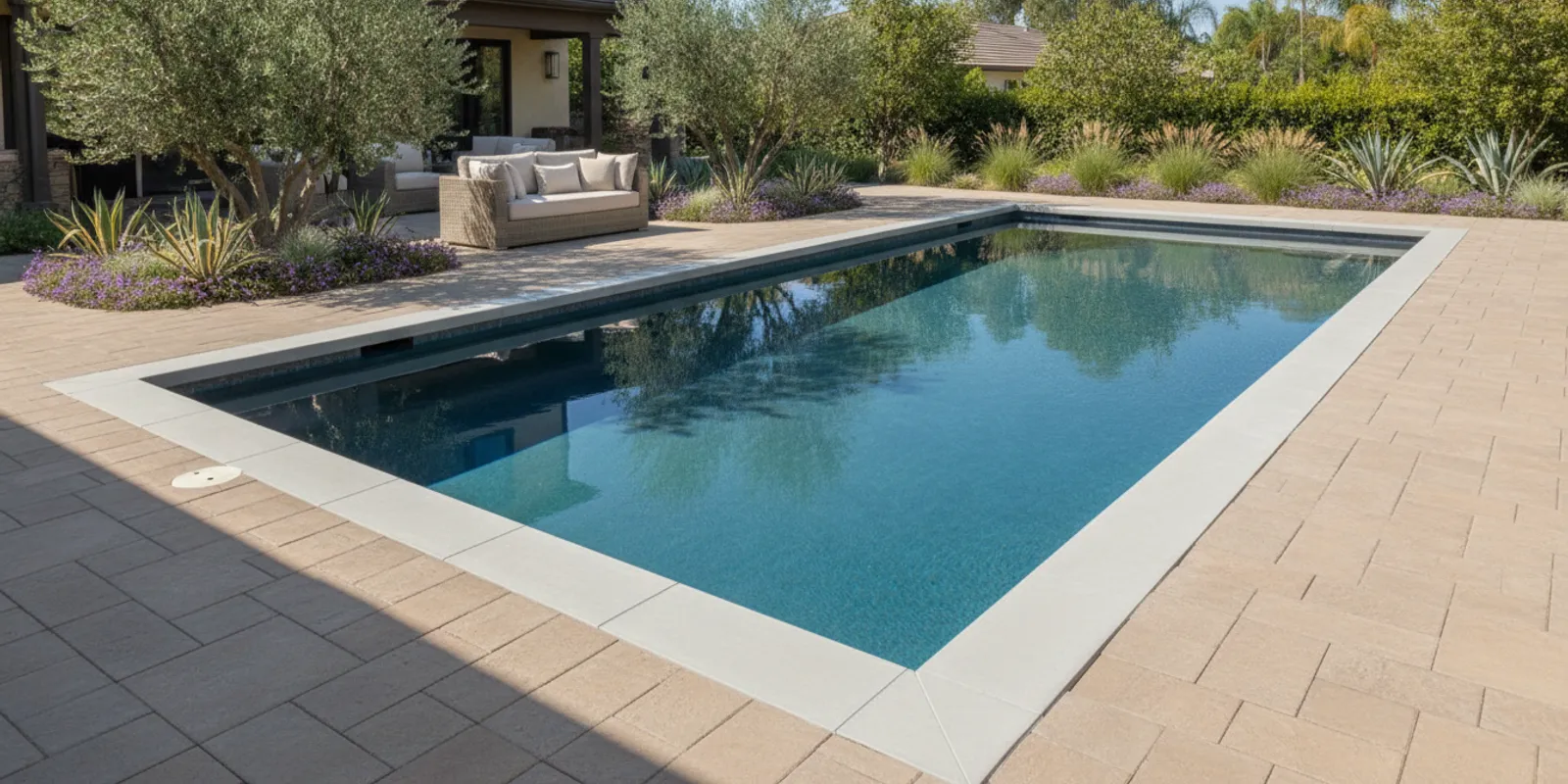
What does pool deck resurfacing in Ladera Ranch include?
Resurfacing is often used as a general term for improving an existing poolside surface. The actual work can vary. It may mean preparing and renewing a sound concrete surface, installing a compatible finish, or removing and rebuilding some or all of the deck. If the existing deck is made of pavers, the right plan may involve lifting and resetting affected areas, replacing damaged units, correcting the base, or considering a larger installation rather than coating the pavers.
Those approaches are not interchangeable. A new finish can improve appearance, but it will not solve every movement, drainage, or structural problem below it. Conversely, replacing an entire deck when only a limited area needs correction may add scope that is not necessary. The first task is to establish what is in place and why it is no longer working.
For a broader view of poolside construction and material coordination, see the pool deck services page. The right scope depends on the site, the existing materials, and the goals for the finished space.
How should you assess pool deck resurfacing in Ladera Ranch?
Walk the entire deck when it is dry, then observe it during or after normal water use. Note where the surface is worn, cracked, loose, uneven, or persistently damp. Look at the pool edge, steps, gates, drains, and places where the deck meets the house or planting. A photo record and a simple sketch can help you describe the trouble spots during an assessment.
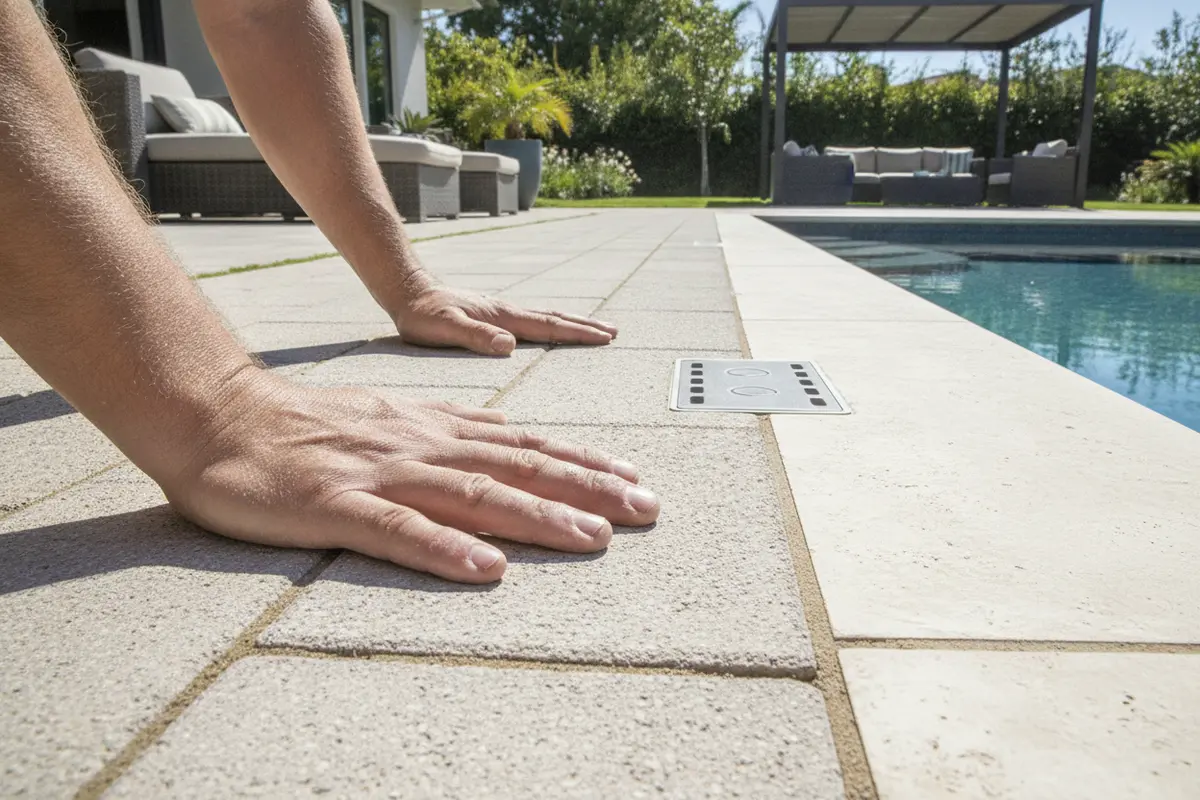
- Surface wear: Fading, flaking, stains, rough patches, or a finish that has worn through may point to a surface-level issue. Confirm that the underlying material is stable before selecting a new finish.
- Cracks and movement: Record the length and location of cracks, and note whether nearby sections appear to have shifted. The pattern and movement matter more than appearance alone.
- Loose or uneven pavers: Rocking units, widening joints, or settled areas can suggest that the bedding or base needs attention. Adding a surface layer over movement does not address its cause.
- Water behavior: Identify puddles, runoff toward the house, and locations where water collects near a drain or pool edge. These clues help the project team evaluate grading and drainage.
- Transitions: Check coping, steps, thresholds, and changes in material. A deck can look sound in the middle while its edges or connections need repair.
Some symptoms have more than one possible cause. For example, a low spot could relate to grading, settlement, a blocked drainage path, or more than one issue at once. Treat observations as information to investigate, not as a do-it-yourself diagnosis of what lies below the surface.
Which resurfacing approach fits your starting surface?
Start by identifying whether the deck is poured concrete, pavers, or another surface. Then compare the condition of the material with the finish you want. A surface finish is most suitable when the base is stable and the product is designed for that substrate and poolside exposure. If there is widespread movement, significant damage, or unresolved drainage, repairs or replacement may need to be part of the plan.
| Approach | Best starting point | What to clarify |
|---|---|---|
| Renew or refinish an existing surface | A sound substrate with wear or appearance concerns | Preparation method, product compatibility, texture, edges, and how cracks or defects will be treated |
| Repair and reset selected areas | Localized damage or movement where the remaining deck is serviceable | Whether the underlying cause can be corrected and how the repaired area will match |
| Replace or rebuild the deck | Widespread deterioration, persistent movement, or a desire to change layout or material | Removal, base preparation, grading, drainage, coping, access, and the full area included |
These are planning categories, not a final diagnosis. A site assessment should establish whether a finish can be installed over the current surface and what preparation the proposed system requires. Ask the installer to explain how the recommended scope responds to the actual condition, rather than comparing options by finish name alone.
For paver decks, the surface itself is only part of the assembly. The pavers, bedding, base, joint treatment, restraint, and drainage work together. A repair should account for the reason the area moved. If you are comparing a larger paver scope, the guide to planning a paver patio installation covers related preparation and sequencing considerations.
How do you compare materials for a poolside surface?
Compare materials by how they feel, perform, look, and connect to the rest of the backyard—not by a color sample alone. Request samples or view installed examples when possible. Evaluate them in the light and setting where they will be used, and consider how the material will look alongside the home’s exterior, pool finish, planting, and any adjacent patio or seating area.
- Concrete with a compatible finish: Can provide a continuous appearance, but the finish system and preparation must suit the existing slab and exposure. Ask how cracks, control joints, edges, and any surface defects are handled.
- Concrete pavers: Offer individual units and a range of shapes, colors, and patterns. Their installation depends on stable base preparation, edge restraint, jointing, and suitable drainage. Ask how localized units could be accessed and reset if future maintenance is needed.
- Other specified finishes: A contractor may propose a system suited to the existing substrate and project goals. Confirm the product, installation steps, expected texture, maintenance needs, and limitations in writing.
Materials around a pool should be selected for the actual conditions, including water exposure, foot traffic, sun, cleaning, and how swimmers enter and leave the water. Product names do not replace a discussion of installation details. Ask for the system specification and verify that it is intended for the substrate and use proposed for your deck.
If your project includes coping work, consider the separate condition of the pool edge rather than assuming a deck finish will resolve it. The pool coping replacement guide explains why that transition deserves its own review.
What should you know about slip resistance and comfort?
No poolside surface should be chosen from a promise that it is simply “slip-proof.” Texture, water, debris, footwear, cleaning, and surface wear all affect how a deck feels underfoot. Ask the contractor what the selected finish is designed to provide, how its texture will feel when wet, and what care is needed to maintain it. A more textured finish may offer more traction, but it can also feel different on bare feet and may collect debris differently.
Look at the whole route around the pool. Steps, narrow passages, shower or rinse areas, and transitions can be as important as the broad deck. Discuss where water tends to travel, how the surface will be cleaned, and whether the chosen texture works with the household’s use of the space. If a specific product has performance documentation, ask to review it rather than relying on a broad verbal claim.
Comfort in direct sun also deserves attention. Surface color, material, shade, exposure, and time of day can affect how warm the deck feels. There is no single color or material that guarantees a comfortable temperature in every yard. Compare samples in full sun and shade when practical, and plan seating or shade in relation to how the family uses the pool. For more options and tradeoffs, review this guide to pool deck resurfacing approaches.
Why do drainage and grading matter?
Water needs a planned route away from the house and other areas where it should not collect. During assessment, note puddling, washout, water crossing a walkway, or runoff that repeatedly heads toward a door. A proposed deck project should consider the existing slopes and drainage points, not just the visible finish.
Ask how the project team will check grading before work begins and how the finished surface will tie into drains, thresholds, planting beds, and adjacent hardscape. A new material can change elevations, especially when it is installed over an existing surface. The plan should explain how edges and connections will be handled so the finished deck does not create an abrupt lip or obstruct an existing drainage path.
Do not assume that every standing-water issue can be solved by adding a drain, or that a resurfacing layer will correct slope. The source and destination of the water need to be understood first. This article on planning hardscape with proper drainage offers additional context for coordinating surfaces and water movement.
How should the deck meet the pool coping?
Coping forms the edge at the pool and creates a highly visible transition between water and deck. Check for loose, cracked, or uneven pieces, open joints, and changes in elevation. Also consider how the proposed surface will meet the coping in both appearance and function. A finish that raises the deck can affect this relationship and the adjoining steps or access points.
Clarify in the scope whether coping will remain, be repaired, or be replaced. Ask how the installer will protect the pool during work, maintain consistent elevations, and finish joints where the deck meets the edge. These details matter whether the new surface is a continuous finish or individual pavers. Keep the coping decision coordinated with deck material selection so one part of the work does not constrain the other unexpectedly.
What affects an estimate for pool deck resurfacing?
There is no reliable price based on the phrase “resurface a pool deck” alone. Estimates reflect the actual area, starting condition, material, preparation, access, and related work. A lower-scope finish over a sound substrate is not directly comparable with removal, base correction, new pavers, or coping replacement. Request a written estimate that describes the work rather than comparing only a total.
Common estimate factors include:
- Area and shape: Measure the deck and note curves, narrow corridors, steps, and separate levels. More edges and details can require different labor than a simple open rectangle.
- Removal and disposal: If existing material must be removed, clarify what is included and how the work area will be accessed.
- Condition below the finish: Repairs to the slab, base, or drainage may alter the final scope. Ask how concealed conditions are evaluated and how any scope change would be discussed.
- Material and pattern: Product selection, size, color, layout, cuts, and edge details all affect installation requirements.
- Coping and connections: Include the pool edge, steps, drains, thresholds, and adjacent hardscape in the conversation, even if they are not part of the selected scope.
- Site access and protection: The route for materials and equipment, protection of landscaping, and work-area constraints can affect planning.
- Approvals and coordination: Check whether community rules, property requirements, or other approvals apply. Confirm who is responsible for obtaining and scheduling any required approvals.
For a useful comparison, request an itemized scope with the proposed materials, preparation, repairs, edge treatments, cleanup, and exclusions stated clearly. Ask what assumptions the estimate makes about the existing base and how the team will handle an unforeseen condition. A defined scope makes it easier to compare proposals on the same basis without treating a preliminary figure as a guaranteed final cost.
How long does the work take?
The timeline depends on the scope and site. Surface preparation and finishing over a stable base may involve different steps from removal and rebuilding. Material availability, access, weather conditions, repair discoveries, and coordination with other backyard work can also affect the schedule. The appropriate way to plan is to ask for a project sequence and current schedule assumptions for your property.
Before work starts, confirm the expected start window, major work stages, access needs, and how the pool and surrounding areas will be protected. Ask when the deck can be walked on and when the pool area can return to normal use, based on the specific materials and installation instructions. Do not rely on a generic timeline that ignores the chosen product or conditions found during preparation.
If the pool deck is part of a larger outdoor renovation, sequence it with connected work such as landscaping, lighting, seating, or an outdoor kitchen. This can help avoid damaging a completed surface with later construction traffic. The outdoor living and paver services overview can help you consider related project elements together.
What should Ladera Ranch homeowners prepare before requesting an estimate?
A few practical details can make the first project discussion more focused. Gather photographs of the full deck and close-ups of cracks, movement, coping, drains, and transitions. If you have plans or records showing the pool and deck layout, bring them along. Note which problems are most important to solve and what you want the space to feel like when the work is complete.
It can also help to make a short priority list: appearance, underfoot texture, maintenance, shade, seating space, or a connection to another outdoor area. Decide whether you want to explore a limited repair or a broader transformation, while remaining open to what the surface assessment reveals. For community properties or homes with review requirements, identify approval steps early so design and scheduling can account for them.
When comparing contractors, ask who will assess the surface, what preparation is included, what materials are proposed, and how drainage and coping will be addressed. Confirm relevant licensing and review the current license information through the California Contractors State License Board. Ask for a written scope and clear communication about changes before work proceeds. Pacific Pavers focuses on backyard renovations and outdoor living projects; you can also see examples in the outdoor transformation gallery.
Discuss your pool deck project
What project stages should you expect?
A written sequence helps clarify what the estimate covers and when decisions need to be made. The details differ by project, but most planning conversations should address assessment, material selection, preparation, installation, and a final review. Ask which steps are included in your proposal and who will coordinate them.
- Assess and document: Review the current surface, drainage paths, pool edge, access, and adjacent areas. Record issues and confirm the goals for the project.
- Confirm scope and selections: Settle the material, pattern or finish, coping approach, boundaries, and any repair assumptions. Get inclusions and exclusions in writing before work begins.
- Prepare the site: Confirm access, protect the pool and nearby features as planned, and remove or prepare the existing surface according to the selected system. If opening the deck reveals a condition that changes the scope, ask how it will be explained and approved.
- Complete the installation: The crew performs the specified repairs and installs the finish or replacement surface. Drainage, edges, and transitions should be addressed as part of the agreed plan, not treated as an afterthought.
- Review and care: Walk the finished area with the project team, discuss any care instructions, and make sure you understand when the surface and pool area can return to use.
This sequence is a useful framework, not a promise that every job follows the same schedule. Confirm the sequence for your property, particularly if you are coordinating other contractors or outdoor improvements. If the pool, deck, and landscaping are being updated together, settle who is responsible for each transition and when each area will be accessed. That small coordination step can reduce the risk of completed work being disturbed by a later phase.
How can you compare proposals fairly?
Two estimates can use similar material names but describe very different work. One may include removal and preparation, while another assumes the existing surface is ready to receive a finish. Compare the written scope line by line, and ask for clarification wherever an important detail is left open.
- Does the proposal identify the exact area and boundaries of work?
- Does it state the surface preparation and repair approach?
- Are the material or finish, color selection, pattern, and edge details identified?
- Does it explain how coping, drains, steps, and adjacent surfaces will be treated?
- Are removal, hauling, site protection, and cleanup addressed?
- Does it state what is excluded and how additional work is handled if conditions differ from expectations?
- Are schedule assumptions and use restrictions explained for the materials selected?
Use the same questions with each contractor. If a proposal is unclear about a significant part of the job, request a written explanation before making a decision. This does not require choosing the most extensive scope. It helps you understand what each option is intended to solve and where responsibility begins and ends.
What maintenance questions should you ask?
Maintenance varies by product and installation, so ask for care instructions for the specific surface rather than assuming every pool deck needs the same treatment. Clarify routine cleaning, appropriate cleaning methods, joint or finish upkeep, and any products the manufacturer says to avoid. Ask whether resealing or another periodic treatment applies to the chosen system, and what signs might indicate that a repair or inspection is needed.
Consider maintenance alongside the daily use of the yard. A surface that collects leaves or debris differently may need a different cleaning routine. Pool chemicals and splash patterns can affect how often areas are rinsed or cleaned. If the deck includes pavers, ask how to address an individual unit that becomes loose or damaged and whether access to the base is possible without disturbing a large area. The goal is not to assume that one material requires no care, but to understand its upkeep before selecting it.
It is also useful to keep the product and installation information with your project records. Note the selected finish, any care recommendations, and the date the work was completed. If you later need to discuss maintenance or a change in condition, those details can help identify what was installed and what guidance applies. Ask the installer to explain any limitations or conditions that affect the recommendations.
Frequently asked questions
Can you resurface over an existing pool deck?
Sometimes, but only if the existing surface and proposed system are compatible and the substrate is suitable. Movement, damage, elevation changes, drainage problems, and edge conditions should be assessed before deciding to cover the existing deck.
Is a textured finish always the best choice around a pool?
Not automatically. Texture is one consideration alongside wet-foot traction, bare-foot comfort, cleaning, water exposure, and the needs of people using the pool. Compare the actual finish and ask how it is intended to perform and be maintained.
Does pool deck resurfacing include coping replacement?
Not necessarily. Coping can be a separate part of the scope. Ask whether the pool edge will remain, be repaired, or be replaced, and how the selected deck finish will meet it.
What information helps produce a more useful estimate?
Photos, approximate dimensions, notes about drainage and uneven areas, and a clear description of your goals give the project team a helpful starting point. A site assessment is needed to confirm the condition, materials, and work included.
A well-planned pool deck project begins with an honest assessment of the existing surface and a clear scope for the finish, drainage, coping, and surrounding transitions. With those details addressed before construction, you can compare options and make decisions that fit how you want to use your Ladera Ranch backyard.

Jeff Tobin is the founder of Pacific Pavers, an award-winning outdoor living company serving Orange County, California. With a 30-person team of ICPI-certified professionals, Jeff specializes in transforming residential and HOA properties through custom paver installations, pool remodeling, and complete outdoor living spaces. His company philosophy—”Flawless craftsmanship. Clear communication. Zero stress.”—reflects his commitment to delivering premium results and exceptional customer experiences. As a BBB-accredited business and Belgard Master Craftsman, Pacific Pavers has become known for process-driven operations and elite craftsmanship in the hardscape industry.