
Choosing the best ground cover for dogs means balancing comfort, durability, drainage and cleanup, not simply picking the softest surface. The right choice depends on how your dog uses the yard, how much sun it gets and whether the ground can handle repeated play and wet weather.
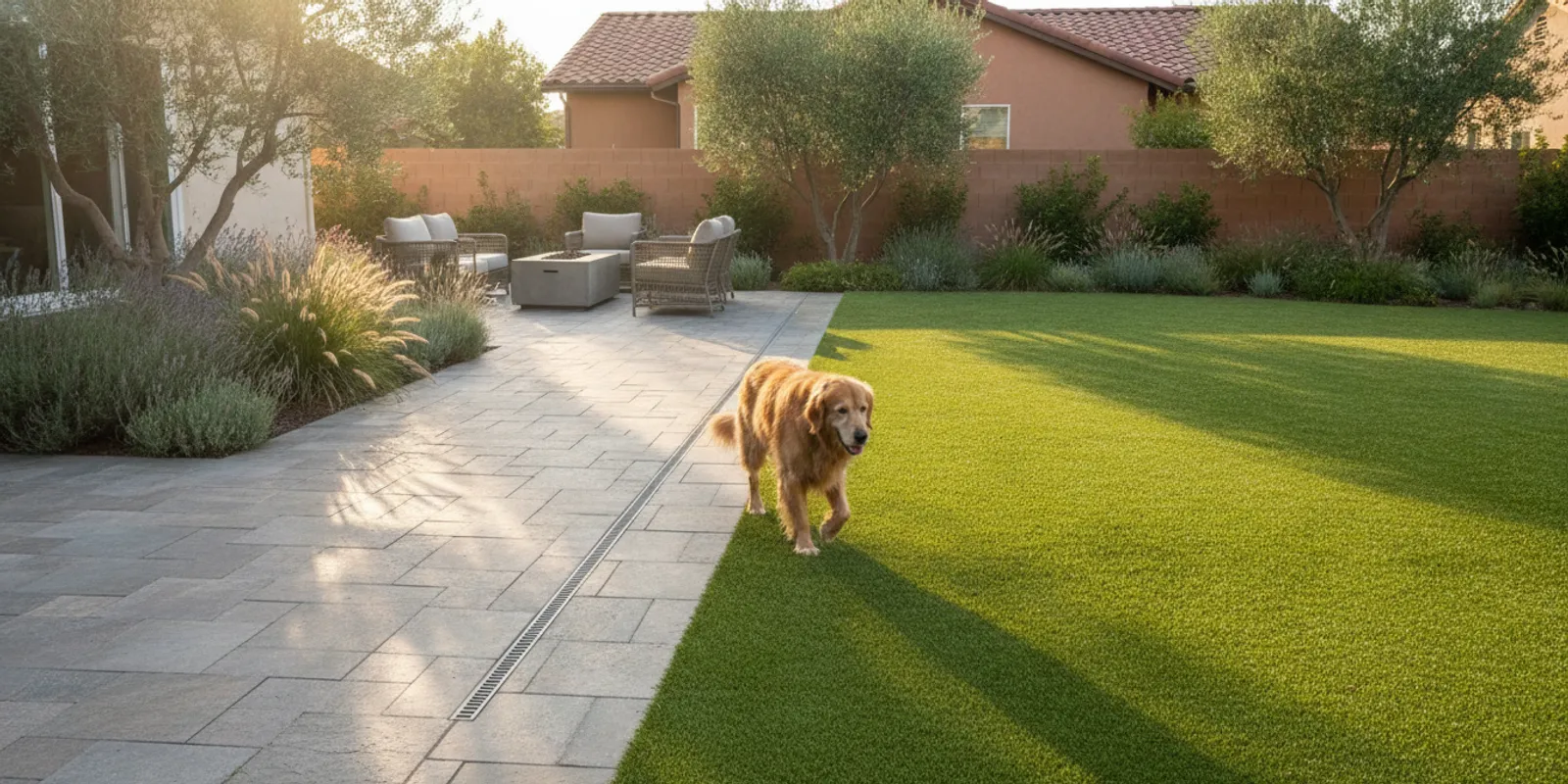
For many homeowners, synthetic turf is worth comparing with natural grass, gravel, mulch and pavers. No material is ideal for every dog or every yard. A useful plan often combines a comfortable area for play with durable routes to gates, patios and the home. Before selecting a product, consider your dog’s size, digging and chewing habits, bathroom routine, and the maintenance you are prepared to do.
What makes a ground cover dog-friendly?
A dog-friendly surface should suit both the animal and the site. It needs to tolerate the way your dog moves across it, while allowing water to drain and making routine cleaning manageable. “Dog-proof” is not a realistic standard: persistent digging, chewing or heavy running can challenge almost any material.
Start by evaluating these factors:
- Traffic: Does your dog repeatedly run the same path, patrol a fence line or play fetch in one area? Concentrated wear can turn grass to bare soil and loosen lightweight materials.
- Comfort: Will the surface be used for resting, walking or energetic play? Texture, firmness and surface temperature matter. Check the surface with your hand during the hottest part of the day before letting a dog use it.
- Drainage: Water and pet waste need somewhere to go. A surface that stays wet or holds odor may become unpleasant, while poor grading can send water toward a house, gate or neighboring property.
- Cleanup: Think about how you will remove solid waste, rinse the area and manage urine. A surface that looks tidy but is difficult to clean may not work with your household’s routine.
- Behavior: Dogs that dig, chew, scratch or react to moving objects may need a different detail or layout than dogs that mostly lounge.
- Upkeep: Compare watering, mowing, replenishing, brushing and rinsing, not only the appearance on installation day.
University Extension readers discussing dog-area ground covers likewise emphasize resilience to traffic and digging, pet suitability and ease of maintenance. Those are useful screening criteria, but they do not replace checking the product specifications and the conditions in your own yard. See the Extension discussion of safe ground cover for dogs for a related overview.
A quick site audit can make the comparison more concrete. Walk the yard after a dry day and again after rain. Mark muddy patches, puddles, worn tracks, fence-line digging and places where your dog stops to rest. Note which areas get direct sun at midday and which stay shaded. Then estimate how much of the yard is genuinely needed for play, rather than treating the entire lawn as one surface. A small, heavily used zone may need a different solution from a larger area that is used only occasionally.
Which ground cover options should you compare?
Each surface has tradeoffs. Use this comparison list as a first screen, then compare actual materials and installation details for your site. The comments below are general planning guidance, not a guarantee that a particular surface is suitable for every dog.
- Synthetic turf: Potential advantages: Consistent green appearance; no mowing; can create a defined activity area. Tradeoffs to consider: Needs an appropriate base, drainage and regular cleaning; surface temperature and product construction vary; not immune to wear or digging. Often worth considering when: You want a predictable play surface and are ready to follow the product’s care guidance.
- Natural grass: Potential advantages: Familiar, soft feel; can blend with planting and existing lawn. Tradeoffs to consider: Repeated traffic and urine may leave worn or discolored patches; requires watering and routine lawn care; mud can be an issue. Often worth considering when: Your dog’s use is moderate and you can maintain the lawn or repair worn areas.
- Gravel or small stone: Potential advantages: Can work for a defined utility or side-yard zone; generally does not become a muddy lawn. Tradeoffs to consider: Stone size and shape affect comfort and paw contact; it can scatter, shift or be swallowed by some dogs; heat and cleanup need consideration. Often worth considering when: You need a durable route or low-planting area and can choose a suitable aggregate carefully.
- Mulch or bark: Potential advantages: Can cover planting beds and provide a natural look. Tradeoffs to consider: May be scattered or dug up; some products are unsuitable if chewed or ingested; it needs replenishment and can retain moisture. Often worth considering when: You are covering beds your dog does not use as a primary running surface.
- Pavers or other hardscape: Potential advantages: Creates stable paths, patios and transitions; easy to define separate activity zones. Tradeoffs to consider: Hard underfoot; joint and edge details matter; sun can heat exposed surfaces; not a substitute for a comfortable play area. Often worth considering when: You want durable circulation or gathering space alongside a softer surface.
- Mixed surface plan: Potential advantages: Matches different areas to different uses, such as turf for play and pavers for paths. Tradeoffs to consider: Transitions, drainage and edge restraint require planning; more than one material means different care routines. Often worth considering when: Your yard has distinct play, access, dining or planting zones.
For a project with multiple zones, compare the available outdoor living and hardscape services as part of the overall plan. For a closer look at turf specifically, review the synthetic grass installation information and note the questions you still need answered about your site and your dog’s routine.
Think about the whole route through the yard, not just the surface where a dog plays. If muddy paws are a concern, a durable path from the back door to the play zone may matter as much as the main ground cover. If the dog spends time near a gate, the entry point may need a stable, cleanable landing. In a compact yard, these zones can overlap; in a larger yard, separating them can make maintenance easier. The most suitable plan is often a sequence of surfaces that handles specific tasks, rather than a single material expected to do everything.
Is synthetic turf a good choice for dogs?
Synthetic turf can be a practical option when you want a consistent-looking surface and less mowing. It may suit a designated dog area, but the result depends on more than the visible turf fibers. Base preparation, drainage, seams, edges and the product’s care instructions all affect how the area performs.
Before deciding, ask the installer or supplier to explain:
- How the proposed base will be prepared and compacted for your site.
- Where water will drain, and what happens during heavy rinsing or rain.
- How the turf is secured at edges and seams, especially where a dog may paw or dig.
- What cleaning routine the manufacturer recommends for pet use.
- How the surface behaves in full sun and what shade options might help.
- Which materials and infill are included, and whether their documentation addresses the intended use.
Do not assume every synthetic turf product has identical drainage or cleaning requirements. Ask for the product information in writing and follow it. If your dog chews surfaces, eats non-food items or has a specific sensitivity, consult your veterinarian before choosing a material or infill.
It also helps to write down a realistic care routine before you commit. Who will pick up waste, rinse the area when needed and check for debris? How will you reach the entire dog-use zone with a hose or other cleaning equipment? Ask which maintenance tasks are product-specific and whether brushing or replenishing infill is part of the recommended care. A low-mowing surface is not a no-maintenance surface, and planning for the routine can prevent an attractive installation from becoming inconvenient.
For more general project context, browse the company’s outdoor transformation gallery. A gallery can help you discuss layout and appearance, but it cannot tell you whether a particular installation is appropriate for your dog or site.
Can natural grass work in a dog yard?
Natural grass can work well for dogs when the lawn has a chance to recover between periods of heavy use and someone can keep up with its care. It may be less suitable where a dog runs the same route all day, digs repeatedly or uses a small patch as a regular bathroom area. These patterns can wear the grass faster than it can recover.
Walk the yard and identify worn tracks, bare soil, muddy corners and places where water collects. Notice whether your dog chooses a particular route or favorite spot. You might be able to reduce damage by adjusting the layout, creating a defined path, or reserving one section for play instead of expecting the whole lawn to handle every activity.
Grass also needs a realistic maintenance plan. Consider how you will manage mowing, watering, patch repair and cleanup. If the lawn’s appearance is important, be honest about whether the amount of use and upkeep are compatible. A blended design can keep grass where it is working and use a more durable surface at entrances or along high-traffic paths.
For example, a household with one dog that spends short periods outdoors may find that a maintained lawn remains comfortable, especially if play is spread across the yard. A dog that sprints the same fence line several times a day may create a narrow worn track even if the rest of the lawn looks healthy. In that case, consider protecting the route or changing the layout so the lawn has less concentrated pressure. If bare patches repeatedly return, compare the ongoing repair effort with the care needed for an alternative surface instead of judging only by the initial appearance.
When do gravel, mulch or pavers make sense?
Harder or loose materials can be useful in the right part of a yard, even if they are not the best choice for the main play area. Gravel can define a service strip or side route. Mulch can protect planting beds that are separated from dog traffic. Pavers can make a clear route between the back door, a gate and an outdoor seating area.
With gravel, consider paw comfort, stone size, surface temperature, movement and whether your dog tends to chew or swallow objects. Keep loose material away from areas where it may be tracked inside or pushed into drains. With mulch, check what the product is made from and whether it is appropriate for the way your dog behaves; do not assume that a natural material is automatically safe to ingest.
Pavers are durable for circulation and gathering spaces, but a hard surface can feel uncomfortable for prolonged lying or running. In full sun, it can become hot. Ask how the layout will handle slope and runoff, and plan transitions that do not create awkward edges or trip points. A paver patio can function as a distinct outdoor living zone, while a softer surface can be planned for play nearby.
See the patio installation guide for broader planning considerations when hardscape is part of the yard. The right combination depends on your property, not a fixed recipe.
Use boundaries deliberately if you combine loose fill, planting and hardscape. An edging detail can limit gravel migration and keep mulch out of a path, but the edge should not create a sharp or raised obstacle where a dog runs. Check how the material meets a gate threshold, drain or lawn edge. Sketch a simple cross-section of the transition if the levels differ; it can prompt useful questions about containment, water flow and paw-friendly movement before the work starts.
How should you plan drainage and cleanup?
Drainage deserves attention before a surface is selected. A new ground cover cannot solve a grading problem by itself. Note where water flows now, whether puddles remain after rain or rinsing, and whether runoff moves toward the home, pool, side yard or neighboring property. Share these observations during planning.
For pet areas, consider how routine cleanup will work in real life. Where will solid waste be collected? Can the area be rinsed without sending runoff somewhere inappropriate? Is there a convenient route from the house? On synthetic turf, follow the manufacturer’s cleaning instructions rather than relying on generic advice. On grass, plan for worn patches and the possibility that some spots will need extra care.
Draw a simple map of the yard, then mark the home, gates, downspouts, drains, trees, slopes, existing hardscape and areas where water gathers. Add the spots your dog uses most. That map gives a designer or installer a clearer starting point and can reveal conflicts before work begins.
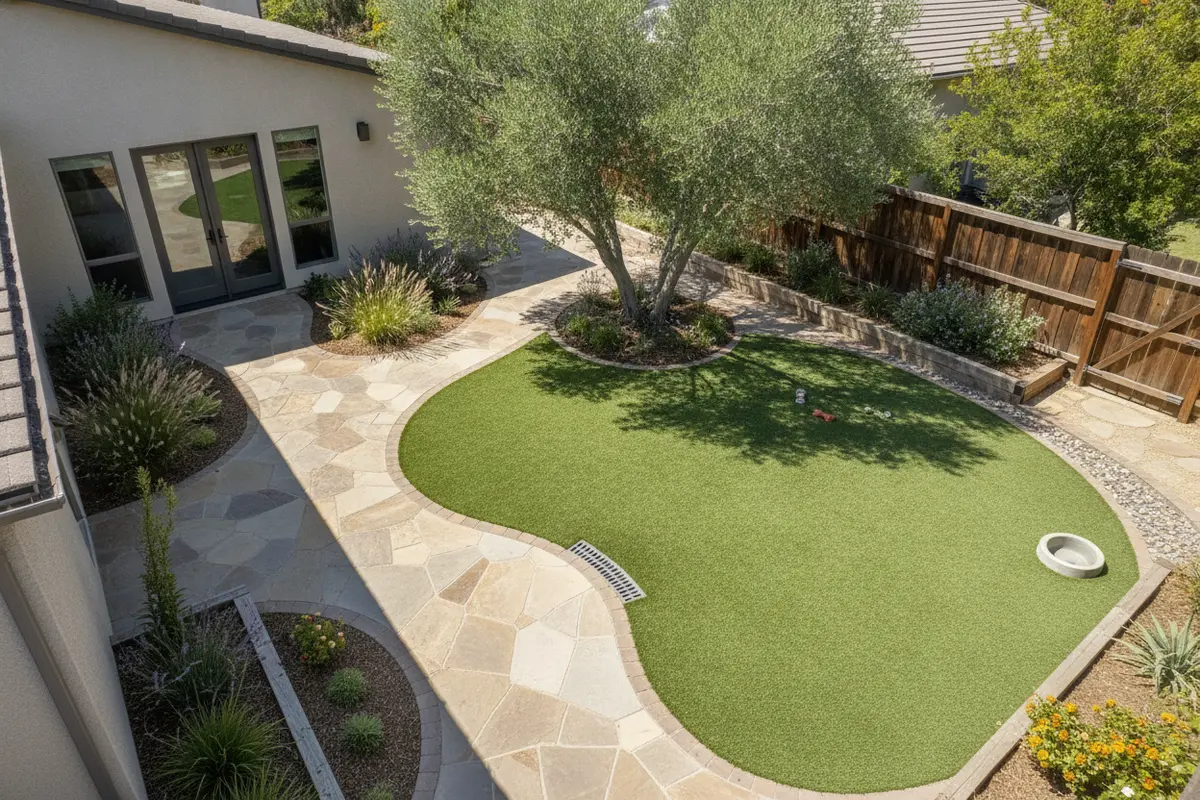
To make the map actionable, add arrows showing the direction water travels during a storm, plus notes on places where hoses or downspouts discharge. Mark a low point separately from a drain: water that collects in a depression may not have a direct route away. Then identify the easiest path for carrying waste bags and cleaning supplies. These details help compare the day-to-day practicality of two layouts that might look equally attractive in a rendering.
How can you match the surface to your dog’s habits?
Observe your dog for several days rather than relying on a quick impression. A simple log can help: note where the dog runs, digs, rests and goes to the bathroom; whether the yard is wet or muddy; and which paths become worn. Then match the ground cover to the behavior.
- Frequent running: Give repeated routes a durable, easy-to-maintain surface. Avoid expecting a small patch of grass to withstand concentrated traffic without recovery.
- Digging: Look for the reason: shade, a view through the fence, a scent or boredom may be drawing the dog to one area. A material alone may not stop digging. Discuss secure edges and behavior management with a qualified pet professional if needed.
- Chewing or eating objects: Be cautious with loose materials and ask a veterinarian about product suitability. Keep any material the dog tries to ingest out of reach.
- Older or less mobile dogs: Prioritize predictable footing, clear routes and manageable transitions. Ask your veterinarian if your dog has mobility or joint concerns.
- Several dogs: Expect more concentrated traffic and plan cleaning and drainage around actual use. Extension guidance on ground cover under demanding dog traffic is another starting point for thinking about durability, but your site conditions still matter.
A brief observation log can reveal patterns that are easy to miss. For each day, record the weather, how long the dog used the yard, where it spent time and any cleanup issue. If one spot is repeatedly used for bathroom breaks, that may call for a location with straightforward access and a care routine you can keep up with. If the dog rests in shade but runs in sun, comfort needs differ by zone. Use those observations to prioritize the layout before comparing colors or surface textures.
What should you consider in an Orange County yard?
In Orange County, sun exposure and warm weather make shade and surface temperature practical planning questions. A surface that feels comfortable in the morning may feel very different in direct afternoon sun. Check the proposed materials at the time of day your dog is most likely to use the yard, and provide access to shade and water.
Also look at the property’s specific drainage, slope and planting conditions. Coastal exposure, compacted soil, existing trees and the amount of shade can all affect the plan. Do not assume a generic recommendation accounts for those conditions. If your property has an HOA, confirm whether a change to the yard requires review before selecting materials or scheduling work. Pacific Pavers’ HOA information may help you identify the right questions for a community project.
For homeowners comparing a broader outdoor renovation, the Orange County backyard remodel guide offers additional planning context. A ground-cover decision can be easier when considered alongside access, seating, planting and other uses of the yard.
Test comfort where the dog will actually walk and lie down, not only in the middle of an open lawn. A narrow strip beside a wall may receive reflected heat, while a tree canopy can create a cooler but leafier area that needs more frequent clearing. Think through the hottest part of your dog’s usual outdoor schedule and whether the layout offers shade, drinking water and an easy route back indoors. These simple checks are useful regardless of whether the surface is turf, grass, stone or pavers.
What should you ask before choosing a ground cover?
Bring clear questions to a product or project discussion. Ask for answers that address your yard rather than a generic promise about durability.
- Which areas are intended for play, circulation, dining, planting and pet relief?
- How will the proposed surface handle our dog’s actual traffic and behavior?
- What base, edging and transition details are planned?
- Where will rainwater and rinse water go?
- What cleaning and maintenance steps are required, and how often?
- How does the material perform in direct sun, and what can we do about exposed areas?
- What product documentation describes the material, infill and intended use?
- What parts of the yard should remain accessible during installation, and how will the work area be separated from pets?
When reviewing a proposal, compare the same scope across options: area dimensions, preparation, edging, drainage, materials, cleanup instructions and any exclusions. A surface price without this detail is difficult to compare with a complete plan. For other project types or materials, use the services overview to orient your questions, then confirm the specific scope with the contractor.
A practical comparison worksheet can keep the decision focused. List each option in a column and rate it against the same needs: comfort for your dog, expected traffic, drainage plan, cleanup steps, sun exposure, initial work scope and ongoing upkeep. Add a short note about any uncertainty, such as a product detail that still needs written confirmation. This is more useful than choosing from a sample alone because it makes tradeoffs visible. If one surface scores well for appearance but poorly for cleaning or heat, consider using it in a different zone rather than rejecting or accepting it for the whole yard.
Frequently asked questions
What is the best ground cover for dogs that dig?
There is no surface that reliably stops every dog from digging. Choose a material and edge detail suited to the site, but also identify why and where the dog digs. A designated activity zone, shade or enrichment may help address the cause; seek guidance from a veterinarian or qualified dog-behavior professional when needed.
Is synthetic turf better than grass for dogs?
It depends on the household. Synthetic turf can provide a consistent-looking area without mowing, but it still requires suitable drainage and cleaning, and its temperature and care needs vary by product. Grass feels familiar but can wear or become muddy under concentrated traffic and requires lawn maintenance. Compare both against your dog’s habits and your willingness to maintain them.
Can dogs use gravel as ground cover?
Gravel may suit a limited path or utility area, but it is not automatically comfortable or appropriate for every dog. Consider the aggregate’s size and shape, heat, movement and the risk that a dog may chew or swallow stones. Ask a veterinarian if your dog has a tendency to ingest non-food items.
How do I keep a dog area from smelling?
Use a surface with a cleaning routine you can follow, remove solid waste promptly and manage rinse water as the product instructions recommend. Odor can also signal a drainage or maintenance issue. Ask the installer and product manufacturer for guidance specific to the surface rather than assuming that one cleaning method works everywhere.
Should the whole yard use one surface?
Not necessarily. A mixed plan can use a softer area for play, pavers for paths or seating, and planting materials in protected beds. Keep transitions practical and make sure drainage and edges are addressed between materials.
Call (714) 718-3970 to discuss your project
The best choice is the one that fits your dog’s real habits, your property’s drainage and sun, and the upkeep your household can sustain. Map the yard, compare materials by zone and confirm product-specific care requirements before making a decision.

Jeff Tobin is the founder of Pacific Pavers, an award-winning outdoor living company serving Orange County, California. With a 30-person team of ICPI-certified professionals, Jeff specializes in transforming residential and HOA properties through custom paver installations, pool remodeling, and complete outdoor living spaces. His company philosophy—”Flawless craftsmanship. Clear communication. Zero stress.”—reflects his commitment to delivering premium results and exceptional customer experiences. As a BBB-accredited business and Belgard Master Craftsman, Pacific Pavers has become known for process-driven operations and elite craftsmanship in the hardscape industry.