
A custom fire pit is the social anchor of a modern Orange County backyard. It creates a warm focal point for gatherings and makes the outdoor space more inviting. This addition works best when it matches your existing patio.
Schedule a consultation to explore Pacific Pavers’ complimentary $6,500 design package for qualified projects over $30,000.
Fire pit installation provides a permanent, high-quality feature for your outdoor space. In Orange County, the cost. For a detailed outdoor fireplace vs fire pit design comparison, see our guide on for a custom fire pit varies based on materials and fuel source. While basic DIY kits are available for less, a premium masonry installation ensures long-lasting safety. These features are often planned as part of a larger, cohesive outdoor living project. Working with a certified team ensures your fire feature meets local codes and fits with your hardscape. According to Pacific Pavers, a unified design approach ensures your fire pit is an integrated landscape feature that matches your entire backyard. This expert approach protects your home’s value and provides a safe area for your family to enjoy.
What does fire pit installation cost in Orange County?
Pacific Pavers explains that Orange County fire pit installation cost depends on the fuel system, masonry, site preparation, utility work, permits, and surrounding hardscape. Custom fire pits are often designed within larger premium outdoor living projects, so an on-site consultation and coordinated design are the most reliable ways to establish an accurate budget.
Learn more about our paver driveway installation costs.
Learn more about our paver driveway installation costs.
Main price drivers
The type of fuel you choose is a big factor for your budget. Natural gas pits need a fuel line to run from the house. This adds to the work and the cost of fire pit installation. You may also want custom fire pit design options that match your patio stone. Choosing a fuel source that suits your needs is a key first step. Natural gas offers convenient, low-maintenance operation, but it requires professional utility planning and a carefully integrated fuel line. Wood creates a traditional fireside atmosphere, while requiring thoughtful placement, protected log storage, ash removal, and ember management.
Site prep is another cost to keep in mind. We have to dig and level the ground before we start. If you want a gas pit, we must dig a trench for the pipe. Good drainage is also a must for any outdoor feature. This prevents water from pooling around the base. Proper prep work makes sure your new pit lasts for a long time.
Permits and local rules
You must follow local laws for any fire feature in your yard. In California, you have to follow state fire safety codes for outdoor structures. This may mean getting a permit before we start to build. HOA rules are also a big part of the process in many Orange County towns. We help you find designs that the board will like and approve. Our team knows the local rules for each city and area.
| Feature | Built-in Gas Pit | Custom Wood Pit |
|---|---|---|
| Fuel Line | Needs a gas line | No line needed |
| Site Prep | Trench for pipe | Level ground only |
| Safety Parts | Shut-off valves | Spark guard mesh. |
Value of a custom build
We use 3D plans to show you how the pit will fit with your pool or kitchen. This helps you see the result before we ever dig a hole. You can see how the colors match your patio pavers. Custom builds let you pick the size and shape that fits your group. Whether you want a round pit or a long fire table, we can build it to fit your life.
Built-in versus standalone fire pit designs
Picking the right fire tool starts with your goals for the space. Most homeowners choose between a set unit or a portable piece. A set design uses strong items like stone or brick to match your home. Portable units are often made of metal or light stone and can be moved. Both types offer warmth, but the fire pit installation steps and look vary a lot.
Custom set fire features
A built-in fire pit is a set part of your yard. We often build these as the main part of a larger patio plan. These designs use high-end items that last for many years. Picking a custom fire pit design ensures it matches your home style. These units are heavy and stay in one place once built.
Set units often link to a gas line for easy use. This stops the need for wood or propane tanks. Our team uses ICPI-certified paver installation to make sure the unit stays strong. This path keeps the pit from sinking or cracking over time. These units also create a more integrated, permanent impression than a portable model.
Portable fire units
Portable fire pits are a good pick for small spaces. They are light and you can move them around your yard. This lets you change your seating plan when you have guests. Most of these units use wood or propane for fuel. You can find them in many styles, from old metal bowls to new gas tables.
Fire tables and outdoor fireplaces
Fire tables are a common trend for new homes. They work as both a table and a heat source for your drinks and snacks. Most fire tables use clean gas and sit at standard table height. This makes them great for close seating areas. You can see many modern fire pit trends that use these dual-use pieces.
Outdoor fireplaces offer the most luxury and heat control. They have a pipe that pulls smoke up and away from your guests. This is helpful for wood fires in close spaces. High-end builds must follow local fire safety codes to make sure they are safe. A fireplace makes a strong wall that can block wind and give you more peace.
Which fuel type works best for your fire pit?
Pacific Pavers recommends choosing fuel around how you want to use and maintain the space. Natural gas suits a permanent, convenient fire feature; propane offers controlled flames without a fixed household line; and wood creates a traditional experience but requires storage, cleanup, and careful ember management. Local rules and site conditions also guide the decision.
Natural gas for ease and style
Natural gas is a top pick for many homes because it is easy to use. You won’t need to store wood or move heavy tanks around. A gas line connects the pit directly to your home fuel source for a steady flow. This setup allows for a clean look that works well with design ideas for a custom fire pit. You can start the fire with a simple switch or remote.
This fuel type is best for fixed fire pits that serve as a main point in your yard. It burns clean and does not produce smoke that might bother people next door. It also stays hot as long as you want without any extra work. Local fire safety codes in California often have rules for gas lines. Our team handles the prep work to make sure your setup is safe and meets all standards. This ensures your pit is a safe place for guests to gather.
Propane for more choice
Propane fire pits offer many of the same perks as natural gas. They light quickly and give you control over the flame height. The main point is that propane uses a tank instead of a line. This makes it a good choice if you do not want to dig up your yard for pipes. You can hide the tank inside the fire pit base or in a nearby stone seat to keep it out of sight.
You can find many new fire pit design concepts that use propane. This fuel is great for modern looks with fire glass or lava rocks. It offers a clear flame with no ash or soot to clean up later. Since propane burns hot and clean, it is a smart pick for a low-stress life. It works well for homes with tight HOA rules on wood smoke. You just need to keep a spare tank on hand so the fire does not go out.
Wood fires for classic charm
Some homeowners still love the snap and smell of a real wood fire. Wood pits provide a rustic feel that gas cannot match. They give off a lot of heat and light, which makes them great for cool nights by the coast. But you must plan for wood storage and ash cleanup after every use. You also need to watch for sparks that could fly out of the pit. Using a spark guard can help keep your patio safe from embers.
Wood smoke can be a concern for people living close to you if the pit is not in the right spot. In places like Corona del Mar, local rules often guide where you can burn wood safely. Using a fuel source that fits your needs is vital for a good result. No matter what fuel you pick, our ICPI-certified team ensures your fire feature lasts for years. We focus on the build strength of every project to give you peace of mind.
How to plan a safe fire pit installation
Pacific Pavers plans a safe fire pit installation by evaluating setbacks, overhead clearance, utilities, prevailing wind, drainage, fuel requirements, and circulation before construction. The final design should use appropriate heat-resistant materials, preserve comfortable movement around seating, and comply with applicable city, fire, utility, manufacturer, and HOA requirements for the specific property.
Finding the best spot
Pick a flat spot far from your house or low trees. Many people start with a ten-foot gap, but you may want more room to keep smoke away. Wood smoke can bother neighbors if the pit is too close to their homes. A good safe seating and circulation plan helps you find the best spot while leaving space to walk around.
Choosing safe materials
Only use heat-proof materials for your fire feature. The wrong stone can crack or pop when it gets hot. You also need to pick your fuel, like wood, gas, or propane. Each one has its own safety needs. Adding a spark guard is a smart way to keep hot bits from flying onto dry grass.
- Check local laws and HOA rules to make sure your plan is legal.
- Pick a flat site well away from your house, fence, and tree limbs.
- Call your utility company to mark lines before you dig for gas or base work.
- Use fire-safe stones that can take high heat without breaking.
- Set up good drainage at the bottom to stop water from filling the pit.
- Put a firm, safe surface like pavers around the pit to catch sparks.
How should seating be arranged around a fire pit?
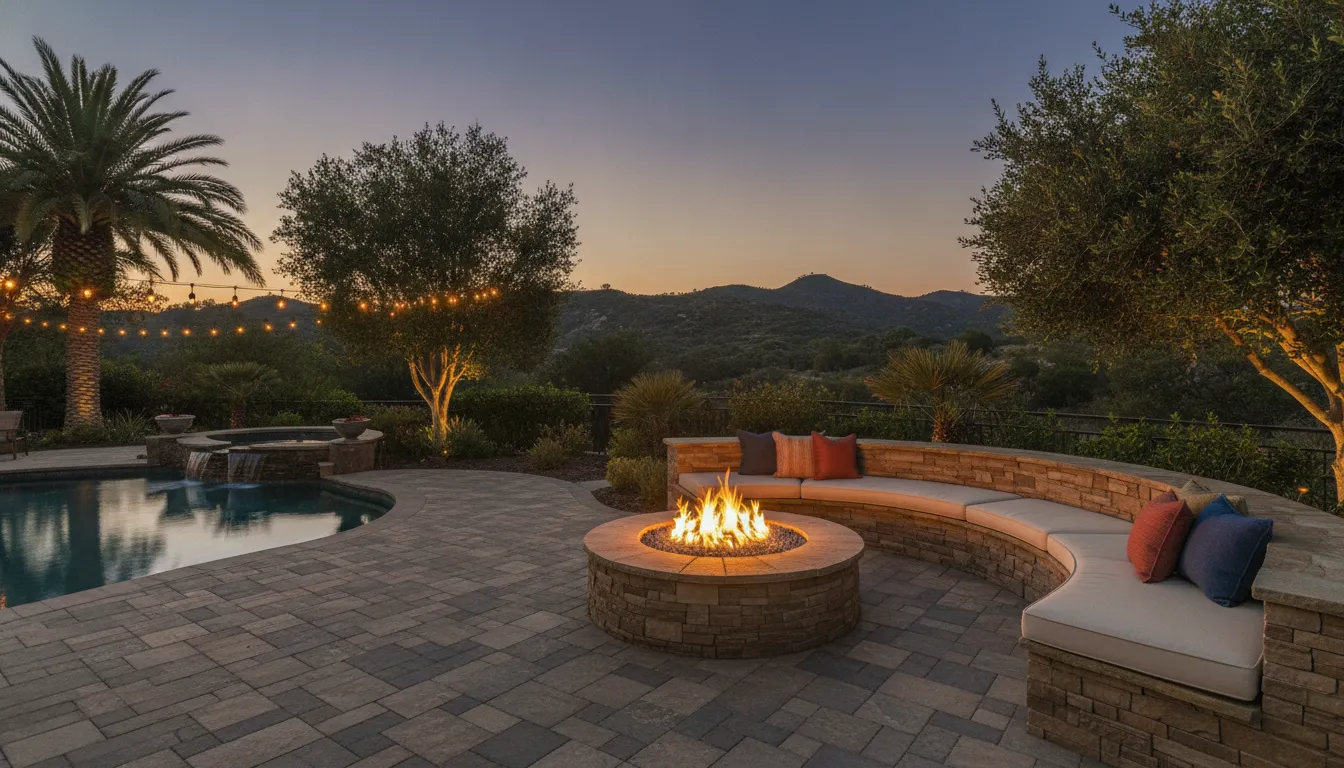
Pacific Pavers arranges fire pit seating to support conversation, comfortable heat exposure, and clear circulation. The fire feature’s shape guides the layout: circular seating complements round pits, while linear arrangements suit rectangular fire tables. Fixed seat walls can define the patio, and movable chairs add flexibility for different gatherings and weather conditions.
Matching seating to fire pit shape
The shape of your fire pit should guide your choice of chairs or benches. Round pits work best with curved seating or chairs set in a circle. This shape helps people face each other, which makes it simple to talk. If you have a square or long pit, linear rows of chairs often look better. Setting your seats with the edges of the pit creates a clean and modern look.
You should also think about how many people will use the space at once. It is best to choose a fire pit size that fits your usual guest list. A small pit might only need four chairs, while a large one can handle a full bench. Matching the scale of your chairs to the pit helps the whole area feel right.
Fixed benches and movable chairs
Homeowners often choose between built-in stone benches and light, movable chairs. Fixed seating like a seat wall looks high-end and lasts for a long time. These walls also help define the edges of your patio. But benches can be hard to move if you want to get closer to or further from the flames. They are best for large yards where the fire pit has a fixed home.
Movable chairs, such as Adirondack chairs, give you more choices. Guests can pull them closer on cold nights or push them back if the fire gets too hot. Using a mix of both types can offer the best results. You can have a fixed stone bench on one side and open space for chairs on the other. This setup lets you change the flexible seating arrangement when you need to host a bigger group.
Planning for foot traffic and flow
Clear paths around your seating are vital for ease and safety. You should leave at least three feet of open space behind your chairs. This allows people to walk past without asking others to move. If the area is too tight, the space will feel crowded and hard to use. Good flow makes it easy for guests to grab a drink or a snack and come back to the fire.
Safety is the key part of any fire pit plan. Keep your seating at a safe distance from the heat to avoid burns or sparks. You also need to make sure the paths to the pit are flat and well-lit. Trip hazards can be a big risk in dark backyards. A pro team can help you place lights and pavers to keep every guest safe while they enjoy the night air.
Planning a larger outdoor transformation? Schedule a Pacific Pavers consultation to discuss the complimentary $6,500 design package available for qualified projects over $30,000.
Integrating a fire pit with your paver patio
A fire pit should feel like a true part of your home. It should not look like an extra part added later. High-end fire pit installation works best when you plan it with your whole yard. A good plan ties the fire pit to your patio and paths. This creates a space that is easy to use and look at. Explore Pacific Pavers’ premium paver installation service for a coordinated patio and fire feature.
Planning for a matching design
A design-build model helps you get one look for the whole yard. You can use 3D tools to see how the pit fits before you build. This step makes sure the size is right for your space. It also helps you match the pit stones to your patio pavers. A solid plan keeps the pit from looking out of place.
Our team at Pacific Pavers uses fire pit styles that complement the patio to match your style. We look at your current yard and layout. This helps us find the best spot for your new feature. A well-placed pit adds value to your land and makes it more fun to host guests.
Creating useful outdoor zones
A large patio works best when it has clear areas. You might have one spot for food and one for fire. It is wise to set up a welcoming outdoor conversation area that feels warm. You should leave enough room for people to walk. Good flow makes your yard feel open and big.
You can use different paver patterns to mark these zones. This shows where the patio ends and the fire zone starts. Proper zones keep your yard tidy and ready for a crowd. Lighting also helps define your space. Small lights along the edge of the pit add a nice glow.
Building for safety and strength
Safety is the most important part of any fire pit installation. You must use heat-proof parts that can take high heat. This keeps the pit from breaking as time goes on. ICPI-certified teams know how to build pits that last. They focus on a strong base and good water flow.
In California, you must follow local fire rules. The state has laws for outdoor fire pits to keep homes safe. You can check fire safety standards to see what your task needs. Using the right parts and following rules keeps your family and your neighbors safe.
The weather in Orange County also matters. Homes by the sea may need stones that can take salt air. Inland homes face hot sun and dry wind. A Belgard Master Craftsman can help you pick the best stone for your local air. This makes sure your patio and fire pit stay strong for a long time.
What happens during professional fire pit installation?
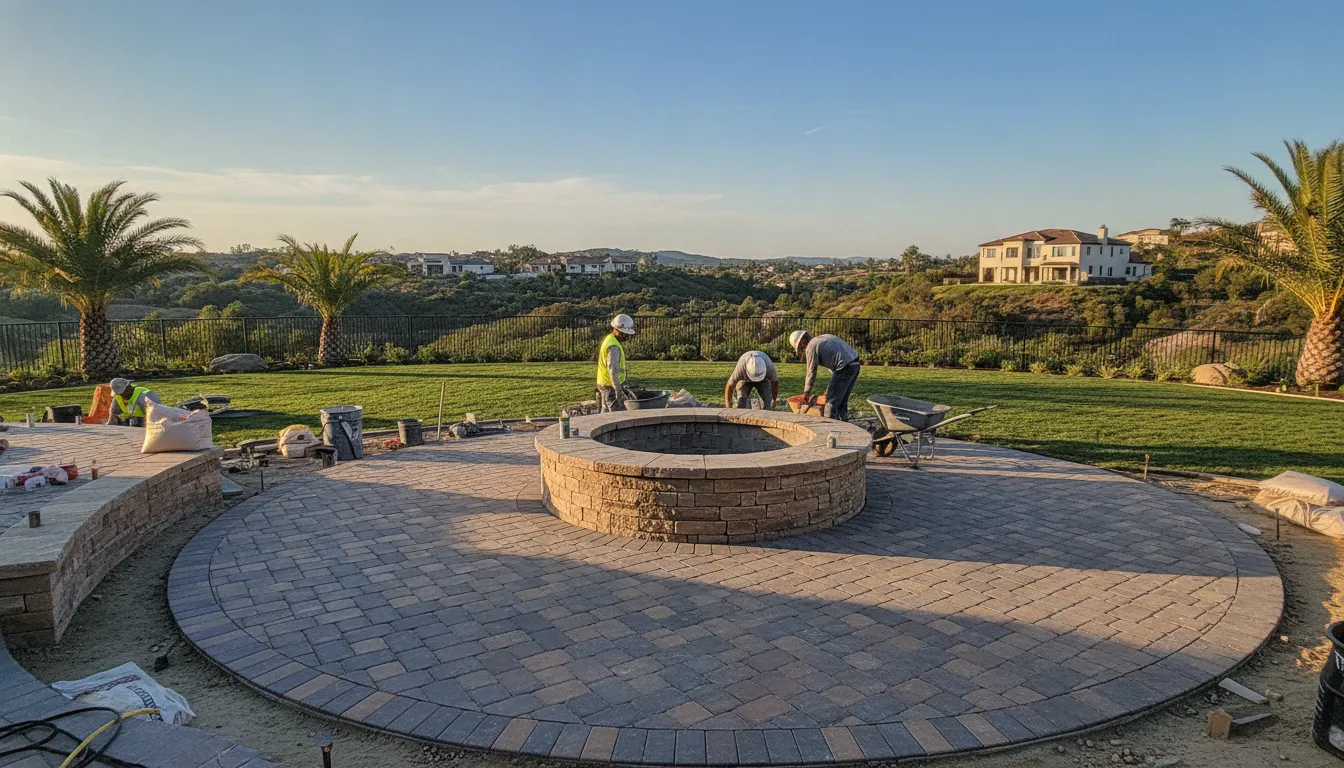
Pacific Pavers manages professional fire pit installation as a coordinated design-build process: consultation, site evaluation, concept planning, material selection, utility and requirement review, base preparation, construction, and finishing. This integrated approach aligns the fire feature with the patio and surrounding outdoor rooms while giving the homeowner one experienced team throughout the project. If you prefer a DIY overview of what’s involved, our backyard fire pit installation steps article walks through the process in detail.
Design and local planning
A pro team will use 2D or 3D tools to show you how the space will look. They look at your whole yard to make sure the new feature fits the space. This plan helps with inspiring backyard fire feature designs that match your patio and outdoor kitchen. The goal is to make the fire pit look like a built-in part of your yard.
In Orange County, many homes are part of a home owners group. These groups have strict rules for fire safety and style. A local expert knows how to work through California fire safety codes and local HOA rules. They handle the forms so you do not have to worry about fines or slow work. This keeps the project on track from the start.
Site prep and a safe build
Once the plan is set, the work on the ground begins. The team will mark the spot and start to dig. They must clear away dirt and rocks to build a strong base. This base is key for a long-lasting fire pit. Most pro builds follow strict rules to ensure the unit stays level for years. This prevents cracks and other damage over time.
If you choose a gas fire pit, the team will run gas lines under the ground. This needs a skilled hand to keep things safe. They use heat-resistant materials to protect your yard and home from high heat. After the lines are in, the crew builds the stone or brick walls. They finish the work with high-grade stone caps or glass for a clean look.
- The team meets with you to talk about your goals and yard layout.
- Experts create 3D views and check local HOA rules to get a green light.
- Crews dig out the area and set a firm base for the new structure.
- Pros run gas or electric lines if your design needs them for fuel.
- Stonework teams build the walls and add the stone or brick finish.
- The team cleans the site and shows you how to use your new fire pit.
The final step is a check to make sure every detail is right. Pro teams do not use outside help for the work. This keeps the grade high and the timeline short. Once the work is done, you can enjoy a safe and great space for years. Good planning makes sure your seating plan for larger gatherings works well for large groups.
Ready to plan a cohesive outdoor living space? Explore Pacific Pavers’ custom fire pit installation service, then schedule a consultation to learn about the complimentary $6,500 design package for qualified projects over $30,000.
Frequently Asked Questions
How long does an expert fire pit build take?
The timeline for an expert fire pit build depends on site conditions, design complexity, utility work, inspections, and surrounding hardscape. After planning is complete, the crew prepares the site and base, coordinates required utility work, constructs the feature, applies the selected finish, and completes cleanup. Pacific Pavers provides a project-specific schedule before construction begins.
Do I need to check for buried power lines before a fire pit build?
Yes, you must call 811 to check for lines before you start any digging in your yard. This free help lets you find water, gas, and power lines under the soil. Hitting these lines can be very unsafe and cost a lot to fix. Pro teams handle this step for you as part of the site prep. They make sure the area is safe for a new gas line or deep base.
Is it better to build a DIY fire pit or hire an expert?
A DIY fire pit can save money at first, but a pro build offers more safety and value. As stated by Pacific Pavers, an ICPI-certified build ensures the long-term strength of your fire pit. Experts know how to build a firm base that will not sink or crack. They also handle the hard tasks like running gas lines and meeting local HOA rules for a stress-free result.
Can I put a fire pit on my existing wood deck?
You should not put a wood-burning fire pit on a wood deck. The heat and sparks are a big fire risk for your home. If you want a fire feature on a deck, a gas fire table is a safer choice. Even then, you must use a heat shield to protect the wood. It is best to check California fire safety rules for local laws on decks.
Ready to set up your custom fire pit design?
Waiting to start your project can lead to higher prices for parts and long delays when the busy season arrives. Booking your build now allows our expert team to finish your new fire pit before the next cool night. This full service gives you a nice, safe space for your family without the common stress of big projects or running the site. Our team handles every step from the first sketch to the final brick and helps you find custom fire pit planning ideas. You get a well-planned space that adds real value to your home in Orange County while we take care of the work.
Ready to set up your custom fire pit design? Schedule a free design meeting to talk to a local expert.

Jeff Tobin is the founder of Pacific Pavers, an award-winning outdoor living company serving Orange County, California. With a 30-person team of ICPI-certified professionals, Jeff specializes in transforming residential and HOA properties through custom paver installations, pool remodeling, and complete outdoor living spaces. His company philosophy—”Flawless craftsmanship. Clear communication. Zero stress.”—reflects his commitment to delivering premium results and exceptional customer experiences. As a BBB-accredited business and Belgard Master Craftsman, Pacific Pavers has become known for process-driven operations and elite craftsmanship in the hardscape industry.