
Choosing non-slip pool pavers in Newport Beach is not just a matter of picking a rough-looking surface. Pool decks see splashes, wet feet, sun, cleaning, and movement between the water and the rest of the yard. The right choice balances grip underfoot with comfort, drainage, maintenance, and a finish that suits the home. Because performance depends on the product and the conditions at the property, evaluate samples and installation details together rather than relying on a label or appearance alone.
Call Pacific Pavers to discuss a pool-deck design consultation
What does “non-slip” mean for a pool deck?
“Non-slip” is often used as a shorthand for a surface that provides traction, but it should not be read as a promise that a deck cannot become slippery. Water, sunscreen, algae, soap residue, leaves, and dust can all affect footing. A surface that feels secure when dry may feel different when wet, and no finish removes the need for sensible poolside care.
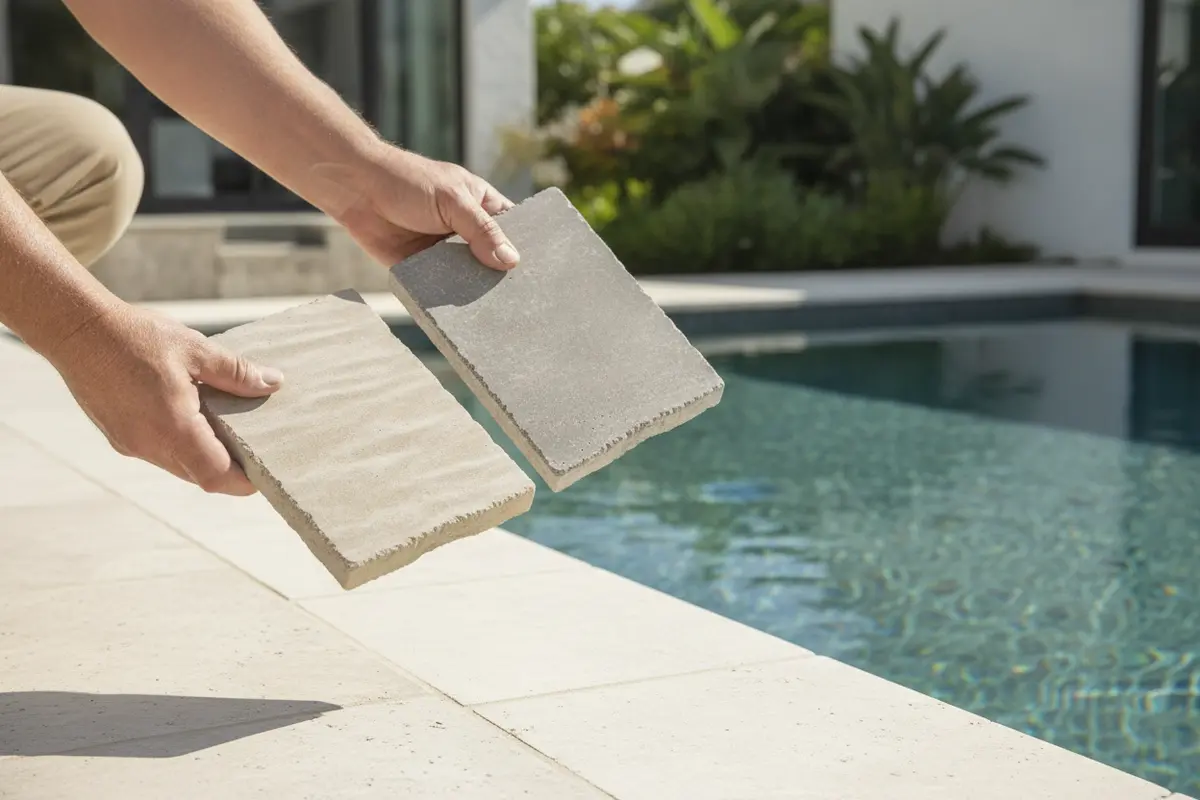
Think in terms of reducing risk and choosing a surface appropriate for the way the deck will be used. Ask for product-specific information about the surface finish and its suitability for poolside use. Whenever possible, inspect a physical sample in both dry and wet conditions. Check that the texture feels consistent without being so abrasive that it is uncomfortable on bare feet.
Also evaluate the whole walking route. People step out of the pool, turn at corners, cross toward seating, and move around furniture. A good surface choice can be undermined by standing water, a sudden change in elevation, an uneven transition, or a slick area that collects residue. For an overview of the company’s pool-deck work, see paver pool decks.
How should you compare pool paver textures?
Texture is one important part of the decision, but “rougher is safer” is not a reliable rule. Deeply textured surfaces may hold dirt in their recesses or feel harsh under bare feet. Very smooth finishes may be easier to clean but can be less reassuring when wet. The aim is a usable balance, confirmed with the actual product and project conditions.
When comparing samples, consider these points:
- Wet and dry feel: Handle the sample dry, then wet it with clean water. Walk on it carefully while stationary and while changing direction. A small sample does not reproduce a full deck, but it can reveal obvious comfort or cleaning concerns.
- Texture consistency: Compare more than one piece. Natural variation can change the feel from paver to paver, so ask how the selected product varies across a larger installation.
- Barefoot comfort: Run a hand over the surface and consider how it may feel on a hot day or during extended use. Avoid choosing only by a visual close-up.
- Cleaning practicality: Look at whether soil, leaves, and poolside residue can be removed with ordinary maintenance. Ask the supplier or installer for care instructions for the specific material and finish.
- Product documentation: Request the manufacturer’s current technical details. Ask what test method, if any, supports a traction claim and what the results mean for a wet poolside application. Do not compare numbers from different test methods as if they were interchangeable.
It is useful to view samples outdoors in the light where the deck will be installed. Texture and color can look different in direct sun, shade, and after wetting. If the project includes more than one paving area, compare the poolside material with the adjoining patio or path so that the transition remains clear and intentional.
What should Newport Beach homeowners consider about water exposure?
Pool decks are exposed to more than occasional splashes. The area nearest the waterline can be repeatedly wetted, while the outer deck may stay dry for longer periods. Nearby showers, planters, outdoor kitchens, and garden irrigation can add other sources of moisture. Salt air and coastal conditions are part of the local setting, but the actual exposure depends on the property, pool use, and maintenance habits.
Map where water is likely to land and where people are likely to walk. Pay particular attention to pool entry points, steps, ladders, corners, and the route to a shower or seating area. Those are places where wet feet and turning movements overlap. Choose the surface for how the entire area will function rather than treating the deck as one uniform zone.
Ask how the paver and joint system is intended to handle regular wetting, what cleaning products are appropriate, and what maintenance is recommended. Follow the product guidance rather than applying a coating or cleaner selected for a different material. If the property has persistent damp spots or recurring biological growth, discuss the cause with a qualified professional; a more textured paver alone may not address the underlying water condition.
How can you balance surface comfort and heat?
A pool deck can be comfortable in the morning and feel quite different after hours of direct sun. Color, material, finish, shade, and the amount of reflected heat from nearby walls or paving can affect how the area feels. No single color or product guarantees a cool surface in every setting.
Compare several colors outdoors and think about the deck’s sun pattern during the hours it is most likely to be used. Pale tones may brighten the area and complement coastal architecture, while darker accents can define borders or seating zones. But color should be one factor among several, not a substitute for checking material specifications and a sample under real conditions.
Consider how the deck will be used by children, older adults, and guests who may walk barefoot. If possible, assess samples after they have been sitting in sun and shade. Plan shade, umbrellas, or other features as part of the overall outdoor layout if the site needs them. Review paver patio options when coordinating a pool deck with a connected patio area.
Why do grading and drainage matter?
Even a well-chosen textured paver can feel uncomfortable if water repeatedly pools where people walk. Drainage planning should begin with the shape of the whole site: the pool edge, the deck, nearby structures, planting beds, and routes for runoff. The installation needs to direct water appropriately while respecting the pool, the home, and applicable site conditions.
During planning, ask the design and installation team to explain how surface slopes and drainage details will work. Identify low spots, downspouts, drains, steps, and places where water could be directed toward a doorway or foundation. A visual review of the finished surface is not a substitute for confirming the planned drainage approach before installation.
- Walk the existing deck after ordinary use or irrigation and note any places that stay wet.
- Point out roof runoff, hose bibs, outdoor showers, and planting areas that may add water.
- Ask how the new surface will connect to existing drains and adjacent paving.
- Discuss any drainage changes that could affect the pool edge, structures, or neighboring areas.
- Confirm who is responsible for maintaining drains and keeping them clear after the project.
Drainage should be planned as part of the hardscape rather than left as a finishing detail. If the project also updates the pool area, compare the deck scope with the broader pool remodeling work so that surfaces and transitions are coordinated.
How should pavers meet the pool coping?
The coping is the edge detail around the pool. The meeting point between coping and deck deserves careful attention because it is a frequent walking and water-exposure zone. A pleasing appearance is important, but the transition also needs to be planned for level changes, drainage, edges, and the existing pool structure.
Ask how the proposed deck will meet the coping and whether the coping itself is staying, being repaired, or being replaced. Confirm the planned joint and edge details, and ask how the design will avoid abrupt changes underfoot. Where a project meets steps, gates, or adjoining surfaces, review those connections as well. Do not assume that a new paver surface can simply be laid against an existing edge without evaluating the conditions.
Material choice and layout can make the coping transition feel either unified or clearly delineated. A complementary tone can create a continuous look; a subtle border can help define the water’s edge visually. View samples together in outdoor light and consider how the pool water, house exterior, and existing hardscape affect the color combination. The visual distinction should support the overall design without introducing a difficult-to-walk surface change.
Which factors should you compare before choosing?
Use the table as a discussion aid when you narrow down options. Product-specific suitability and installation details still need to be confirmed for the property.
| Decision factor | What to compare | Questions to ask |
|---|---|---|
| Texture and traction | Wet and dry feel, consistency, and available product information | Is this finish appropriate for the poolside use and cleaning routine? |
| Barefoot comfort | Surface feel, texture depth, and how it feels in sun and shade | Can we inspect a full-size sample outdoors before selecting it? |
| Water management | Site grading, drainage paths, joints, and existing low areas | Where will water go, and how will the design address persistent wet spots? |
| Coping transition | Edge height, joint detail, existing coping condition, and walking route | How will the deck meet the coping without a problematic abrupt transition? |
| Maintenance | Routine cleaning, product-specific care, and access to drains | Which cleaners and maintenance steps are recommended for this material? |
| Visual design | Color, pattern, border, home architecture, and adjoining paving | How will the selected samples look in this property’s light and setting? |
How can layout improve comfort and appearance?
Pattern and placement affect how a pool deck reads and how people move through it. A large, open area may benefit from a calm field pattern, while a border can distinguish the pool perimeter or connect the deck to the house. Layout should be based on the pool shape, deck dimensions, access routes, drainage plan, and the sizes and shapes of the chosen pavers.
Look beyond the water’s edge. A design can visually connect the pool with a dining area or patio, or separate zones for lounging and circulation. Keep the main walking paths easy to understand, and avoid placing a visual accent where it complicates a step, gate, or narrow passage. Where there is existing paving, compare samples with it rather than assuming that a similar color will match once installed.
Joint lines, borders, and cuts should be considered early. Discuss how the pattern will resolve around curves, corners, drains, and the coping. A detailed plan helps prevent last-minute compromises and gives the installer a clear scope. To see examples of outdoor surfaces and project layouts, browse the outdoor transformation gallery.
What maintenance should you plan for?
Maintenance affects both appearance and footing. Leaves, dust, sunscreen residue, food spills, and organic buildup can accumulate on an outdoor surface. Regular inspection and cleaning help you spot issues early, but the suitable method depends on the paver, joints, finish, and manufacturer’s recommendations.
Ask for written care guidance before the project is complete. Confirm which cleaners are appropriate, whether pressure washing is recommended or should be avoided, how to handle stains, and what to do if a paver shifts or a joint needs attention. Do not apply a sealer simply because a neighboring surface uses one; first verify whether it is suitable for the selected material and poolside conditions.
After installation, keep drains and channels clear of leaves and debris. Look for recurring puddles, loose or uneven units, and changes in the coping or joints. If something changes, address it promptly with a qualified professional. The paver sealing and maintenance information can help you discuss care questions for an outdoor paving project.
What should you prepare for a site assessment?
A professional site assessment helps connect product choices to the actual pool and yard. Before the visit, gather a few observations rather than trying to diagnose the property yourself. Note where the deck gets direct sun, where water remains after use, which paths people take, and any areas where the surface feels uneven or uncomfortable.
- Take overview photos: Include the pool, house, adjoining patio, gates, steps, and planting areas.
- Mark wet zones: Note splash areas, outdoor showers, drains, low spots, and locations that stay damp.
- Describe use: Explain who uses the pool, how people move between areas, and where seating or entertaining happens.
- Identify what stays: Clarify whether coping, drains, existing paving, or other features are intended to remain.
- Bring inspiration and concerns: Show colors or layouts you like, and point out practical priorities such as barefoot comfort or easy cleaning.
Ask for a clear explanation of the proposed materials, layout, drainage, transitions, and maintenance expectations. A design consultation should help establish the project scope and address site-specific questions; it should not rely on a generic promise that one paver is slip-proof in all conditions. For information about arranging a discussion, see the design consultation page.
How do you compare paver materials for a pool deck?
Start by comparing the actual products under consideration, not broad material labels. Paver material, finish, surface texture, thickness, color, and installation method all influence what you see and how the deck is cared for. The same general material category can include multiple finishes, so ask for the precise product and finish name rather than relying on a description such as “pool paver.”
For each candidate, record its appearance, wet feel, maintenance guidance, and any available product documentation. Ask how it is intended to be installed near a pool and whether the manufacturer identifies limitations for the conditions at your property. Compare the samples in a consistent way: view them in sun and shade, wet them with clean water, and consider how they feel underfoot. Keep the chosen sample or a photo with the product details so the selection can be checked against the project scope.
It is also worth thinking about the deck as a system rather than a single paving unit. The base, joints, drainage, edge details, and connection to coping all play a role. Ask the installer to explain how the proposed assembly suits the site and which parts require routine attention. If the project replaces only part of an existing deck, clarify how the new surface will meet the old one and whether the color and finish difference will be visible. These questions make it easier to compare proposals on scope instead of comparing product names alone.
What should be settled before installation?
Before work begins, make sure the design intent and practical details are recorded clearly. Confirm the limits of the work area, which existing features are included, where the main circulation routes run, and how borders or pattern changes will be laid out. Review how the installer plans to handle the pool edge, drains, steps, gates, and adjoining surfaces. If any condition is uncertain, ask how it will be evaluated and communicated before it affects the finished layout.
Agree on the selected paver and finish using an identifiable sample or product specification. Discuss who will protect the pool and nearby finishes during construction, how access to the yard will work, and how the site will be kept orderly. Ask when you can review the layout and material before installation proceeds, and how questions or changes will be documented. The details can vary by project, so avoid assuming a particular sequence or completion time without confirmation from the contractor.
At handoff, request the product and care information for the installed materials, plus guidance on the appropriate person to contact if a paver shifts, a drain becomes obstructed, or water pools unexpectedly. Keeping these details together helps with future maintenance and makes it easier to identify the surface if repairs are needed. A clear scope and handoff do not replace good design; they help preserve the decisions made during planning.
What are common mistakes to avoid?
- Choosing by appearance alone: Attractive product photos cannot show how a surface feels when wet, cleans, or looks in your yard’s light. Inspect samples and ask about product details.
- Assuming a rough surface is always better: Texture must be balanced with comfort and care. More texture is not automatically the right answer for every household.
- Ignoring where water travels: A paver decision cannot correct every grading or drainage problem. Discuss water paths and low areas as part of the site plan.
- Overlooking transitions: Coping, doors, steps, drains, and adjoining paving all affect the walking route. Review them before work begins.
- Forgetting maintenance: Ask how to clean the selected material and what routine inspections are appropriate before making a final selection.
- Relying on an absolute safety claim: No surface can guarantee that a wet deck will never be slippery. Plan for cleaning, good drainage, and careful use alongside an appropriate material choice.
Frequently asked questions
Are textured pavers always safer around a pool?
No. Texture may help provide a more secure feel, but performance varies by product and conditions. Water, residue, maintenance, drainage, and the way the surface is installed all matter. Compare the actual product when wet and ask for documentation relevant to poolside use.
Should I choose the lightest-colored pool pavers?
Not automatically. Color can influence the look and feel of a sun-exposed deck, but material, finish, shade, and site conditions also matter. Compare samples outside at different times of day and consider the paver alongside the home, pool water, coping, and nearby paving.
Can new pavers fix standing water on an existing deck?
Not by themselves. Persistent water may relate to slope, drains, the surrounding grade, or other site conditions. Have the area assessed so the drainage approach is understood before selecting materials or planning installation.
How do I know if existing pool coping can remain?
Its condition and the way the new deck will meet it need to be reviewed on site. Ask the installer to assess the coping, edge, level changes, and planned joint detail. Do not assume that the coping can stay without checking the transition.
What is the best first step for choosing non-slip pool pavers in Newport Beach?
Start with a site-specific review of how the pool area is used, where water moves, and what existing features must connect to the new surface. Then compare suitable samples for wet feel, comfort, care, and design before confirming the full scope.
Call Pacific Pavers to discuss your pool-deck project
A comfortable pool deck depends on the complete plan: a suitable surface, thoughtful drainage, carefully resolved coping transitions, and a maintenance routine that fits the material. A professional site assessment can help you evaluate those details together and choose a design that works for your Newport Beach property.

Jeff Tobin is the founder of Pacific Pavers, an award-winning outdoor living company serving Orange County, California. With a 30-person team of ICPI-certified professionals, Jeff specializes in transforming residential and HOA properties through custom paver installations, pool remodeling, and complete outdoor living spaces. His company philosophy—”Flawless craftsmanship. Clear communication. Zero stress.”—reflects his commitment to delivering premium results and exceptional customer experiences. As a BBB-accredited business and Belgard Master Craftsman, Pacific Pavers has become known for process-driven operations and elite craftsmanship in the hardscape industry.