
Outdoor kitchen cost in Orange County commonly starts around $15,000 for a compact built-in cooking area, while many custom design-build projects range from $30,000 to $75,000. Large premium spaces with extensive utilities, masonry, appliances, pavers, and a patio cover can exceed $100,000. The right budget depends less on island length alone and more on how the entire outdoor living area must function.
Schedule an outdoor kitchen design consultation with Pacific Pavers.
Quick answer: Budget for the complete installation, not only the grill and island. Site access, demolition, drainage, utility distances, appliance specifications, countertop material, shade, permits, and finish quality all affect the final price. A coordinated outdoor kitchen installation plan lets homeowners compare options before construction and protects the investment from expensive rework.
This guide explains realistic price tiers, the decisions that move a budget, and how to prioritize spending for an Orange County home. Published national figures can be a useful reference point, but local labor, permitting, coastal exposure, lot conditions, and premium finish expectations make a property-specific plan more reliable than a national average.
Outdoor kitchen cost ranges in Orange County
No single number fits every backyard. A simple grill island near existing utilities is fundamentally different from a complete entertaining space with a sink, refrigeration, bar seating, lighting, paver patio, and overhead cover. Use the ranges below for early planning, then confirm the actual scope through site evaluation and design.
Learn more about our landscape design services.
| Project Level | Typical Planning Range | What It May Include | Best Fit |
|---|---|---|---|
| Compact built-in kitchen | $15,000-$30,000 | Focused grill island, limited utilities, durable counter, basic storage | Homeowners who want a dedicated cooking station |
| Custom entertaining kitchen | $30,000-$75,000 | Custom island, multiple appliances, utilities, lighting, seating, coordinated hardscape | Frequent hosts seeking a complete gathering area |
| Premium outdoor living environment | $75,000-$100,000+ | Large kitchen, premium appliance suite, extensive masonry, pavers, cover, complex site work | Homeowners planning a comprehensive backyard transformation |
These ranges are planning tools, not bids. A small kitchen can exceed its expected tier when utility connections are distant or access is difficult. A larger kitchen can remain efficient when it has a disciplined appliance program and a straightforward site. For another published reference, Fun Outdoor Living reports a national outdoor kitchen average of about $16,500. The source notes that selections and project scope can move costs substantially. Orange County homeowners should treat that figure as a national benchmark rather than a local quote (Fun Outdoor Living outdoor kitchen cost guide).
Compact built-in kitchens
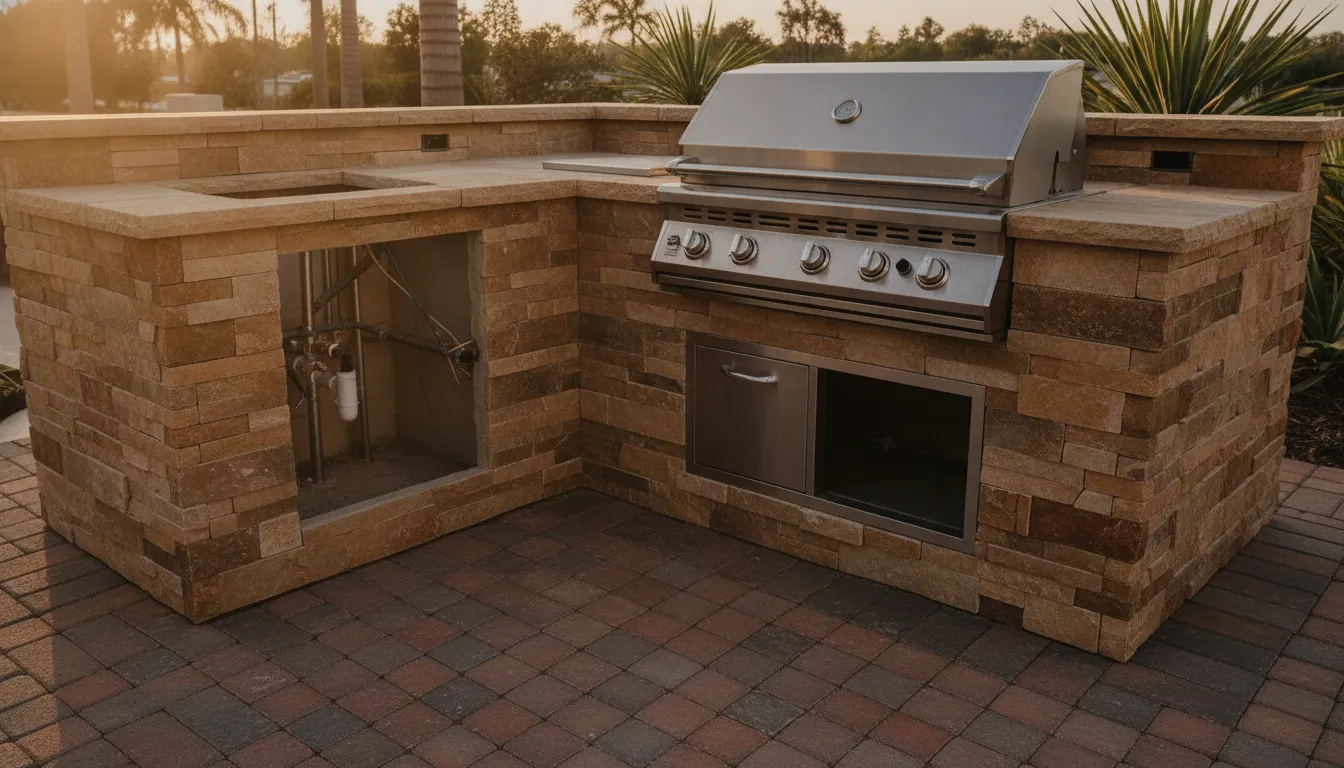
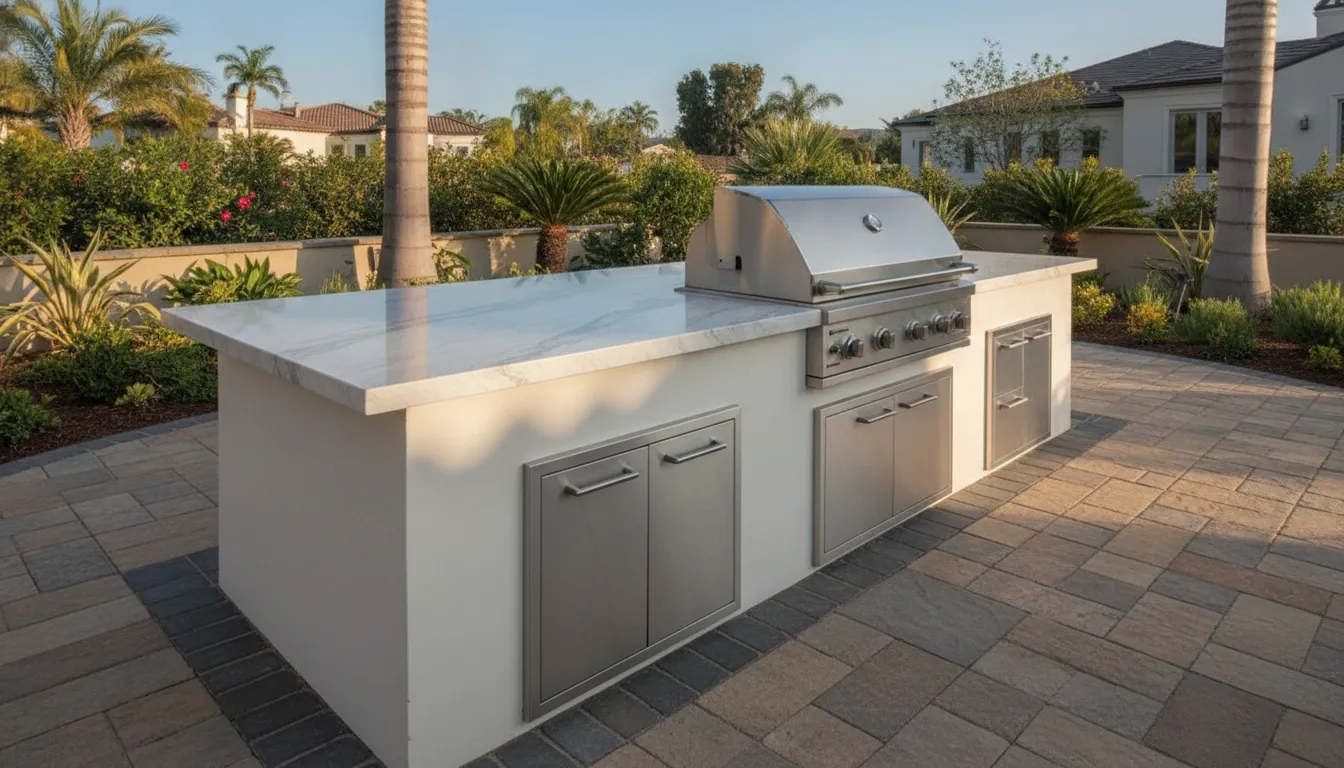
A compact installation focuses spending on the cooking essentials. It may include a built-in grill, access doors, a weather-resistant island, and counter space for preparation. Locating it near usable gas and electrical connections can help contain costs. It still requires professional planning for clearances, ventilation, drainage, and safe circulation.
Custom entertaining kitchens
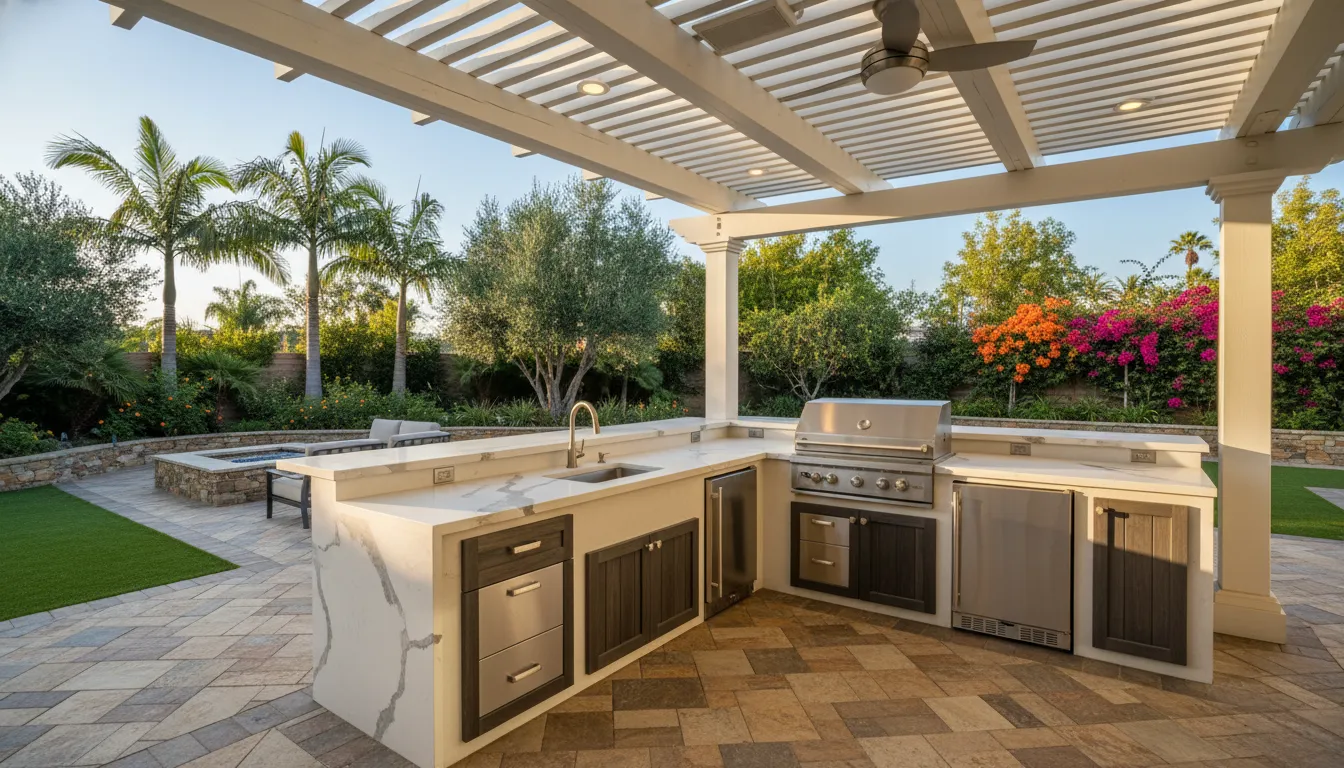
This tier adds the features that make hosting easier: refrigeration, a sink, side burners, waste storage, bar seating, lighting, and a larger preparation surface. The kitchen is usually integrated with a custom paver patio designed for outdoor entertaining. Coordinating the floor, island, utilities, and traffic paths creates a more refined result than assembling them as separate projects.
Learn more about our fire pit installation costs.
Premium outdoor living environments
Premium projects treat the kitchen as one part of a larger design. They may include a pizza oven, beverage center, expansive counters, dining and lounge zones, architectural masonry, landscape changes, and overhead shade. These projects demand detailed design development because every component affects another. The goal is not simply to add more features, but to create a cohesive setting that feels intentional and performs well.
Seven factors that shape the final price
A useful estimate separates the project into major systems. This makes it easier to understand where the money goes and which choices offer the greatest everyday value.
1. Site preparation, access, and demolition
Existing conditions set the foundation for the budget. Crews may need to remove old concrete, correct drainage, level a sloped area, or reinforce the base beneath a heavy island. Narrow side yards, stairs, and limited equipment access can increase labor. A site evaluation should identify these conditions before a fixed-price quote is prepared based on the approved scope.
2. Island size and construction
The island establishes the kitchen’s footprint, but linear feet do not tell the whole story. Corners, curves, appliance openings, raised bar sections, finish details, and structural requirements affect labor and materials. Premium design-build expertise ensures the island supports the selected appliances and provides comfortable preparation, serving, and seating areas without overwhelming the patio.
3. Gas, electrical, water, and drainage
Utility work is one of the most important budget variables. The cost depends on connection locations, trench distances, required capacity, and local code. Gas may serve a grill, side burner, or pizza oven. Electrical circuits may support refrigeration, outlets, lighting, and specialty equipment. A sink adds water supply and drainage considerations. Planning these systems before hardscape construction prevents avoidable demolition later.
4. Appliance package
Outdoor-rated appliances vary widely in price, performance, warranty, and durability. A focused package with a quality grill, refrigerator, and practical storage often delivers more value than a crowded island filled with rarely used equipment. Appliance specifications must be finalized early because dimensions, ventilation, power, and gas requirements influence the island design.
5. Counters, veneer, and finish materials
Countertop thickness, edge treatment, slab selection, seams, and fabrication complexity all affect cost. Veneer and masonry choices influence both visual character and maintenance. Orange County sun, salt air near the coast, heat, and occasional rain make exterior-rated materials essential. The best palette complements the home and surrounding hardscape rather than competing with them.
6. Patio, cover, and adjacent features
A kitchen needs comfortable circulation and stable support. Expanding or replacing the surrounding patio may become a meaningful part of the investment. Shade can also transform how often the area is used, especially during warm afternoons. An Alumawood patio cover planned with the kitchen can provide a coordinated solution, but post locations, clearances, lighting, and structural requirements must be resolved in the design.
7. Permits, engineering, and HOA review
Gas, electrical, plumbing, structural work, and patio covers may trigger city permits or engineering requirements. HOA communities can add design review steps and material standards. Requirements differ among Orange County jurisdictions, so responsible planning confirms what applies to the specific property. Permit and review time should be included in the schedule as well as the budget.
Why one design-build plan protects the budget
Outdoor kitchens connect multiple trades and systems. When the island, utilities, hardscape, drainage, lighting, and cover are designed separately, conflicts can surface during construction. A post may land in a walkway, a utility trench may cross finished pavers, or an appliance may require capacity that was not planned. Each conflict consumes time and money.
Pacific Pavers approaches the backyard as one coordinated environment. Its Orange County design-build process brings layout, material selections, engineering considerations, and construction sequencing into a single plan. With 2D and 3D outdoor living design, homeowners can review the relationships among spaces before work begins and make informed tradeoffs while changes are still easy to evaluate.
Discuss your outdoor kitchen priorities in a design consultation.
Qualified projects of $30,000 or more may receive a complimentary $6,500 design package. The design phase helps define the approved scope, after which Pacific Pavers can provide a fixed-price quote based on that scope. This does not mean a project can never change; homeowner-requested additions or newly discovered conditions can still affect price. It does mean the initial quote is grounded in a far more complete set of decisions.
How to build a realistic outdoor kitchen budget
Start with how the space should improve daily life, then translate those priorities into a phased list of requirements. The most successful budgets reserve money for infrastructure and craftsmanship before adding optional appliances.
- Define the primary use. Decide whether the kitchen is mainly for weeknight grilling, large gatherings, poolside service, or full outdoor dining.
- Set a comfortable investment range. Share the range early so the designer can recommend a realistic footprint, finish level, and appliance package.
- Separate essentials from upgrades. Mark each feature as required, preferred, or optional before design development begins.
- Evaluate the entire site. Account for access, demolition, drainage, utilities, hardscape, shade, lighting, and permitting rather than pricing the island alone.
- Approve specifications before construction. Confirm appliance models, materials, layout, and scope so the fixed-price quote reflects real selections.
Ask for an itemized scope
A useful proposal should describe what is included, what is excluded, and which selections or allowances affect the price. It should identify responsibility for design, permits, utilities, appliance installation, hardscape, and cleanup. Comparing only bottom-line numbers can hide major differences in scope and quality.
Plan a practical contingency
Even careful planning cannot reveal every concealed condition. Existing undocumented lines, hidden damage, or unusual soil conditions may only become visible after work starts. Keeping a contingency separate from the desired upgrade budget helps homeowners make calm decisions if an unforeseen condition appears.
Consider lifecycle value, not only initial price
Exterior construction must endure heat, moisture, sun exposure, cooking grease, and frequent use. Saving on hidden infrastructure, appliance suitability, or installation quality can lead to repairs and replacements that erase the initial savings. A premium project should direct investment toward safe utility work, durable construction, and the features used most often.
Where to invest and where to simplify
A disciplined design does not require the most expensive choice in every category. It puts premium resources where they improve performance, longevity, and the homeowner’s experience.
Invest in infrastructure and layout
Gas, electrical, plumbing, drainage, structural support, and safe clearances are difficult to change after the patio and island are finished. A thoughtful layout is equally valuable because it determines whether guests can gather without interrupting the cook. Pacific Pavers’ ICPI-certified team and Belgard Master Craftsman experience support precise hardscape planning and installation.
Invest in the primary cooking appliance
The grill should suit the household’s cooking habits and expected volume. Choose an exterior-rated model with appropriate heat control, service support, and warranty coverage. Then design the island around its exact specifications. Specialty equipment can be added when it serves a clear purpose, but it should not displace essential preparation and landing space.
Simplify the appliance list and finish palette
Reducing the number of appliances can lower equipment, utility, and island costs without weakening the core experience. A restrained finish palette can also look more sophisticated than several competing materials. Repeating a paver or masonry tone from elsewhere in the yard creates visual continuity and makes the kitchen feel integrated.
Phase optional features intelligently
Some upgrades can be added later, but only if the initial design prepares for them. Conduit, utility capacity, footings, and designated clearances may need to be installed during the first phase. Discuss future ideas during design so today’s construction does not block tomorrow’s improvements.
Questions to ask an outdoor kitchen contractor
The contractor’s process affects budget reliability as much as the visible selections. Before choosing a team, ask questions that reveal how design decisions, site conditions, and construction details will be managed.
- Who coordinates the complete project? Confirm whether one team manages design, hardscape, utilities, permits, and scheduling.
- How are existing conditions evaluated? Ask what is inspected before pricing and how concealed conditions are handled if discovered.
- When are appliance specifications finalized? Exact models should be coordinated with openings, ventilation, fuel, and power requirements.
- What does the quote include? Request a written scope covering materials, allowances, exclusions, permits, and cleanup.
- What credentials support the work? Verify licensing, insurance, relevant certifications, and experience with premium outdoor environments.
Pacific Pavers serves Orange County with turnkey design-build expertise, owner involvement, an ICPI-certified team, Belgard Master Craftsman credentials, and California contractor license CLS #1005154. Homeowners receive one coordinated plan for the features that make the backyard work as a whole.
Outdoor kitchen cost FAQs
How much does an outdoor kitchen cost in Orange County?
A compact outdoor kitchen may begin around $15,000, while many custom Orange County design-build projects fall between $30,000 and $75,000. Large premium kitchens with extensive utilities, appliances, masonry, pavers, and a cover can exceed $100,000. A site-specific design and scope are required for reliable pricing.
What is the most expensive part of an outdoor kitchen?
The largest category varies by project. Site preparation, long utility runs, custom masonry, premium appliances, and overhead structures can each become major cost drivers. Pricing the complete environment reveals which category matters most for the property.
Does an outdoor kitchen need permits in Orange County?
Permits may be required when a project includes gas, electrical, plumbing, structural work, or a patio cover. Requirements vary by city and HOA. The project team should confirm the applicable rules for the property before construction begins.
How can homeowners control outdoor kitchen costs?
Set priorities early, locate the kitchen near practical utility connections, select a focused appliance package, and approve one coordinated design before construction. Request a fixed-price quote based on the approved scope, while keeping a separate contingency for unforeseen conditions or requested additions.
Plan a premium Orange County outdoor kitchen
The most reliable budget begins with a complete vision of the backyard. When cooking, dining, circulation, utilities, pavers, lighting, and shade are resolved together, homeowners can see what their investment will deliver and choose upgrades with confidence. Pacific Pavers brings premium design-build expertise to outdoor living projects throughout Orange County.
Before starting your project, review our Outdoor Kitchen Contractor Checklist to ensure you are hiring the right team.
For homeowners ready to move from rough estimates to a property-specific plan, the next step is a design conversation about goals, site conditions, priorities, and investment range.
Request your Pacific Pavers outdoor kitchen consultation.

Jeff Tobin is the founder of Pacific Pavers, an award-winning outdoor living company serving Orange County, California. With a 30-person team of ICPI-certified professionals, Jeff specializes in transforming residential and HOA properties through custom paver installations, pool remodeling, and complete outdoor living spaces. His company philosophy—”Flawless craftsmanship. Clear communication. Zero stress.”—reflects his commitment to delivering premium results and exceptional customer experiences. As a BBB-accredited business and Belgard Master Craftsman, Pacific Pavers has become known for process-driven operations and elite craftsmanship in the hardscape industry.