
Your driveway sets the tone for the entire property. In Orange County, the right choice depends on more than the initial installation price: homeowners should weigh appearance. Maintenance, drainage, lifespan, and how well the surface supports a high-value home.
Ready to compare options for your property? Schedule a free design consultation with the Pacific Pavers team.
In a paver driveway vs asphalt Orange County comparison, asphalt usually offers a faster, lower upfront-cost installation. Pavers deliver broader design flexibility, easier individual repairs, and stronger long-term appeal. For homeowners planning a premium exterior transformation, professionally installed pavers are often the more complete investment.
That does not make asphalt the wrong choice for every property. The best material depends on your priorities, site conditions, project timeline, and plans for the home. Start by comparing the costs of each option in the Orange County market, then consider what those costs include over the life of the driveway.
Paver Driveway vs Asphalt: Cost Comparison for Orange County Homeowners
Concrete pavers cost more upfront than asphalt but offer greater design flexibility, longer lifespan, and potentially higher property value. Asphalt provides a lower initial investment with faster installation. The right choice depends on your budget, timeline, and long-term goals for your Orange County home.
For most Orange County homeowners, the first difference is upfront installation cost. Asphalt is generally the more economical material, while concrete pavers require a larger initial investment for upgraded materials, base preparation, and detailed installation. The right comparison, however, includes more than the first invoice.
| Consideration | Concrete pavers | Asphalt |
|---|---|---|
| Installed cost | $17.88-$23.75 per square foot | $4-$12 per square foot |
| Installation timeline | Varies with driveway size, base preparation, design, and site access | Often one to two days |
| Design flexibility | Multiple colors, shapes, textures, borders, and patterns | Primarily a consistent, dark paved surface |
| Long-term value | Can support curb appeal and may contribute to property value when well designed and maintained | Provides a practical driving surface at a lower initial cost |
| Permit planning | Orange County driveways larger than 100 square feet may require permits, with processing reported at approximately 15 days to six weeks | |
The cost ranges above come from Orange County driveway comparisons. Including estimates of $17.88 to $23.75 per square foot for concrete pavers and $4 to $12 per square foot for asphalt. Asphalt can often be installed in a day or two, which may matter when access and schedule disruption are the priority. Pavers typically involve more design and preparation decisions, but those decisions create a finished surface that can be coordinated with the architecture, walkways, and front entry.
- Paver driveway: Higher upfront cost, wider design options, longer preparation phase, investment that complements premium Orange County homes
- Asphalt driveway: Lower upfront cost, fast installation, limited design flexibility, practical surface for budget-conscious projects
- Property value impact: A well-maintained, attractive driveway can increase curb appeal and total property value by up to 10%, according to Oregon State University research
- Permit timeline: Orange County driveway permits typically take 15 days to six weeks to process plan accordingly
A well-maintained, attractive driveway can increase curb appeal and total property value by up to 10%, according to Oregon State University research. That does not guarantee a specific return, but it explains why a premium driveway can make sense for a high-value Orange County home. For a closer look at material and installation variables, review our guide to paver driveway cost. A site-specific design and estimate is the only reliable way to compare the total investment for your property.
Durability and Lifespan: How Long Do Paver and Asphalt Driveways Last?
Well-installed paver driveways commonly last 25 to 50 years or more, while asphalt driveways typically last 12 to 20 years with proper maintenance. Pavers also offer the advantage of individual unit replacement when damage occurs, making long-term care more targeted and cost-effective.
For Orange County homeowners comparing materials, lifespan is one of the clearest differences between pavers and asphalt. Both can perform well when the base, drainage, installation, and maintenance are handled correctly. The long-term repair process, however, is very different.
Paver driveways are built for decades of use
Well-installed paver driveways commonly last 25 to 50 years or more, depending on the paver system, soil conditions, drainage, traffic, and maintenance. Other industry comparisons place a professionally installed paver driveway at 30 years or more, while some well-installed systems can reach 40 years or longer with proper care. These ranges are useful planning benchmarks, not guarantees. Installation quality matters as much as the surface material.
One advantage of pavers is that damage can usually be addressed at the individual-unit level. If a paver cracks or becomes stained, a qualified contractor can remove and replace the affected pieces instead of cutting out and resurfacing an entire driveway. The surrounding pattern can remain intact, which helps preserve the appearance of a large investment. For a deeper look at paver driveway durability, review the factors that influence service life and long-term performance.
Asphalt has a shorter service window and different repairs
Asphalt is a practical surface that can flex with temperature changes. With proper maintenance, it can last up to 20 years, according to Oregon State University Extension. Other comparisons place a well-maintained asphalt driveway at approximately 12 to 20 years. The actual result depends on the quality of the base, water management, installation conditions, vehicle loads, and ongoing care.
When asphalt develops cracks, potholes, or areas of settlement, repairs typically involve patching, sealing, or resurfacing. Those repairs can be effective, but patched areas may remain visible and recurring damage can signal problems below the surface. Regular maintenance can extend the driveway’s useful life, yet homeowners should plan for replacement sooner than they would with a well-installed paver system.
- Paver lifespan: 25-50+ years with targeted individual-paver repairs when needed
- Asphalt lifespan: 12-20 years with regular sealcoating and crack management
- Repair approach: Pavers allow spot replacement; asphalt requires patching or resurfacing larger areas
In an Orange County paver driveway vs asphalt comparison. Asphalt may offer a shorter initial service cycle while pavers can provide a longer-lasting surface with more targeted repair options. A professional evaluation of the soil, drainage, driveway base, and expected vehicle use is the best way to set a realistic lifespan expectation for either material.
Comparing Paver Driveway vs Asphalt Orange County Maintenance Requirements
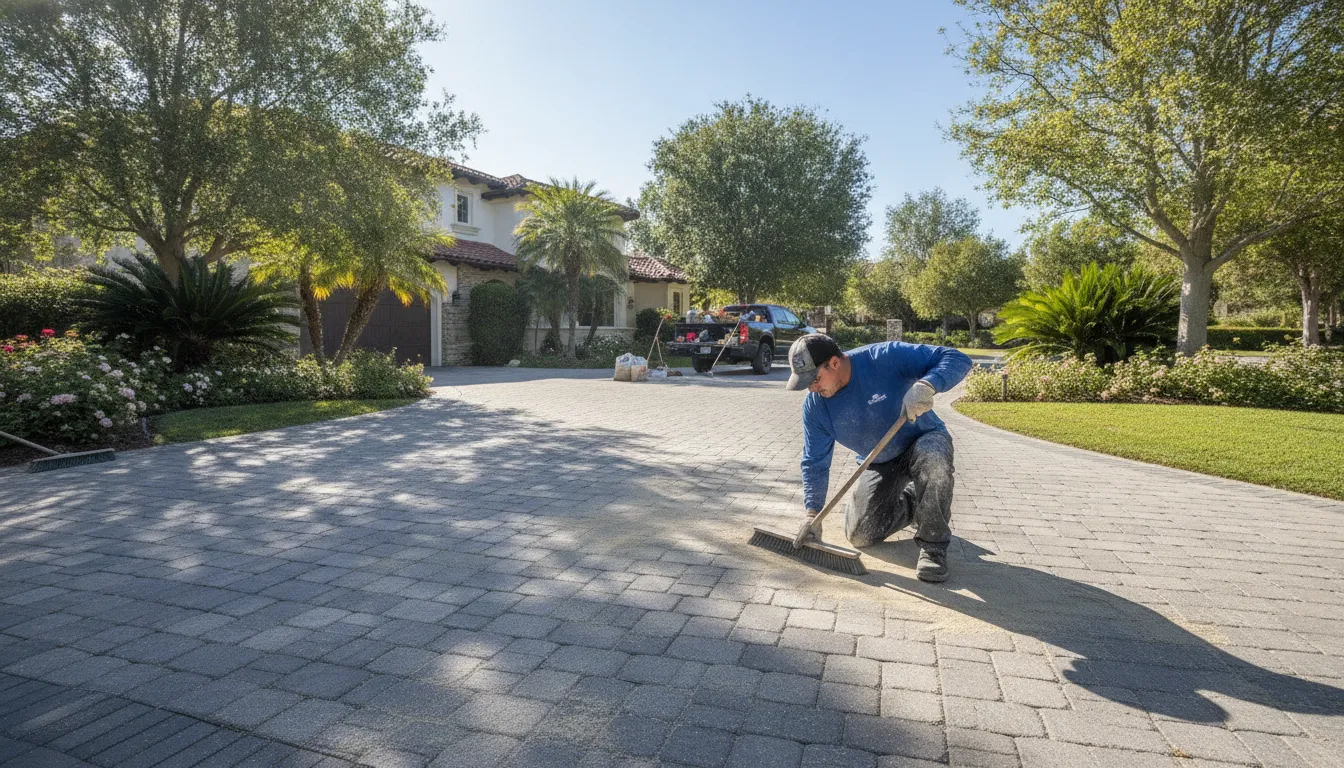
Asphalt driveways require regular sealcoating every few years to protect the surface and maintain appearance, while paver driveways need occasional cleaning and joint-sand replenishment. Pavers allow targeted repairs of individual units, making long-term care less disruptive and more cost-effective.
Maintenance is an important part of comparing driveway materials, especially in Orange County, where warm, sunny weather can expose surface weaknesses over time. Asphalt generally needs a more predictable maintenance schedule. A sealcoat should be applied within six months of installation, followed by another coat every other year, according to a comparison from Greener Horizon. More broadly, asphalt requires sealcoating every few years to protect it from the elements and preserve its appearance, according to Oregon State University.
Asphalt requires ongoing surface care
Sealcoating helps refresh asphalt’s dark appearance and provides a protective layer, but it is a recurring service rather than a one-time step. Homeowners also need to watch for cracks, edge deterioration, and areas that begin to soften. Asphalt absorbs significant heat in summer, which can make the surface uncomfortable for bare feet and may cause it to become pliable during particularly hot conditions. That heat exposure can make timely maintenance more important for a driveway that receives direct sun.
- Sealcoating frequency: Every 2-3 years for asphalt, with the first coat within six months of installation
- Crack management: Fill cracks promptly to prevent water infiltration and base damage
- Edge wear: Asphalt edges are vulnerable to crumbling without proper base support
Pavers are maintained in smaller, targeted steps
Paver driveways typically need occasional cleaning and, depending on traffic and weather, re-sanding of the joints. The benefit is that maintenance can be focused on the affected area rather than applied across the entire driveway. If one paver becomes stained, cracked, or damaged, it can generally be removed and replaced individually without resurfacing the whole installation. This makes repairs less disruptive and helps preserve the rest of the driveway’s appearance.
Pavers also provide more design flexibility than asphalt, with a wider range of colors, shapes, and textures documented by the District of Columbia Department of Energy and Environment. That variety makes it easier to match an existing home, HOA standards, or a broader outdoor living design. For homeowners weighing paver driveway vs asphalt Orange County. The practical choice often comes down to whether they prefer recurring surface treatments or occasional, localized care paired with a more customizable finish. If you are also considering a paver walkway installation, the same maintenance approach applies to your entire hardscape.
Curb Appeal and Property Value: How Your Driveway Choice Impacts Your Home
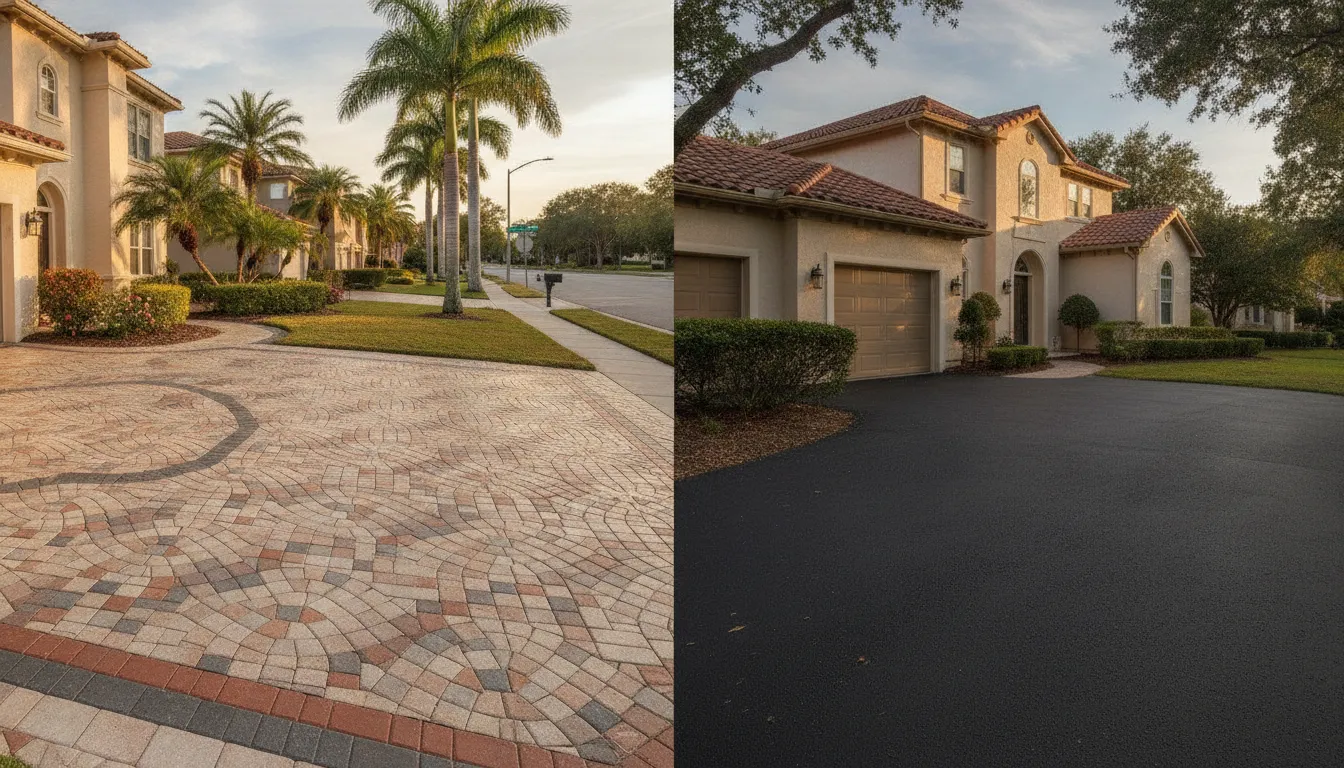
Your driveway material directly affects your home’s curb appeal and can influence property value by up to 10%. Pavers offer broader design options and a premium appearance that aligns with high-end Orange County homes, while asphalt provides a clean but uniform look with less design flexibility.
Your driveway is one of the first features people see from the street. In a high-value Orange County market, that first impression can influence how a property feels before anyone reaches the front door. Research from Oregon State University notes that a well-maintained, attractive driveway can increase curb appeal and total property value by up to 10%. That does not make a driveway an automatic investment, but it does show why material selection and ongoing condition deserve more attention than they often receive.
Asphalt offers a clean, uniform surface in a familiar black finish. Its understated appearance can work well when speed and simplicity are the priority. But it provides few ways to coordinate the driveway with a home’s architecture, landscaping, entry walkway, or outdoor living spaces. Over time, fading, edge wear, and surface repairs can also make the driveway look less intentional unless it is maintained carefully.
Pavers create a stronger design opportunity. They are available in a broader range of colors, shapes, textures, and laying patterns than traditional asphalt, giving homeowners more control over the finished appearance. A border can frame the driveway, contrasting tones can define parking areas, and a pattern can echo details already present in the home. For a Newport Beach, Laguna Beach, or Irvine property. Those choices can help the driveway feel like part of the overall design instead of a purely functional strip of pavement. Paver patios and walkways use the same design language; see our paver patio comparison guide for related outdoor living ideas.
Permeable pavers add another curb-appeal benefit when drainage is a concern. According to the District Department of Energy and Environment, permeable systems allow rainwater to soak naturally through the joints and into the ground below. That can reduce visible runoff while supporting a more thoughtfully designed front entry.
For a closer look at the design and performance advantages, review these benefits of paver driveways. The right choice should balance the home’s style, neighborhood expectations, drainage needs, and long-term maintenance plan rather than focusing only on the initial surface. For more Orange County outdoor design inspiration, explore paver patio transformations in Ladera Ranch.
Orange County Climate and Installation Factors in the Paver Driveway vs Asphalt Decision
Orange County’s warm climate and seasonal rain create different practical considerations for each material. Pavers handle heat better with lighter color options and allow permeable drainage. Asphalt absorbs more heat and requires careful grading to manage stormwater runoff.
Orange County’s climate affects how a driveway looks, feels, and performs over time. Warm summer temperatures can make dark asphalt absorb substantial heat. The surface may become uncomfortable under bare feet and can turn pliable during particularly hot weather. That matters when the driveway connects to a front entry, side yard, pool area, or outdoor living space. Pavers offer a more adaptable surface design, with color and material selections that can be coordinated with the home’s architecture and surrounding hardscape.
Seasonal rain creates a different consideration. Conventional asphalt sheds water across the surface, so grading and drainage planning are important wherever runoff could collect near a garage, walkway, or foundation. Permeable pavers provide another option. Their joints and base allow rainwater to infiltrate into the ground, helping manage runoff during heavier storms and reducing the risk of localized flooding. The right system depends on soil conditions, slope, drainage requirements, and the property’s existing hardscape, so the design should be evaluated before materials are selected.
- Heat absorption: Asphalt absorbs more heat and can reach uncomfortable surface temperatures; pavers offer lighter color options that stay cooler
- Rainwater management: Permeable pavers allow natural drainage through joints; asphalt requires proper grading and may need additional drainage solutions
- Seasonal expansion: Asphalt can soften in extreme heat; pavers remain stable across temperature swings
Permits and site planning in Orange County
Driveway work is not only a material decision. In Orange County, driveways larger than 100 square feet generally require a permit, and processing can take approximately 15 days to six weeks. Allowing time for drawings, plan review, and any jurisdiction-specific requirements helps prevent a construction schedule from becoming an avoidable source of disruption.
HOA requirements can shape the material choice
Many Orange County communities, including neighborhoods in Newport Beach, Ladera Ranch, and Irvine, have HOA rules governing driveway materials, colors, patterns, and visible exterior changes. Pavers typically provide more flexibility for meeting those standards because they are available in coordinated colors, shapes, and textures. A thoughtful proposal can include material samples and a layout that the architectural committee can review before work begins.
Pacific Pavers has extensive experience coordinating HOA-driven improvements across Orange County. Its design-build process helps align site conditions, permitting, and community approvals from the start. Explore paver driveway services to discuss a driveway plan suited to your property and neighborhood requirements. Homeowners planning broader upgrades may also find our Newport Beach outdoor living renovation guide helpful for coordinating multiple project elements.
Frequently Asked Questions
How does a paver driveway compare to asphalt in Orange County?
Asphalt typically costs less upfront and can be installed quickly, while pavers provide more design flexibility, a more distinctive appearance, and easier spot repairs. The better choice depends on whether your priority is minimizing initial cost or creating a long-lasting driveway that complements your home’s architecture and outdoor improvements.
What is the cost difference between asphalt and paver driveways?
Asphalt is generally the more affordable material to install, while pavers require a larger initial investment because of the individual units, base preparation, and detailed installation. Compare the full scope, including demolition, drainage, borders, permits, and long-term maintenance, rather than evaluating material price alone. Oregon State University notes that asphalt is generally more cost-effective than stone pavers.
Do paver driveways require more maintenance than asphalt in Orange County?
Both materials need routine care, but the tasks differ. Asphalt commonly needs sealcoating every few years to protect its surface and appearance, while pavers may need periodic cleaning, joint-sand maintenance, and occasional leveling. Individual pavers can also be removed and reset when a localized area needs attention, without replacing the entire driveway.
Are paver driveways more durable than asphalt?
With proper maintenance, asphalt can last up to 20 years, according to Oregon State University. A properly designed and installed paver system can offer a longer service life, and its modular construction makes targeted repairs practical. Drainage, soil conditions, base preparation, installation quality, and maintenance all influence actual performance.
How do weather conditions in Orange County affect driveway choice?
Warm summers can make asphalt absorb substantial heat and become uncomfortable or pliable. During seasonal rain, permeable pavers can help rainwater soak into the ground instead of concentrating runoff, as described by the District Department of Energy and Environment. A site-specific drainage plan is important for either material.
Schedule Your Orange County Driveway Consultation
The right driveway depends on your home’s design goals, maintenance preferences, and long-term plans. A conversation with Pacific Pavers can help you compare pavers and asphalt in the context of your property before choosing a direction. Schedule a free design consultation to discuss your driveway project with the team.

Jeff Tobin is the founder of Pacific Pavers, an award-winning outdoor living company serving Orange County, California. With a 30-person team of ICPI-certified professionals, Jeff specializes in transforming residential and HOA properties through custom paver installations, pool remodeling, and complete outdoor living spaces. His company philosophy—”Flawless craftsmanship. Clear communication. Zero stress.”—reflects his commitment to delivering premium results and exceptional customer experiences. As a BBB-accredited business and Belgard Master Craftsman, Pacific Pavers has become known for process-driven operations and elite craftsmanship in the hardscape industry.