
When you are researching pool coping repair, Orange County homeowners often want to know whether a crack or loose edge can be fixed in place, or whether the surrounding deck needs attention too. The answer depends on what moved, how far the damage extends, and whether water is draining as it should. A careful assessment helps separate a small, localized defect from a symptom of a larger issue.
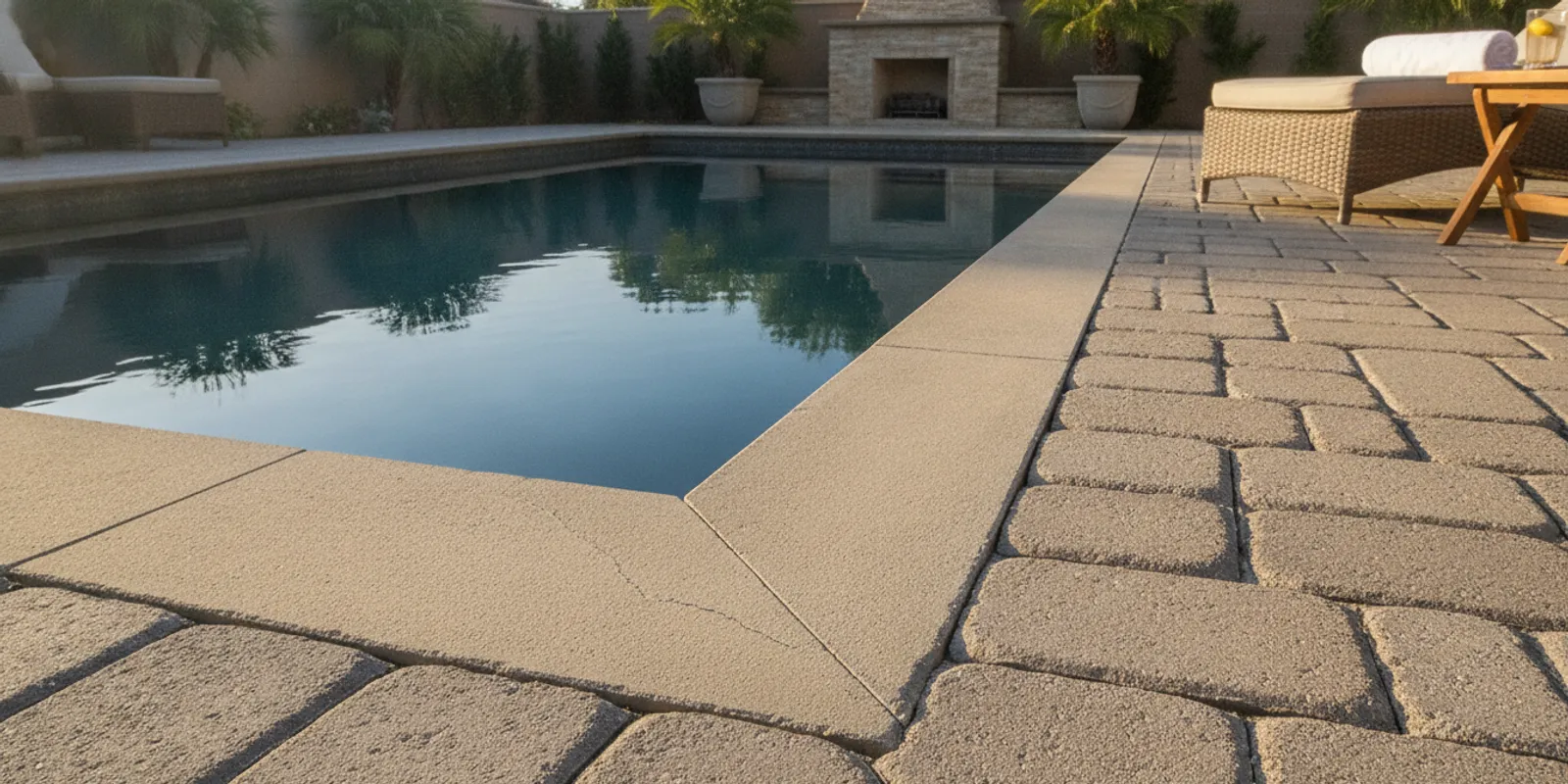
What does pool coping do?
Pool coping is the finished edge that caps the pool structure where it meets the surrounding deck. It creates a defined transition around the water, protects the edge beneath it, and gives the deck a finished appearance. Coping may be made from concrete, natural stone, manufactured pavers, or another material selected for the project.
That edge is exposed to sun, water, cleaning products, foot traffic, and changes in temperature. It also connects several parts of the pool area: the pool shell, the coping units, joints, and deck surface. A defect in one part can affect another, which is why a quick surface patch does not always address the cause.
For a broader look at how deck surfaces and pool areas work together, see Pacific Pavers’ paver pool deck information. If your project involves more than the pool edge, the company’s outdoor living and hardscape services page outlines the broader service scope.
Because the coping is both an edge detail and part of a larger assembly, it helps to describe the symptom precisely. “The coping is damaged” could mean a chipped corner on one unit, a series of open joints, a piece that shifts underfoot, or an uneven deck transition. Each points to different questions. Note the location, the length of the affected area, and what you can see around it before deciding what kind of work to request.
Pool coping repair Orange County: Which signs need attention?
A single hairline mark may be cosmetic, while a moving section or repeated separation deserves a closer look. Note where the problem appears, whether it is changing, and if it follows a joint or crosses through a coping piece. Photos taken from the same angle over time can help show whether it is stable.
Look at the pool perimeter in sections instead of relying on one overall impression. Walk around the deck where it is safe, and compare the affected area with nearby coping. A small defect surrounded by firm, even units is different from a similar crack accompanied by several gaps, a sinking paver edge, or a change in how water moves. Do not pull at joints, pry up pieces, or repeatedly step on a loose section to test it.
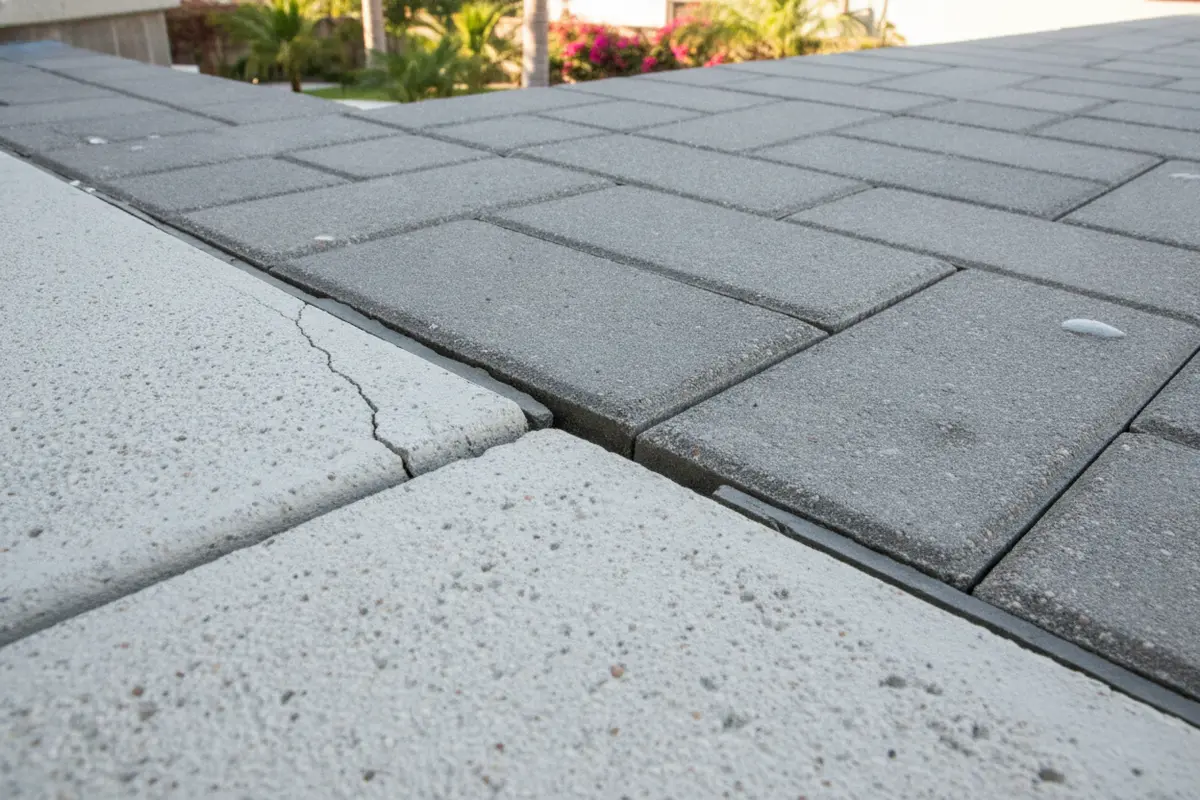
Cracks through a coping piece
Cracks can result from impact, material wear, movement beneath the coping, or stress at a joint. A crack that stays within one piece is different from a line that continues into adjacent units or the deck. Look for widening, new cracks, or edges that have become sharp. Avoid assuming that filling the visible line will resolve movement below it.
Record whether the line crosses the whole piece, begins at a corner, or follows the boundary between two units. A chip or surface check may remain limited, while a crack that cuts across a unit or reappears after a prior patch calls for closer evaluation. The surrounding pattern matters too: several cracks aligned in a row may deserve a different review than one isolated mark caused by a known impact.
Movement, rocking, or a loose section
Coping that shifts underfoot or rocks when touched can indicate that its bedding or bond has failed. Movement may also occur where coping meets a deck that has settled or expanded differently. Do not repeatedly step on or test a loose piece. A unit that moves can create a trip hazard and may allow water into the assembly.
Pay attention to the size of the affected area. Is one coping unit loose, do several adjacent units move, or does the deck surface beside them also feel uneven? A change over time is useful context. If a section was stable and now shifts, or if a repair has loosened again, tell the assessor. Keep people away from the unstable area rather than using it as a regular route around the pool.
Open or changing joints
Joints between coping pieces and along the deck interface can open, crumble, or separate. Some movement joints are intentional, so the presence of a gap alone does not establish a defect. Pay attention to changes: a joint that is widening, losing material, or letting water collect needs assessment. The right repair depends on the joint’s role and the materials on both sides.
Take a photo that includes the whole joint and the adjacent materials. A narrow gap may be part of the original design, while missing or loose joint material, repeated separation, or a gap that has changed can be meaningful. Avoid filling every opening with the same product. A joint that needs to accommodate movement and one that has a different function may call for different treatment, so the material and construction details should be identified first.
Staining, mineral marks, or recurring discoloration
Dark patches, white deposits, and discoloration can be caused by different things, including water movement, deposits, or surface products. Staining by itself does not prove the coping is failing. If it appears alongside an open joint, persistent dampness, loose units, or a change in the deck, record the location and mention it during an assessment. Avoid harsh cleaning or sealing before identifying the material and likely cause.
Describe whether the mark is new, returns after cleaning, or appears only in one area. Also note what cleaning products have been used. Different stone, concrete, and manufactured surfaces can respond differently to treatments. A cleaner or sealant applied without identifying the surface may change its appearance, leave residue, or make it harder to understand the original symptom. If the coping is stable and the only concern is a stain, ask whether a material-specific cleaning review should come before construction work.
Water that collects or drains toward the pool edge
Observe the deck after routine use or rainfall. Does water linger beside the coping, run toward the pool, or collect in a low spot? Drainage patterns can help identify whether the issue is limited to a joint or connected to the deck’s slope. Do not change drainage or add a surface coating as a guess; the underlying grading and water route matter.
When documenting water, note where it starts, where it flows, and whether it disappears after conditions change. A photo immediately after rain and another later can show whether a low area persists. Mention nearby drains, downspouts, or other visible sources of runoff if relevant. These observations do not diagnose the cause, but they help an assessor look at the whole path rather than only the wet spot at the pool edge.
Uneven or unsafe transitions
A raised edge, sudden change in height, sharp broken corner, or gap between deck and coping can catch a foot. Keep people away from an unstable or sharp area, especially children and anyone walking barefoot. Temporary caution is sensible, but it is not a repair. Have a professional review a transition that is loose, worsening, or difficult to walk across safely.
Look at transitions from more than one direction. A small height difference may be easy to miss when approaching from one side and more noticeable from another, particularly around a turn or step. Mark the location in your notes rather than placing a loose object over it, which could create another trip risk. If the damaged area is near a gate, steps, or a frequently used path, mention that use pattern when arranging an assessment.
Pool coping repair Orange County: How do repair options compare?
Repair is more likely to be considered when the affected area is limited, nearby pieces are stable, and the surrounding deck has no signs of movement or poor drainage. A professional may be able to reset or replace a small number of units, address an appropriate joint, or correct a localized defect. The exact approach depends on the original installation and the condition of the materials.
A broader scope deserves consideration when damage repeats in several places, multiple pieces move, the deck has settled, or water issues extend beyond one edge. A patch may hide a symptom without correcting the movement or drainage condition that caused it. The assessment should trace the defect far enough to determine what is connected, rather than assuming the visible crack is the full extent.
Repair and replacement are not simply a choice between inexpensive and expensive. A repair can be the right fit for a contained problem, but repeated patching may not be a good use of effort if the base, adjacent surface, or pool interface continues to move. Replacement can provide a chance to address a wider section and coordinate materials, but it may involve more disruption. Ask the assessor to explain the boundaries of the proposed work and what remains outside them.
For example, imagine one cracked coping unit with sound neighboring pieces and no movement at the deck. The discussion may focus on whether that unit can be removed and replaced, whether a suitable match is available, and how the adjoining joint will be finished. Compare that with a row of coping pieces that have opened joints next to pavers that have also shifted. In the second case, the key question is not only how to replace visible pieces but what explains the repeated movement and whether the deck interface needs attention.
A practical way to compare scopes is to ask for the smallest repair the contractor believes is appropriate and the reason for its boundary. Then ask what evidence would lead to expanding the work. This does not mean choosing the smallest scope automatically; it makes the trade-offs clear. A written scope should distinguish confirmed visible conditions from areas that cannot be evaluated without removing material. If matching an older coping material is uncertain, ask how the proposed finish may differ and what options exist before work begins.
What should you compare before choosing a repair approach?
Use the table as a conversation guide, not a diagnosis. Actual scope depends on the site, materials, and what the inspection reveals.
| Condition observed | Possible scope to discuss | What to clarify |
|---|---|---|
| One stable, isolated damaged piece | Localized repair or replacement of the affected unit | Can the piece be matched, and are nearby units secure? |
| Loose or rocking coping | Resetting or replacing affected pieces, with a check of the support below | What caused the movement, and how will the repair secure the assembly? |
| Several open joints or recurring separation | Joint work and assessment of the coping-to-deck interface | Which joints are designed to move, and what material is appropriate? |
| Widespread movement or uneven deck | Broader deck or coping work, potentially including replacement | What area is included, and how will drainage and transitions be handled? |
| Staining without movement or water symptoms | Material-specific cleaning assessment before repair is considered | What is causing the mark, and could cleaning or sealing alter the finish? |
When comparing proposals, look for the same information in each: which units or sections are included, whether adjoining deck work is included, what materials are assumed, how the site will be protected, and how the finished edge will meet the existing surface. If one proposal addresses only a visible crack and another includes evaluation of a connected joint or movement area, ask each provider to explain the difference. A lower or higher total by itself does not explain whether the scope is comparable.
Also confirm how unexpected conditions will be handled. Work near an existing pool edge can reveal details that were not visible from the surface. Ask how the contractor will pause, document the condition, and obtain approval if the discovered scope differs from the written plan. Clarity about change decisions helps avoid misunderstandings and lets you decide with better information.
What happens during a professional assessment?
A useful assessment starts with the symptoms and how the pool area is used. Point out the exact locations of cracks, gaps, loose pieces, staining, and standing water. Mention when you first noticed them and whether they change after rainfall, pool use, or cleaning. Photographs can help document a changing condition, but they do not replace an on-site review.
The assessor can look at the coping pieces, joints, the transition to the deck, nearby drainage, and visible changes in level. Depending on access and the condition, they may need to determine whether the issue is isolated or connected to a larger area. Ask what could not be verified without opening or removing material; that helps set clear expectations about unknowns.
It can help to walk the perimeter together and point to each observation rather than starting with a general request to “fix the coping.” Ask the assessor to distinguish what is visible from what is inferred. For instance, a loose piece is directly observable, while the reason it loosened may need further investigation. Ask which conditions are urgent, which can be monitored, and what signs would mean the situation has changed.
Before approving work, request a written scope that identifies the affected area, the proposed repair or replacement, material assumptions, and how adjoining surfaces will be protected and finished. Ask whether the work addresses the likely cause or only the visible defect. If the assessment finds a broader hardscape project, it may help to review related paver patio considerations and examples in the outdoor transformation gallery.
For a larger project, ask how the sequence will affect access to the pool area and what preparation is expected from the homeowner. Clarify how existing furniture, planters, and adjacent finishes will be protected, and whether any temporary restrictions will apply while work is underway. These are planning questions, not assumptions about a particular contractor’s process. Getting the answers in writing gives you a more useful basis for comparing the proposed scopes.
How should you prepare for an inspection?
- Make a short defect list. Note each crack, loose unit, open joint, stain, or drainage concern and its approximate location.
- Take clear photos. Include a close view and a wider view that shows where the issue sits around the pool. Repeat from the same position if you are tracking change.
- Describe the timing. Say when you noticed the issue and whether it changes after rain, regular pool use, or other conditions.
- Clear safe access. Move furniture and loose items from the area when practical, but do not step on or lift an unstable coping piece.
- Gather project information. If available, keep installation records, material details, or notes about earlier repairs. Do not delay a safety review to find paperwork.
- Ask about the full interface. Have the assessor explain how coping, joints, deck, drainage, and any nearby barrier or gate are considered together.
Organize photos in a simple sequence: one overview of the pool, one view that locates the issue, and one close-up. If you have older photos from before the damage appeared, keep them with the current images. Add short captions such as “north side, near steps” or “after rain” so the observations remain understandable later. Avoid editing or marking up the only copy of a photo; keep an original that shows the condition as you saw it.
Write down the questions you want answered before the visit. Useful questions include: What seems to be moving? Are adjacent units stable? Is water draining in a way that could affect the area? Which part of the work is repair, and which part is replacement? What is not included? What assumptions would change the scope? A short list keeps the conversation focused and makes it easier to compare recommendations afterward.
If proposed work may affect a pool barrier, gate, or fence, confirm the applicable requirements with the relevant authority before work begins. The County of Orange swimming pool and spa packet addresses pool and spa provisions including secondary barriers; it is not a repair specification for coping.
When should you avoid waiting?
Arrange a timely professional review if coping rocks or shifts, a piece is missing or sharply broken, cracks are spreading, the deck has a noticeable height change, or water is collecting in a new area. Keep foot traffic away from a visibly unstable spot. If the condition creates an immediate danger, use the appropriate emergency or safety response rather than relying on a future construction appointment.
A cosmetic mark on a stable surface may not need urgent work, but it is still worth documenting if it grows or appears with other symptoms. The pattern matters more than one isolated clue. A steady record can help distinguish a stain from a developing movement or drainage concern.
If the concern is near a walking route or entry point, consider how people can avoid it safely while an assessment is arranged. Do not cover a loose area with a rug or place an object where someone could trip over it. Keep the route clear and tell household members where the hazard is. If you are unsure whether an area can be used safely, err on the side of keeping people away until it is reviewed.
Frequently asked questions
Can one cracked coping piece be repaired without replacing the whole edge?
Sometimes. If the damage is isolated and the surrounding pieces and deck are stable, a professional may recommend work limited to that area. If the crack is part of wider movement, a small patch may not last or solve the underlying issue. An on-site assessment determines the appropriate boundary.
Does staining mean water is getting behind the coping?
Not necessarily. Discoloration can have several causes, and its appearance alone cannot confirm what is happening beneath the surface. Note whether the stain recurs or appears alongside damp joints, loose pieces, or pooling water, then ask the assessor to evaluate those symptoms together.
Should I seal a crack or open joint myself?
A surface product may not be suitable for every coping material or joint, and it can make later work more complicated. Because joints can serve different purposes, identify the material and condition before applying a product. If the section moves, is sharp, or is exposed to standing water, arrange a professional review instead of treating it as a cosmetic gap.
Does a pool coping assessment include the deck?
It should consider how the coping meets the surrounding deck, especially if there are gaps, uneven transitions, or drainage symptoms. The exact scope of an assessment varies, so ask whether the review will include adjacent pavers, surface levels, and visible drainage conditions. A coping-only inspection may miss context that explains why a defect returned.
Where can I learn about broader coping work?
For additional background on how a larger coping project may be approached, see the pool coping replacement guide. It is useful context, but the correct scope for a particular pool still depends on what an in-person review finds.
Discuss your pool area with Pacific Pavers
Pool coping problems are easier to evaluate when you look beyond the visible crack and consider movement, joints, drainage, and the deck around it. Document what you see, keep people clear of unstable areas, and get a professional assessment when the condition is changing or unsafe.

Jeff Tobin is the founder of Pacific Pavers, an award-winning outdoor living company serving Orange County, California. With a 30-person team of ICPI-certified professionals, Jeff specializes in transforming residential and HOA properties through custom paver installations, pool remodeling, and complete outdoor living spaces. His company philosophy—”Flawless craftsmanship. Clear communication. Zero stress.”—reflects his commitment to delivering premium results and exceptional customer experiences. As a BBB-accredited business and Belgard Master Craftsman, Pacific Pavers has become known for process-driven operations and elite craftsmanship in the hardscape industry.