
A 400-square-foot lawn can look straightforward on a measuring tape, yet its budget depends on much more than the turf roll. In Orange County, access, removal, grading, drainage, base preparation, edging, seams, and disposal can materially change the work involved.
The 400 sq ft artificial grass cost is best treated as a planning range, not a guaranteed quote. Published guides report installed figures ranging from lower single digits to around twenty dollars per square foot for small projects. The range depends on turf quality, site conditions, and fixed setup costs. A site-specific proposal should separate materials, preparation, labor, and optional work.
That distinction matters because projects under 500 square feet can carry higher per-square-foot costs when access and setup are spread across a smaller area. Get Your Complimentary Design Consultation to discuss the property and scope with a qualified team.
Start by looking at the published planning references, then use the range as a framework for understanding what your installation quote should include.
What Is the 400 Sq Ft Artificial Grass Cost Range?
Direct answer: The 400 sq ft artificial grass cost can vary substantially because a small installation spreads mobilization, delivery, cutting, edging, and preparation across a limited area. Published planning references range from lower single digits to around twenty dollars per square foot installed, but these figures are not Pacific Pavers rates or a guaranteed quote.
For a 400-square-foot project, multiply the cited per-square-foot figures by the measured area only as a rough planning exercise. A Magnolia Turf guide reports a lower general range. InstallArtificial reports a higher reference for projects under 500 square feet. LawnStarter reports a national average that includes materials and labor. Review each source’s assumptions rather than treating any figure as a promise.
| Source | Published reference | How to use it |
|---|---|---|
| Magnolia Turf | Lower single-digit to low-double-digit range per sq ft installed | General range; varies by yard size, conditions, and turf quality. |
| InstallArtificial | Higher reference for projects under 500 sq ft | Small-project planning reference. |
| LawnStarter | National installed-cost comparison range | National comparison reference, not a local quote. |
Why a 400-square-foot lawn may cost more per square foot
Small projects do not necessarily require proportionally less work. A crew still has to schedule the installation, deliver materials, establish a clean perimeter, make cuts around corners or planting areas, and manage seams and waste. Magnolia Turf specifically notes that projects under 500 square feet tend toward the higher end of per-square-foot pricing because fixed setup costs are distributed across less area.
The final scope also depends on what is underneath the existing lawn and how water moves through the site. Removal, excavation, grading, base preparation, drainage, edging, infill, disposal, access, and adjacent hardscape can each change the estimate. Pacific Pavers describes a broader process that includes site assessment, design, preparation, grading, base installation, drainage planning, installation, cleanup, and a final walkthrough through its 2D and 3D outdoor design services.
Use these published figures to frame a conversation, not to select a contractor by price alone. Ask for a written breakdown separating turf, preparation, labor, removal, edging, infill, drainage, and optional hardscape so you can compare equivalent scopes.
What Does Artificial Grass Material Cost for 400 Sq Ft?
For a 400-square-foot project, turf material is only one part of the budget. A material-only calculation should be kept separate from installed cost, because the final scope may also include base aggregate, labor, removal, edging, seams, infill, drainage, and disposal. That distinction makes it easier to compare proposals accurately and avoid treating a roll of turf as a complete lawn system.
Published planning references show why product selection matters. LawnStarter separates polypropylene, polyethylene, and nylon material ranges before labor. Another installation guide gives a separate medium- to high-quality material range. These are external reference ranges, not Pacific Pavers pricing. Product cost also varies by blade structure, backing, density, warranty, and intended use.
| Material factor | Planning reference | What to confirm |
|---|---|---|
| Turf type | Ranges differ by fiber type before labor, with polypropylene, polyethylene, and nylon listed separately by LawnStarter. | Fiber, backing, pile, density, warranty, and whether the product suits pets, children, or high traffic. |
| Quality level | One national guide says high-quality synthetic grass may add a premium to material price. | Ask what performance improvement the upgrade provides, rather than choosing by appearance alone. |
| Waste and cuts | Most yards may require 10%-20% excess; another guide reports 15%-30% residential waste, with narrow layouts sometimes higher. | Review the layout, roll widths, grain direction, seams, and how remnants are handled. |
| Infill and system layers | Infill sits between the blades, while additional layers may support drainage or cushioning. | Confirm infill type and quantity, drainage approach, edge restraint, and whether installation is included. |
A simple 400-square-foot multiplication can therefore understate the material order. A rectangular lawn with few obstacles may use less excess than a narrow, curved area with multiple cuts. Seams also deserve attention. Their placement, joining method, and visibility affect both the finished appearance and the amount of turf needed. Infill is not merely decorative. The University of California Agriculture and Natural Resources notes that infill type can affect durability and long-term appearance. Turf also requires cleaning of debris, spills, and pet waste.
For a complete scope, review the artificial turf installation steps and ask for separate line items for turf, base preparation, labor, removal, edging, infill, drainage, and any adjacent hardscape. That format lets you compare material quality and installation value without mistaking an external planning range for a guaranteed project quote.
Which Site-Preparation Costs Change the Estimate?
For a 400-square-foot lawn, the turf area is only one part of the scope. The existing surface, the way materials reach the yard, and how water moves through the property can change the labor and materials required. Pacific Pavers separates those decisions during assessment rather than treating every small lawn as a standard install.
- Removal and demolition: Existing grass, soil, mulch, concrete, roots, or an older landscape surface may need to be removed before installation. A national cost guide lists grass removal as a separate scope item, with the method affecting the planning range, but that figure is not a Pacific Pavers rate. The amount of material also affects hauling and disposal.
- Excavation and base depth: The crew may need to excavate to create room for the aggregate base and finished turf height. Base material provides a stable surface and supports drainage. The needed depth depends on the existing grade, soil, intended use, and surrounding elevations. A 400-square-foot area with poor soil can require more preparation than a similarly sized, already-stable area.
- Grading and drainage: Low areas, slopes, compacted soil, downspouts, and runoff from nearby hardscape can change the plan. Grading establishes the finished surface, while drainage planning helps water move where it should. Pacific Pavers includes site preparation, grading, base installation, and drainage planning in its broader installation process. These are site-specific decisions, not add-ons that can be priced accurately from square footage alone.
- Access and material handling: A side yard with a wide gate may allow efficient delivery. A fenced, narrow, elevated, or difficult-to-reach area may require additional hand movement and protection for adjacent surfaces. Access can therefore affect labor even when the measured lawn remains exactly 400 square feet.
- Disposal and cleanup: Removed grass, soil, roots, and broken landscape materials must be loaded, hauled, and disposed of properly. The volume and weight of the debris can change the estimate. Cleanup and a final walkthrough are part of the broader Pacific Pavers process, not details to leave out of a comparison.
- Edging and perimeter transitions: Turf needs a secure, clean edge where it meets concrete, pavers, planting beds, fences, or other surfaces. A simple rectangle has less perimeter work than a curved or segmented layout. The number of linear feet, edging material, seams, and adjacent hardscape can all change the scope of a 400-square-foot project.
When comparing estimates, ask whether removal, excavation, base, grading, drainage, access, disposal, edging, labor, and cleanup are listed separately. Pacific Pavers also evaluates adjacent hardscape and related landscape work when those elements affect the finished result. That scope-first approach makes the 400 sq ft artificial grass cost easier to understand before installation begins.
How Does Artificial Grass Compare With Natural Sod?
Both options can create a usable lawn, but they solve different problems. Artificial grass is a manufactured surface designed for consistent appearance and reduced routine watering. Natural sod is a living plant system that can cool its surroundings and support ecological functions. The better choice depends on how the space is used, how much maintenance you want, and how direct sunlight affects the yard.
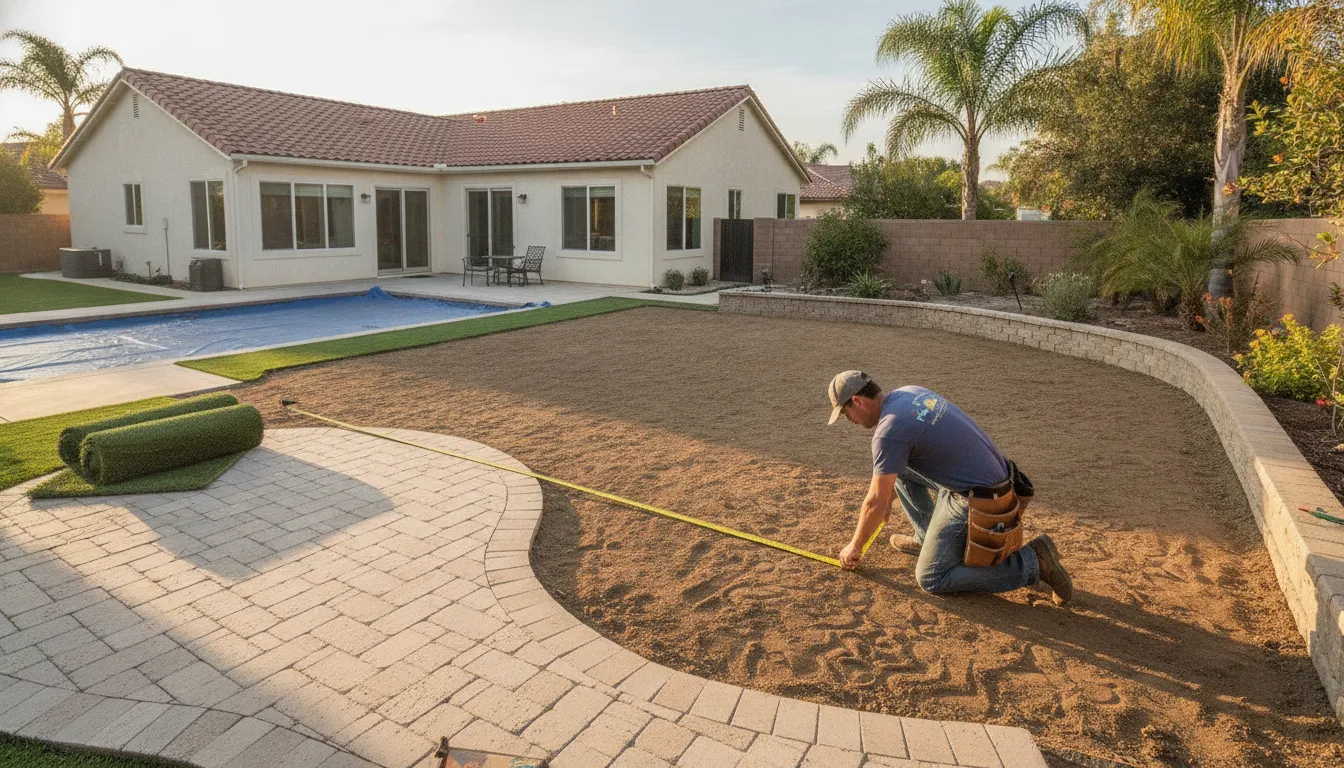
For a 400-square-foot area, compare the complete system rather than the visible blades alone. Base preparation, drainage, edging, irrigation, soil conditions, and the intended use can matter as much as the surface material.
| Consideration | Artificial grass | Natural sod |
|---|---|---|
| Water | Can reduce routine lawn watering, although occasional rinsing may be useful for debris, mud, or pet areas. | Needs regular irrigation to remain healthy, especially during dry Southern California conditions. |
| Maintenance | Remove leaves and spills, clean pet waste, and brush high-traffic areas to limit matting. UC Agriculture and Natural Resources explains the maintenance requirements. | Requires mowing, edging, fertilizing, weed control, watering, and periodic repair or reseeding. |
| Heat | Can become very hot in direct sunlight. Research summarized by Arizona State University notes that turf may heat as much as or more than asphalt or concrete. | As a living plant, natural turf can cool the environment through its natural processes. |
| Ecology | Provides a durable, consistent surface, but does not provide the ecosystem benefits of living turf. | Can provide cooling and living-plant benefits, though it consumes water and requires ongoing lawn inputs. |
| Appearance | Stays visually consistent through seasonal changes when properly installed and maintained. | Changes with weather, season, watering, mowing, soil health, and lawn stress. |
| Best use | Useful where predictable appearance, high foot traffic, or lower routine watering is a priority. | Useful where natural cooling, living groundcover, and a traditional lawn experience matter most. |
In hot, exposed areas, plan for shade, access, and surface temperature before choosing turf. Infill and the broader drainage system also affect long-term appearance and performance. A site-specific design can combine synthetic grass with planting, irrigation planning, or hardscape when one surface cannot meet every need.
Should You Choose Artificial Grass or Pavers?
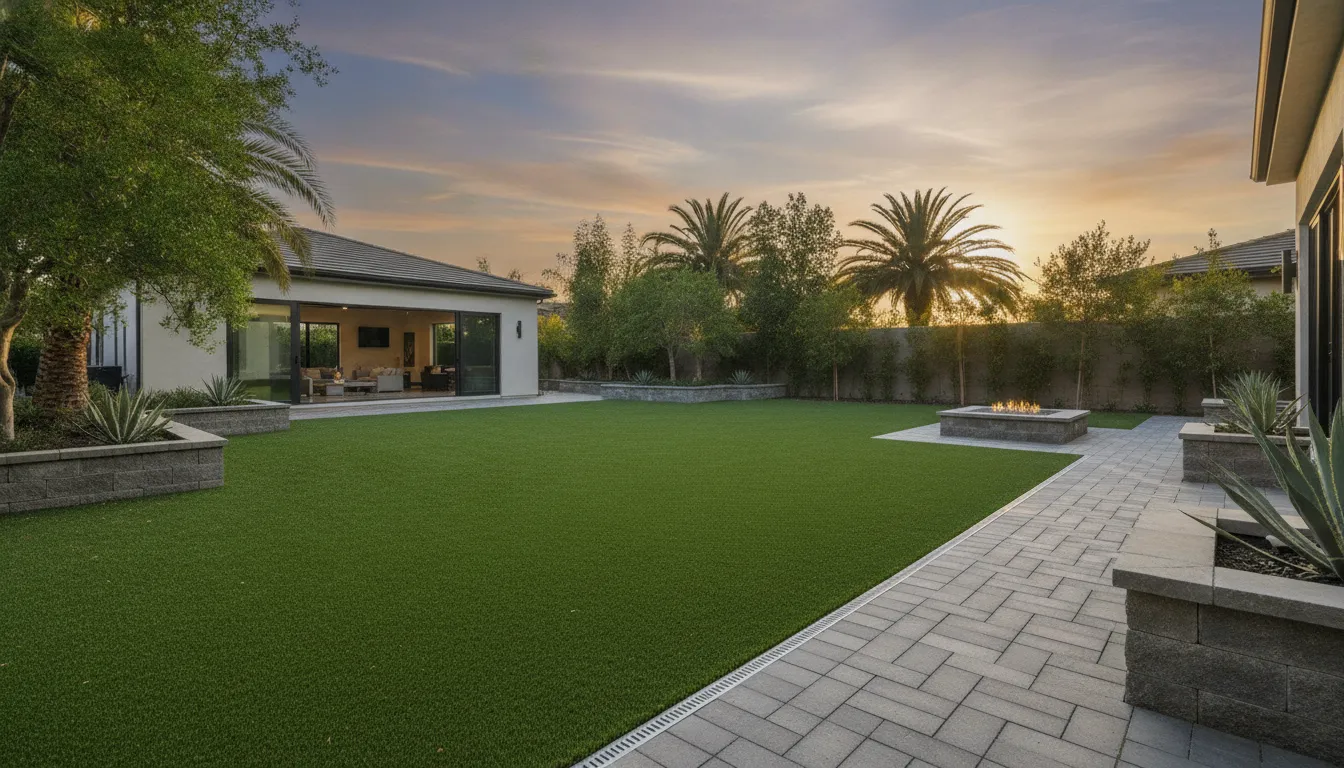
The better surface depends on how you want to use the space. Artificial grass creates a softer, lawn-like area for children, pets, lounging, or visual contrast around hardscape. Pavers provide a firm, structured surface for walkways, seating areas, outdoor kitchens, and places where furniture or repeated foot traffic needs stable support.
Drainage is a design question for both options, not an automatic advantage for either one. A turf installation still needs appropriate grading, a properly prepared base, and drainage planning. Pavers also require a suitable base and correctly managed joints and slopes so water moves away from structures rather than collecting at the edges. Pacific Pavers describes a process that can include site assessment, grading, base installation, drainage planning, installation, cleanup, and a final walkthrough. Landscape design services can coordinate those decisions when the project includes more than one surface.
Match the surface to the job
- Choose artificial grass when you want a consistently green, low-maintenance lawn substitute, a play surface, or a visual transition between planting beds and hardscape. It still needs debris removal, spill cleanup, and prompt pet-waste care. Brushing high-traffic areas can also help limit matting.
- Choose pavers when the area must carry patio furniture, support a walking route, define an entertaining zone, or withstand concentrated loads. Pavers also give you broad options for patterns, borders, and transitions to steps or walls.
- Consider a hybrid layout when the yard needs both comfort and structure. A paver path or seating pad through artificial grass can reduce wear, clarify circulation, and create a more intentional finished design.
Durability also depends on installation quality and the conditions at the property. Turf performance is influenced by the backing, seams, base, edging, and infill. Infill affects long-term appearance and durability, while the underlying preparation controls drainage and stability. Pavers depend on comparable fundamentals, including excavation, base depth, compaction, edge restraint, and surface pitch.
For a closer look at the decision in a narrow side-yard setting, read this guide to synthetic grass vs pavers. For a 400 sq ft artificial grass cost plan, ask for the estimate to separate turf, preparation, drainage, edging, labor, and any paver work. That comparison makes the choice clearer than treating either surface as a standalone square-foot product.
What Should an Orange County Installation Quote Include?
A useful artificial-grass quote should describe the work beneath the visible turf, not just multiply 400 square feet by a material rate. Ask the installer to document the measured area, lawn shape, access route, existing surface, and any adjacent hardscape that could affect staging or transitions.
Use this scope checklist
- Removal and disposal: Identify whether existing grass, soil, concrete, or old landscape materials will be demolished, hauled away, and disposed of. Narrow gates, stairs, long carries, and limited street access should be noted.
- Grading, base, and drainage: Confirm the planned excavation depth, aggregate base, compaction, slope corrections, and drainage approach. A quote should explain how water will move away from the home, walls, pool areas, and other vulnerable edges.
- Turf installation details: Ask for the product, blade style, backing, expected material waste, seam locations, fastening method, edging, and infill. The proposal should separate turf, preparation, installation labor, and infill rather than combining every item into one unclear allowance.
- Finish work: Verify whether the scope includes transitions to concrete or pavers, cleanup, debris removal, grooming, and a final walkthrough. Clarify what maintenance guidance and product or workmanship warranty documentation you will receive.
These details matter especially for a smaller project. A tight side yard, irregular planting bed, slope, poor drainage, or difficult access can require more preparation and perimeter work than the square-foot measurement suggests. Questions about pet use, children’s play, entertaining, heat exposure, and expected traffic also help match the installation details to how the space will be used.
Ask how the contractor manages the project
Pacific Pavers describes a broader process that moves from site assessment and design through preparation, grading, base installation, drainage planning, turf installation, cleanup, and a final walkthrough. Its 2D and 3D outdoor design services can help evaluate turf alongside planting, irrigation planning, pavers, and other outdoor elements. For a step-by-step view of the work, see the guide to artificial turf installation steps.
Finally, ask whether the proposal includes only the turf area or also related grading, drainage, planting, or hardscape work. Pacific Pavers offers a Complimentary $6,500 Design Package only for qualified projects that meet the published project threshold. A standalone 400-square-foot installation should not be assumed to qualify. Discuss eligibility during a design consultation.
Get Your Complimentary Design Consultation
Frequently Asked Questions
How much does 400 sq ft artificial grass cost to install?
Published planning guides vary widely. Magnolia Turf provides a lower general installed-cost reference. LawnStarter provides a national installed-cost comparison. InstallArtificial describes a higher reference for projects under 500 square feet. These are external planning references, not Pacific Pavers pricing. Your Orange County estimate depends on access, removal, grading, drainage, base work, turf selection, and edging. Sources: Magnolia Turf, LawnStarter, and InstallArtificial.
How much does 400 sq ft artificial grass cost for materials only?
Material-only cost depends on the fiber, backing, infill, base materials, and expected waste. One published guide lists a medium- to high-quality turf range, while LawnStarter separates material ranges by fiber type. Most yards also need some excess turf, depending on the lawn’s shape. Sources: InstallArtificial and LawnStarter.
What factors affect the cost of installing artificial grass in a 400 sq ft area?
The main variables are demolition, excavation, disposal, grading, base depth, drainage, site access, seams, edging, infill, and nearby hardscape. A small project can also have a higher per-square-foot price because fixed setup and perimeter work are spread across less area. Ask whether each scope item is included rather than comparing turf prices alone.
How much artificial grass do I need for 400 sq ft?
Plan for the measured 400 square feet plus additional material for seams, cuts, and the lawn’s shape. A published installation guide recommends allowing some excess for many yards, although narrow or irregular layouts may require more. The installer should confirm the takeoff after measuring the site. Source: InstallArtificial.
Ready to Plan Your Orange County Artificial Grass Project?
A site-specific consultation can clarify preparation needs, material choices, drainage, and the scope behind your 400 sq ft artificial grass cost. Request your artificial grass consultation to discuss the project with Pacific Pavers. The complimentary $6,500 design package is available only for qualified projects that meet the published project threshold. So your consultation can help determine whether that offer applies to your broader plans.

Jeff Tobin is the founder of Pacific Pavers, an award-winning outdoor living company serving Orange County, California. With a 30-person team of ICPI-certified professionals, Jeff specializes in transforming residential and HOA properties through custom paver installations, pool remodeling, and complete outdoor living spaces. His company philosophy—”Flawless craftsmanship. Clear communication. Zero stress.”—reflects his commitment to delivering premium results and exceptional customer experiences. As a BBB-accredited business and Belgard Master Craftsman, Pacific Pavers has become known for process-driven operations and elite craftsmanship in the hardscape industry.