
In Orange County, a backyard can be both water-conscious and comfortable enough for everyday life. The strongest drought-tolerant designs do not treat synthetic turf as a complete landscape plan. They use turf where it serves a purpose, then combine it with paver patios, seating, fire features, planting zones, and a drainage plan that fits the property.
Get Your Complimentary $6,500 Design Package for a Qualified $30,000+ Project
This guide shares practical drought tolerant backyard ideas with turf for homeowners planning an outdoor living space in Orange County. It is especially useful for homeowners in Newport Beach, Irvine, Ladera Ranch, Yorba Linda, Anaheim Hills, and Laguna Beach. The goal is not to promise a one-size-fits-all water result. It is to help you plan a backyard that looks intentional, supports how your family uses the space, and is easier to maintain responsibly.
What Are Drought-Tolerant Backyard Ideas With Turf?
Drought-tolerant backyard ideas with turf combine synthetic grass with hardscape and carefully selected living plants. Turf can provide a clean play or gathering surface, while pavers create durable circulation and entertaining areas. Planting beds add shade, texture, and seasonal interest, and irrigation and drainage are planned around each zone instead of applied uniformly across the yard.
This approach is different from covering every available square foot with one material. A well-designed backyard gives each area a job. Turf may define an open lawn, pavers may support dining or a fire pit, and planting beds may soften walls, frame views, or manage transitions between surfaces.
How Should You Divide a Backyard Into Turf, Paver, and Planting Zones?
Divide the backyard by activity first, then assign each zone a surface and maintenance plan. Turf can support open activity, pavers can carry furniture and foot traffic, and planting beds can provide shade and structure. Keeping drainage, irrigation controls, and access in the plan prevents attractive material choices from creating service problems later.
Begin with use rather than materials. Sketch where people enter the backyard, where furniture will sit, how guests will move between the home and patio, and where children or pets need open space. Then place materials around those activities.
- Open activity zone: Use synthetic turf for a visually calm area for play, stretching, casual games, or pets. Keep the shape simple enough that edging and drainage can be maintained.
- Entertaining zone: Use a custom paver patio where tables, chairs, grills, and other furniture need a stable surface.
- Transition zone: Use a paver path, border, or stepping-stone pattern to connect the patio, lawn, planting beds, and side yard without making the entire space feel like one large expanse.
- Living landscape zone: Reserve planting beds for low-water trees, shrubs, grasses, and perennials selected for the property’s sun, soil, exposure, and maintenance expectations.
- Service and drainage zone: Keep access points, cleanouts, drains, downspouts, and irrigation controls visible to the person who will maintain them.
For an Orange County backyard, this zoning exercise also helps account for coastal exposure, hillside grades, compacted soil, narrow side access, and HOA design requirements. The final plan should respond to the site rather than force every property into the same turf-to-paver ratio.
What Are the Best Drought Tolerant Backyard Ideas With Turf?
The best turf and paver layouts create a clear relationship between open lawn, entertaining space, and planting. Use pavers where furniture, cooking, fire features, or repeated foot traffic require a firm base. Use turf for flexible open space, then connect the zones with edges and paths that look intentional and remain accessible for maintenance.
1. Frame a central turf lawn with pavers
A rectangular or gently shaped synthetic turf area can act as the visual center of a backyard. Surround it with a paver border or walkway, then place planting beds outside the circulation path. This creates a clear edge for mowing-free maintenance and gives the lawn a finished architectural relationship with the home.
Use this layout when the yard needs an open center for family activity but still needs a defined route from the patio to the garden. A stable paver edge also helps keep loose mulch, gravel, and plant material from spreading onto the turf.
2. Create a paver patio with a turf inset
Instead of treating turf and pavers as competing surfaces, use a narrow turf inset to break up a large patio or connect two seating areas. The inset should be detailed with deliberate geometry and a strong edge. It should not become an awkward strip that catches debris or makes furniture placement difficult.
This idea works especially well for a long backyard where a full-width patio would feel oversized. The paver sections can hold dining and lounge furniture, while the turf inset adds softness and visual separation.
3. Build a fire feature lounge beside the turf
A built-in fire feature needs a durable, level area for seating and safe circulation. Place it on a paver patio beside, rather than in the middle of, the primary turf area. This keeps chairs, foot traffic, and ash or debris from concentrating on the grass while maintaining a visual connection between the lounge and lawn.
Pacific Pavers designs custom firepit installations that can be integrated with patios and seating. The design should account for the selected fuel type, clearances, ventilation, local requirements, and the way people will approach the feature after dark.
4. Pair the outdoor kitchen with a paver dining terrace
An outdoor kitchen should sit on a durable surface with room for circulation, serving, doors, and utility access. A paver terrace can define the kitchen and dining zone while turf remains available for flexible use beyond the hardscape.
Plan the relationship between the kitchen, back door, shade structure, and planting beds before choosing the turf shape. This avoids placing a lawn edge where grease, foot traffic, or chair movement will create ongoing maintenance problems.
5. Use stepping stones to connect destinations
A stepping-stone path can connect the patio to a garden gate, pool area, or secondary seating space while preserving a larger visual field of turf. Set the path around actual walking patterns, not simply along the shortest line on a plan.
For comfortable movement, the stones need consistent placement, stable support, and edges that do not create a trip hazard. Where daily traffic will be heavy, a continuous paver walkway may be a better choice than individual stepping stones.
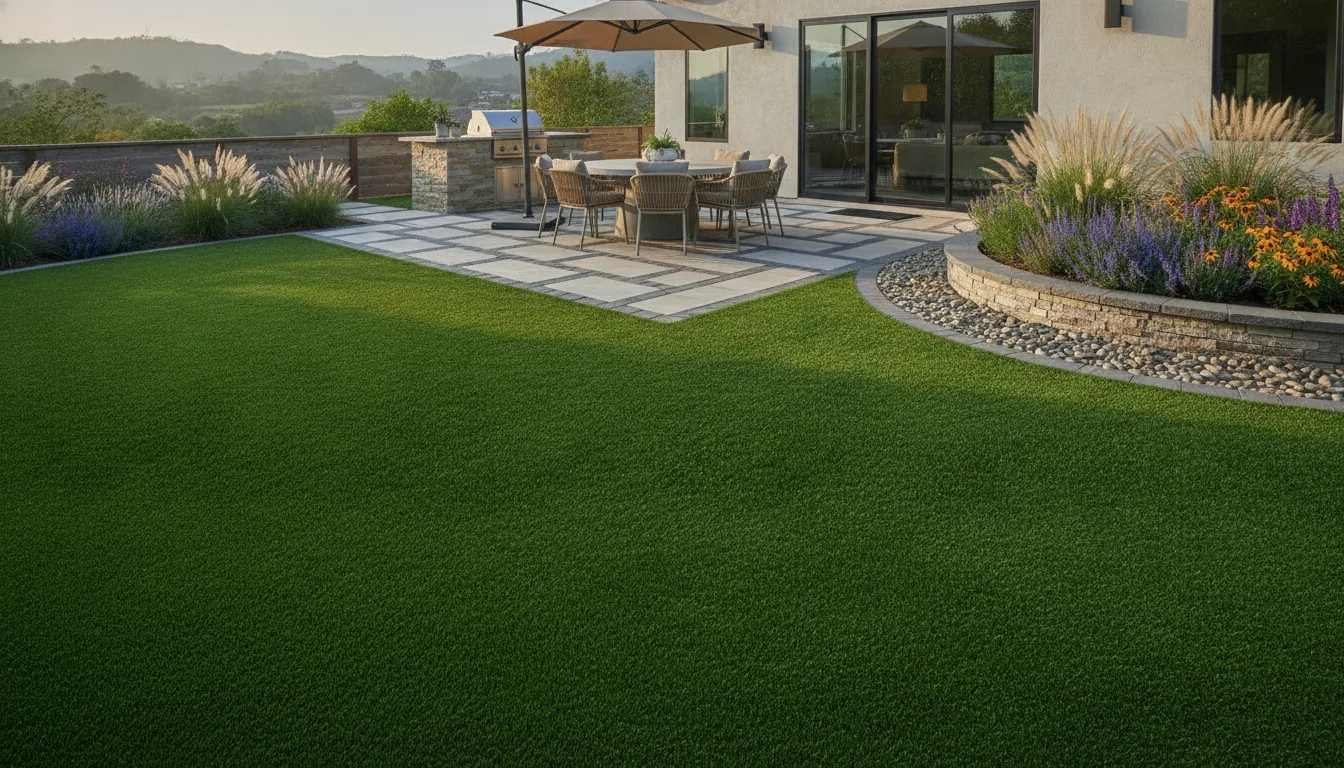
6. Shape planting beds around views and shade
Planting zones do more than decorate the edge of a turf lawn. They can frame a view, screen a neighboring property, soften a retaining wall, or create shade near a seating area. Use curves sparingly and make sure the beds still leave enough room for access, irrigation checks, and future plant growth.
Choose plants by site conditions, not by a generic list. A coastal yard, inland hillside, and shaded courtyard can have very different wind, sun, soil, and frost conditions. Your landscape designer should confirm what is appropriate for the property and how much ongoing care the homeowner wants to provide.
How Do Turf and Pavers Compare for Different Backyard Uses?
Turf and pavers are not interchangeable materials. Turf is usually most useful where a homeowner wants a flexible, lawn-like surface, while pavers are better suited to furniture, cooking, fire features, and concentrated foot traffic. A water-conscious backyard uses both selectively, based on activity, heat, drainage, maintenance, and long-term access.
Turf and pavers solve different problems, so the right question is not which material is better in general. Ask which material is better for each activity.
| Backyard use | Surface that often fits | Planning note |
|---|---|---|
| Dining, grilling, and movable furniture | Pavers | Provide a stable, clean base and leave room for circulation and service access. |
| Open play or flexible lawn activity | Synthetic turf | Plan the base, edge restraint, drainage, heat exposure, and cleaning routine before installation. |
| Fire feature seating | Pavers | Keep the seating and approach area level, durable, and appropriate for the selected feature. |
| Low-water planting beds | Living landscape | Group plants with similar water and sun needs so irrigation is not applied uniformly. |
| High-traffic connection between zones | Pavers or a continuous walkway | Use a surface that supports repeated foot traffic without creating a worn shortcut across the turf. |
Synthetic turf still needs thoughtful care. It may require brushing, debris removal, occasional rinsing, pet-waste cleanup, and inspection of edges or drainage. Pavers also need maintenance, including joint care, cleaning, and periodic evaluation of settlement or drainage. A water-conscious design reduces unnecessary irrigation, but it does not eliminate maintenance.
What Should Irrigation Planning Include in a Turf Backyard?
Synthetic turf does not need the same irrigation as living plants, but the planting beds around it do. Start by separating the yard into hydrozones, or areas with similar water needs. Keep turf, ornamental plants, trees, and container areas from being treated as one undifferentiated zone.
- Plant selection: Choose plants suited to the property’s light, exposure, soil, and intended maintenance level.
- Drip and spray decisions: Use the irrigation method that fits the plant layout and avoids unnecessary overspray onto pavers or turf.
- Root-zone watering: Give trees and larger shrubs the space and irrigation depth they need without keeping adjacent turf edges constantly wet.
- Controller access: Keep valves, filters, and controls accessible for seasonal adjustment and repairs.
- Establishment period: Newly installed plants may need a different watering schedule while they establish than they will after the landscape matures.
A landscape design plan can coordinate planting, irrigation, pavers, and synthetic grass before installation begins. It can also identify where a tree’s mature size or a planting bed’s irrigation needs may affect the turf layout later.
How Do You Plan Drainage Around Synthetic Turf and Pavers?
Drainage should be decided before excavation, base preparation, and finish elevations. Start by tracing where water comes from and where it can safely go. Consider roof downspouts, patio runoff, hillside flow, low spots, doors, pool areas, planting beds, and neighboring properties.
It is important not to assume that synthetic turf is automatically permeable or that paver joints alone will solve a drainage problem. The base, subgrade, soil, slope, edging, and outlet all work together. If water has nowhere to move below the surface, a new finished layer can simply hide the problem until pooling, odors, settlement, or erosion appears.
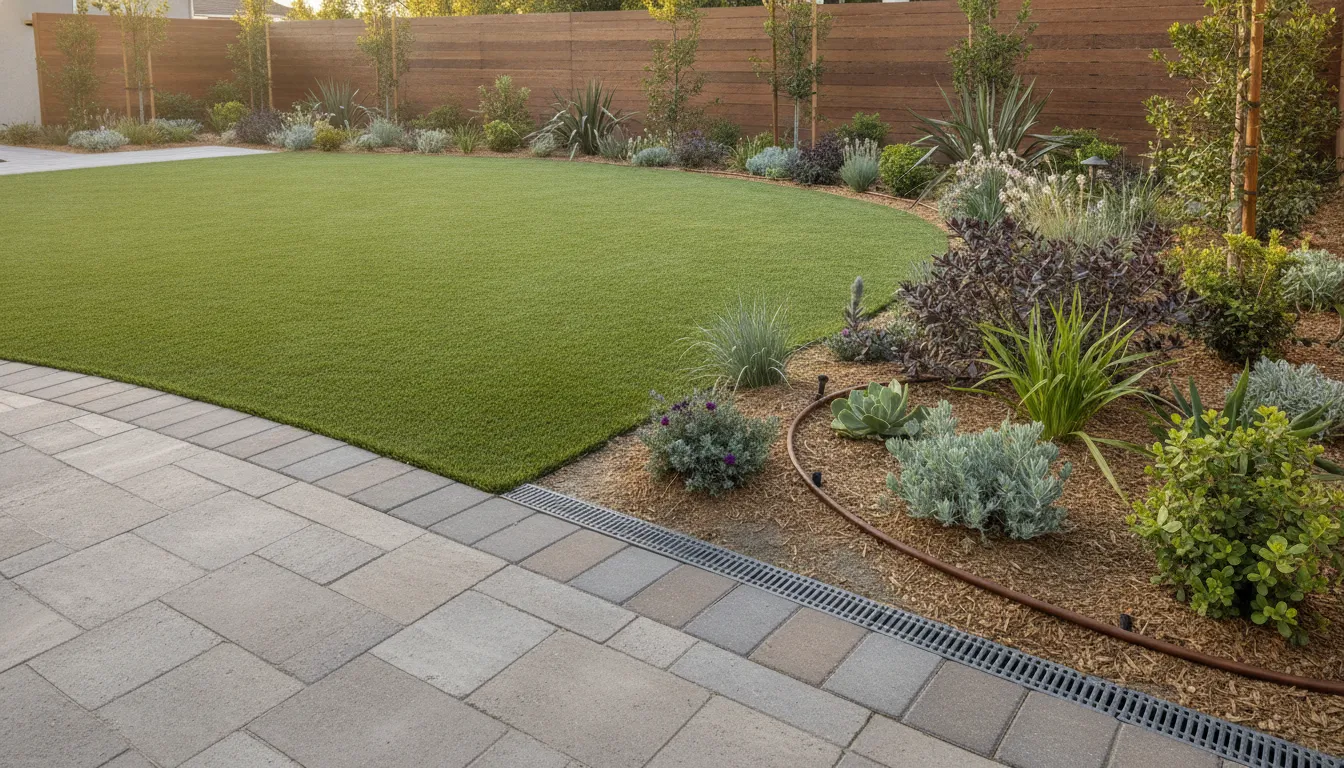
Where appropriate, the plan may combine finished grades, surface channels, area drains, cleanouts, permeable paver assemblies, or other site-specific solutions. The correct choice depends on the existing conditions and the destination for collected water. Pacific Pavers’ guide to patio drainage before installing pavers explains why drainage paths belong in the early design conversation.
What Are the Honest Tradeoffs of a Turf-Based Backyard?
A good design explains limitations as clearly as benefits. Synthetic turf can provide a consistently finished surface and reduce the mowing, edging, and routine watering associated with natural grass. It is not maintenance-free, and it is not the right surface for every part of every backyard.
- Heat: Turf can feel hot in direct Orange County sun. Shade planning, furniture placement, plant selection, and realistic expectations matter.
- Drainage: Turf performance depends on its base and the site’s drainage path. Poor preparation can create problems beneath a clean-looking surface.
- Cleaning: Leaves, dust, food, and pet waste still need to be removed. Busy yards need a practical cleaning routine.
- Living plants: A turf installation does not replace the shade, habitat, seasonal change, and cooling benefits of every living plant. Keep meaningful planting zones where the site and homeowner support them.
- Upfront planning: Edges, transitions, base work, grades, and access should be resolved before materials are installed. Fixing a poorly coordinated surface later is more disruptive than planning it correctly.
- HOA review: Some communities have landscape, color, drainage, or fire-feature rules. Confirm the review path before finalizing the design.
These tradeoffs are not reasons to avoid turf. They are reasons to use it selectively and integrate it with a complete outdoor living plan. A project gallery can help you compare how different hardscape, planting, and outdoor-living elements work together visually before you decide on a direction.
Request Your Complimentary $6,500 Design Package for a Qualified $30,000+ Project
How Can an Orange County Homeowner Plan the Project?
A reliable backyard project starts with a site and use plan, not a material choice made from an inspiration photo. Document movement, shade, utilities, drainage, HOA requirements, and maintenance access. Then coordinate turf, pavers, planting, irrigation, and fire features in one design so the finished backyard works as a connected outdoor room.
- List the activities: Identify how the backyard needs to work for entertaining, pets, children, cooking, relaxing, and circulation.
- Document the site: Note sun, shade, slopes, downspouts, existing drains, gates, utilities, doors, and areas where water currently collects.
- Set the zones: Place turf, pavers, plants, seating, fire features, and service access according to use rather than starting with a material catalog.
- Resolve elevations and drainage: Confirm how finished surfaces will direct water away from the home and toward an appropriate outlet.
- Coordinate irrigation: Group plants by water need and keep controls accessible for future maintenance.
- Review local requirements: Check HOA submittal needs, fire-feature requirements, permits, and any restrictions that apply to the property.
- Review the design in context: Use drawings, material samples, and 2D or 3D views to evaluate the relationship between the home, pavers, turf, plants, and outdoor features.
Pacific Pavers provides integrated 2D and 3D outdoor designs for homeowners who want to review the full backyard plan before construction. The design conversation should include details that are easy to overlook in an inspiration photo, such as maintenance access, drainage outlets, furniture clearances, and how the backyard will feel after the plants mature.
Request Your Complimentary $6,500 Design Package for a Qualified $30,000+ Project
Frequently Asked Questions About Drought-Tolerant Backyards With Turf
Is synthetic turf the same as a drought-tolerant landscape?
No. Synthetic turf is one landscape material. A drought-tolerant landscape also considers plant selection, irrigation zones, soil, shade, drainage, hardscape layout, and the maintenance plan. Turf can be part of a water-conscious backyard, but it should not be presented as the complete strategy.
Can pavers and synthetic turf be installed next to each other?
Yes. Pavers and synthetic turf can work together when the edge, base, finished elevations, and drainage are designed as one system. The transition should be stable, visually intentional, and accessible for cleaning and future repairs.
Does synthetic turf eliminate backyard maintenance?
No. It can change the type of maintenance required by reducing mowing and routine watering for the turf area, but homeowners still need to remove debris, manage pet waste, rinse or clean as appropriate, inspect edges, and care for surrounding plants and pavers.
What should Orange County homeowners ask before installing turf?
Ask how the turf base will be prepared, how water will move through and away from the site, how heat and shade will be addressed, what edge details are proposed, how living plants will be irrigated, and how the design will satisfy any HOA or local requirements.

Jeff Tobin is the founder of Pacific Pavers, an award-winning outdoor living company serving Orange County, California. With a 30-person team of ICPI-certified professionals, Jeff specializes in transforming residential and HOA properties through custom paver installations, pool remodeling, and complete outdoor living spaces. His company philosophy—”Flawless craftsmanship. Clear communication. Zero stress.”—reflects his commitment to delivering premium results and exceptional customer experiences. As a BBB-accredited business and Belgard Master Craftsman, Pacific Pavers has become known for process-driven operations and elite craftsmanship in the hardscape industry.