
Selecting the right paver colors for house styles in coastal Orange County requires a balance of architectural harmony and environmental resilience. A poor color choice can make a premium estate look dated or cause the hardscape to absorb excessive heat in the summer sun. Strategic selection ensures that your outdoor living space complements the natural light and sea air of the California coast. Explore our paver entryway design ideas for more inspiration on matching your home’s style.
Schedule a Pacific Pavers design consultation to compare paver colors at your Orange County home.
Choosing the ideal paver colors for house designs in coastal regions involves matching the material to the home’s architecture while accounting for local weather conditions. Neutral, earth-tone, or grey palettes are frequently favored for contemporary coastal designs to complement existing home structures and natural landscapes. These lighter shades also serve a functional purpose, as high solar reflectance helps mitigate the urban heat island effect by absorbing less radiation. Since coastal Orange County homes require durable materials that can withstand salt air and high humidity, homeowners should select premium blends that resist fading and shifting. According to academic research on color preference, observers tend to prefer palettes with lower color differences, suggesting that a subtle, cohesive transition between the house and the hardscape creates the most appealing aesthetic.
Learn more about our paver sealing and maintenance.
Homeowners often find that the most successful projects prioritize local style and long-term durability. We will now look at the Best paver colors for house styles in coastal Orange County to see which specific blends work best for your property. The path begins with
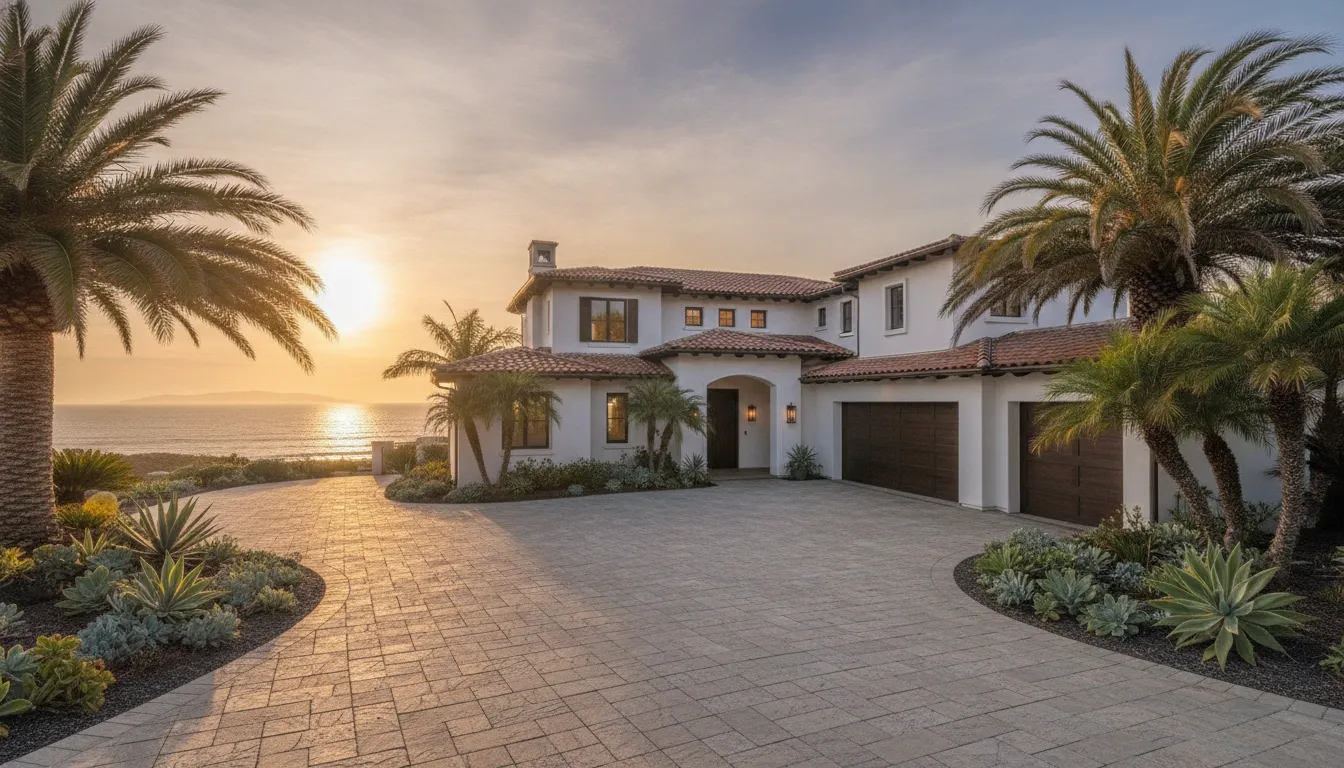
Which paver colors best complement different house styles in coastal Orange County?
Choosing paver colors for house projects in coastal Orange County starts with your home’s architecture, exterior materials, and the area’s bright sun and salt air. Cool grays can complement modern coastal homes, while warm earth tones often work well with stucco and tile. Compare samples at the property before installation so the final blend looks balanced in the actual light.
Colors for modern coastal designs
Modern coastal homes often use clean lines and cool shades. For these houses, neutral grey and silver stones are well liked. These cool tones create a sleek look that matches the ocean breeze.
Research shows that lightness is a big factor in which color sets people like. Using light greys can make a small patio feel much larger. These colors keep your yard looking fresh and stylish for years.
Light colors do more than just look good. They can also keep your outdoor spaces cooler during hot days. High light bounce in lighter pavements helps lower heat in city areas.
This is a smart choice for long driveways where dark stones might get too hot to touch. By picking a light grey or tan, you help your yard stay safe for pets and bare feet.
Warm tones for Spanish and classic styles
Many homes in San Clemente and Yorba Linda feature warm stucco and red tile roofs. These Spanish styles need earth-toned pavers to look their best. Deep tans and toasted browns are great picks for these houses.
These warm colors bridge the gap between your hardscape and the trees and plants. Using a mix of sand and brown shades adds depth to a large driveway or pool deck. For more compact spaces, explore our paver patio ideas for small backyards to see how warm earth tones can transform a limited area.
When you pick warm tones, aim for a low color shift between the stones. Most people like palettes where the colors blend smoothly. This creates a calm and high-end feel for your backyard.
Expert teams focus on complementing coastal home aesthetics with color to make sure the work looks planned. Earth tones also hide dust and dirt better than solid white or black options.
Harmony for Cape Cod homes
Cape Cod homes in Dana Point often use blue, white, or grey siding. These classic styles look best with neutral stones that do not fight with the house color. Soft charcoal or multi-color grey blends are top choices here.
These stones add a touch of class without being too loud. A well-picked blend can highlight the design of your home. You can use dark borders to frame a light walkway for a crisp and clean finish.
Using strong materials is key for homes near the water. Salt air can wear down some surfaces, so high-quality pavers are a must. Best stones offer the look and feel needed for a timeless yard.
Whether you want a stone feel or a smooth slate finish, the color should always help the home’s style. This careful choice ensures your outdoor space feels like a natural part of your land.
How do coastal light, heat, and salt air change color choices?
Living near the ocean in Orange County affects how you choose paver colors for house projects. The bright sun and salt air can change how your hardscape looks over time. You need stones that can handle the heat and stay true to their real shade.
Picking the right color is more than a style choice. It is about how the stone works in its setting. Using the right tones ensures your outdoor space stays nice and useful for years.
Managing sun and surface heat
The sun in places like Newport Coast can make dark pavers very hot. Lighter stones have a high solar reflectance, which means they bounce more light away from the surface. This helps lower the urban heat island effect in your yard.
Your patio or pool deck stays cool underfoot when you pick the right shades. A light palette makes your outdoor space feel nice all summer long. These stones stay easy to walk on even during the hottest hours of the day.
Think about how much shade your yard gets before you buy. Stones in direct sun look much brighter than those in the shade. It is wise to view samples at different times of the day to see how the light shifts.
Lighter shades like tan, cream, or grey work best for open spaces with full sun. These tones stay cool and look great in the middle of the day. They help your yard feel open and bright without being too harsh on the eyes.
Working with coastal light and salt air
The air near the beach has salt and moisture that can be tough on some stones. In coastal Orange County, you should use durable, weather-resistant pavers. These stones keep their color even when exposed to salt spray and moist air.
Our team often suggests modern paver color palettes that use dense stones. These resist fading and stay looking new for much longer. They are built to handle the unique weather found near the Pacific.
Ocean light has a cool blue tone that changes how colors appear. Warm reds or deep browns can look out of place next to the cool light of the coast. Neutral tones help in complementing coastal home aesthetics with color.
These shades bridge the gap between your home and the beach scenery. They create a clean look that fits the local style. Using muted tones stops your hardscape from clashing with the blue of the ocean.
Best color palettes for the coast
Many homeowners in Laguna Beach prefer neutral palettes for their yards. Greys, soft tans, and sandy beiges are top choices because they hide dust and light salt well. These colors also match the local stone and sand found on our coast.
Using a palette with low color contrast between stones creates a smooth look. Most people find this style very pleasing and easy on the eyes. It makes the outdoor space feel calm and relaxed.
- Cool greys: These match modern beach homes and stay looking new in the salt air.
- Sandy beiges: These blend well with the local scenery and hide tracks from the beach.
- Light tans: These reflect heat well to keep your patio or pool deck cool.
- Mixed neutrals: Using a blend of three similar shades adds depth to the design.
Your choice should aim to boost your curb appeal and long-term home value. Working with a Belgard Master Craftsman gives you access to the best stones for the coast. This design-build way helps you find a look that fits your home’s unique style.
Paver color palette comparison for Orange County homes
Choosing the right paver colors for your house is a big step. In Orange County, the sun and salt air change how colors look over time. You want a palette that fits your home’s style and stays cool under the summer sun. A good choice can make your yard look better and add value to your land.
How to pick the best hue
Most local homeowners look for a look that blends with the natural landscape. For many, this means using soft grays or tan tones. Lighter colors are great for complementing coastal home aesthetics with color because they feel airy and open. They also help keep the ground from getting too hot to walk on.
Lighter stones reflect more sun than dark ones. This helps stop your patio from acting like a heater. Using lighter-colored pavements can lower the heat around your home. This is helpful if you like to walk barefoot or have pets that spend time outside. Darker tones can look sleek, but they hold more heat and might need more care.
Visual styles and home pairings
Your home’s main color should guide your paver choice. You do not want the pavers to match the house fully. If they are too close, the yard can look flat and dull. Instead, try to find a shade that is a few steps lighter or darker. This creates a soft contrast that looks clean and expert. You can see how this works in modern paver color palettes that use multi-tone blends.
Think about the materials on your house as well. A home with white siding looks great with light gray or blue-gray stones. A home with warm wood trim might look better with sand or taupe colors. Blended tones are a smart choice because they hide dirt and leaves well. They also tie different colors from the yard and house together into one smooth look.
| Palette Family | Best House Pairing | Visual Effect | Heat/Upkeep | Best Use |
|---|---|---|---|---|
| Cream and Sand | White or light tan | Bright and airy | Stays very cool | Pool decks |
| Warm Taupe | Wood or brown | Natural and soft | Good heat control | Walkways |
| Cool Gray | White or gray | Clean and sleek | Mid-range heat | Modern patios |
| Charcoal | Stark white | Bold and dark | Can get very hot | Accents |
| Clay Red | Spanish style | Classic and warm | Moderate heat | Traditional yards |
| Blended Tones | Any style | Rich and deep | Hides dirt well | Driveways |
Keeping your palette fresh
Upkeep is a key part of choosing a color. Light colors show mud and dirt more than dark ones do. Darker pavers can hide stains well but may show salt spray in coastal areas. Blended pavers offer the best of both worlds. They use two or three shades to create a deep look that stays looking new for longer. This makes them a top choice for busy driveways and patios.
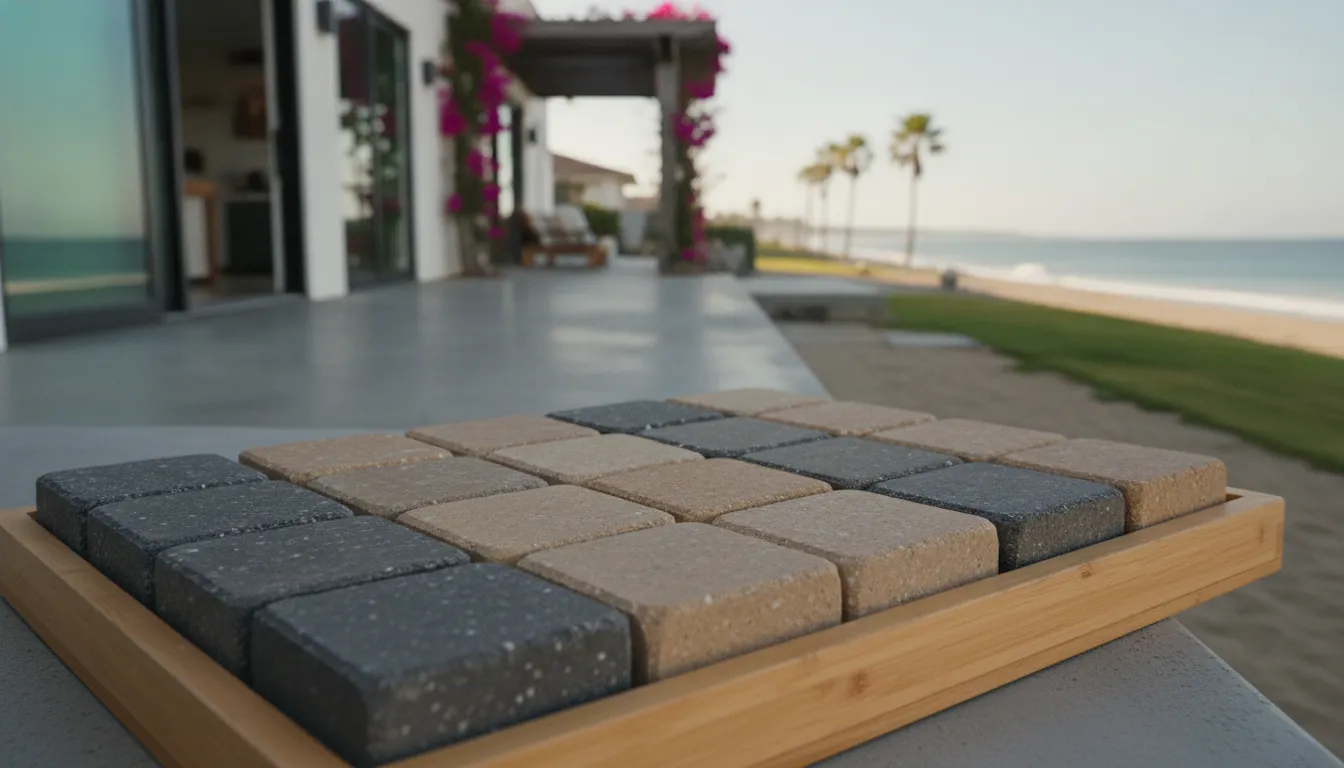
How should you test paver colors before installation?
Choosing the right paver colors for house projects requires more than just looking at a printed book. You need to see how the stones look against your home’s actual walls and roof. This step ensures your new yard feels like a natural part of your living space. A good choice will boost your home’s beauty and its total value. It is one of the key steps in our turnkey design-build process.
Matching your home’s color palette
Start by looking at the main colors of your house. Many Orange County homes use warm tan or cool grey tones. You should pick selecting the right driveway paver colors that match these base shades. Expert studies show that color lightness is a major factor in how people feel about a design. Using lighter stones can also reduce the heat your yard absorbs from the bright sun. This helps keep your outdoor space cool on hot days. It also saves energy for your home over time.
Pay close attention to the trim and roof of your house. If your roof has brown bits, look for pavers with tan or cream flecks. If your house has grey walls, a cool blue or slate stone might look best. You want the new stones to blend in rather than stand out too much. A subtle match creates a clean and high-end look for any property.
The sample testing process
You must test real paver samples on your land before the work begins. Light changes a lot from dawn to dark. This shift in light can change how a color looks to your eye. A stone that looks grey at noon might look tan in the evening glow. Testing on-site is the only way to be sure of your choice.
- Get several full-sized samples of your top choices from a high-end brand like Belgard.
- Place the stones right next to your home’s wall, driveway, and existing yard paths.
- Watch the colors in the morning, at noon, and at dusk to see the light shift.
- Spray the stones with water to see how they look when they are wet.
- Check how the stones look in both bright sun and deep shade to ensure a good match.
Our team helps you see these choices clearly with 2D/3D design services. This lets you view the final result before any work starts on your yard. Neutral tones work well for coastal homes. They blend well with the soft light and the salt air near the sea. Picking the right color palette adds beauty to your home for many years to come.
Think about how the pavers will look with your plants and trees too. Green grass and blue pools can change how you see the stone colors. Neutral grey and earth tones tend to stay in style for a long time. These colors make your home look modern and fresh. This choice will make your outdoor space a place where you love to spend time.
Using borders and accent colors without overdesigning
Picking the right paver colors for house styles in Orange County is about balance. You want a look that pops but does not feel busy. Borders and accent bands add a clean finish to any outdoor spot. They guide the eye and mark the edge. But too many colors can make a yard feel small or messy.
Subtle framing for driveways
A border works like a frame for a picture. For large spots like paver driveways, a soldier course is a great pick. This is where you lay stones side-by-side in a straight row. It creates a crisp line that keeps the main pattern in place. For a high-end look, use a stone that is one shade darker than the main field. This adds depth without a sharp change.
Studies show that people often like color sets with a lower color difference between parts. Keeping your accent colors close to your main stone color creates a smooth feel. If you go too bold, the driveway can look like a patchwork quilt. Stick to tones that share a base, such as cool greys or warm tans.
Planning your patio layout
Patios allow for more patterns than driveways. You might use an accent band to mark a dining spot or a fire pit. A double border is a good way to add detail. You can use a thin row of dark stones next to a wider row of neutral stones. This draws the eye to the shape of the patio.
When you plan your patio, think about how it meets your lawn or pool. A well-placed border can hide small cuts and ensure a flat fit. It also helps with strength. In coastal towns like Newport Beach, your pavers must stay firm during damp months. A strong edge keeps the stones from moving.
Picking colors that match
The best way to pick an accent is to look at your home. Check the color of your roof, trim, or window frames. Using a border that matches your trim helps the yard feel like part of the house. It ties the whole place together.
Here are a few tips for using accents:
- Limit your set to three colors or fewer.
- Use textures to add flair instead of bright colors.
- Match your border stone to a small detail on your home.
- Do not use high-contrast patterns in small spots.
Small changes make a big impact. You do not need bright reds or deep blues to make a point. A simple shift in stone size or a slight change in hue is often enough. This creates a timeless look that will stay in style. Our team uses a design-build path to help you see these choices before we start.
Which paver colors are easiest to keep looking refined?
Selecting the right paver colors for house projects involves more than just looks. The color you pick affects how much time you will spend on care. In coastal areas like Newport Beach or Laguna Beach, salt air and high humidity can change how surfaces age. Choosing complementing coastal home aesthetics with color helps ensure your outdoor space stays clean with less work.
The role of lightness in care
Lighter colors are a top pick in modern design for their clean look. Research shows that lightness is a primary factor in how people view color sets. While pale tones can help reflect heat and keep paths cool, they also tend to show dirt and tire marks more. If your driveway gets a lot of use, very light shades may need more washing to stay bright.
Blended sets and debris
Mixed-color sets or earth tones are often the best choices for easy care. These modern paver color palettes use small shifts in tone to hide dust and light wear. When a surface has varied shades, bits of dirt or leaves blend into the pattern. This makes them a smart choice for busy paths or pool decks where people walk a lot. Most people like these mixed sets because they bridge the gap between the house and the natural yard.
Managing dark tones and white spots
Dark pavers create a bold, high-end look that many owners love. But very dark or solid colors can be harder to keep up. They may show white mineral spots, known as efflorescence, more than light stones. They also take in more sun, which can make them hot to the touch in the Orange County sun. Using pavements with higher solar reflectance can help cool down your outdoor living areas. If you go with dark tones, look for top-tier options made to resist fading and stains.
Common paver color mistakes to avoid
Picking the right paver colors for your house is a key part of any hardscape project. A poor choice can make a high-end project look dull. Many people in Orange County fall into common traps when they plan their new outdoor space. Working with a design-build team helps you avoid these errors from the start. Our expert team ensures your choice enhances your home’s value and style.
Matching the house color too closely
One of the most common mistakes is trying to match the paver color exactly to the home’s outer walls. This often results in a flat look that lacks depth. Instead of a perfect match, focus on colors that go well with the main house color. A slight contrast helps define the outdoor space and makes the design pop. Research shows that lightness is a primary factor in how people like color sets. Most experts suggest these tips for picking contrast:
- Choose a paver that is a few shades lighter or darker than your house.
- Use a dark border to frame a light-colored patio.
- Pick accent colors that match your roof or trim.
Picking colors from a small sample
Choosing a paver based on a single small stone or a tiny chip is risky. Paver colors shift based on light, plants, and the size of the area. A color that looks great in a store may look very different on a large driveway. Our 2D and 3D design services allow you to see how your choices will look at scale. You should always look at full-size stones at your home during other times of the day. This helps you see how the sun and shade affect the stone’s tone before you buy. You also need to think about how the colors change where the patio meets the grass or pool.
Using too many shades or patterns
It is tempting to mix many different paver colors to create a unique pattern. However, using too many shades can make your patio look busy and messy. A high-end look usually relies on two or three tones that work well together. You can use a main color for the body and a second color for the borders. This creates a clean, clear design that does not distract from your home. Stick to a simple set of colors to ensure your outdoor living space stays timeless.
Ignoring fixed materials and heat
Your pavers must work with the parts of your home that will not change. This includes the roof color, stone accents, and the soil in your yard. Forgetting to account for these fixed parts can lead to a clashing look. In sunny areas like Newport Beach, dark pavers can also get very hot. They absorb more heat, which can make a pool deck too hot to walk on. Using lighter-colored pavements can help lower surface heat in your yard. This is a vital choice for the comfort of your family and pets.
Frequently Asked Questions
What is the best color for pavers?
The best color for pavers depends on the style of your home and your local area. For coastal Orange County homes, neutral tones like light grey, tan, and earth shades are top picks. These colors blend well with the natural land and the home styles common in Newport Beach. Light colors are also a smart choice. Research shows that people tend to like lighter colors more when they look at a design.
How do you match paver colors to a house?
To match pavers to your house, look at the primary colors of your roof, siding, and trim. You should pick a paver set that has a low color change from these parts of your home. Studies show that people prefer color sets with small shifts rather than big contrasts. For a smooth look, pick colors that link your hardscape and the plants in your yard to create a balanced outdoor space.
What is the most popular paver color?
Neutral and earth-tone colors are currently the most popular picks for modern coastal homes. Grey and charcoal shades are also in high demand. These colors give a clean look that lasts for a long time. According to Pacific Pavers, these versatile colors help boost curb appeal and home value. Picking a popular, timeless color keeps your home in style while also standing up to the salt air and humidity found in Orange County.
How do you choose the right paver color for a hot climate?
In sunny areas like Orange County, picking lighter paver colors is a smart way to handle heat. Lighter shades bounce back more light, which means they soak up less heat from the sun. Scientific facts show that using lighter paths can help lower heat in busy cities. This keeps your patio or driveway much cooler during the hot summer. It makes your outdoor space much better for your family and guests.
Learn more about our paver entryway colors.
Ready to pick the best paver colors for your home?
Salt air and bright sun can make the wrong colors fade and look old very fast. If you wait to start your work, you might lose the chance to enjoy your new yard when the weather is best. Starting now lets you skip the long wait times and get your home ready for your next big event. You will get a space that looks great and adds real value to your home. Our team makes sure your new pavers match your house and the local coastal style. You can see our plan options on our design services page before we meet. A good plan now saves you from stress and helps you get the exact look you want.
Ready to pick your new colors? Call (714) 718-3970 to schedule a design consultation.